Get Full Government Meeting Transcripts, Videos, & Alerts Forever!
Get email alerts on the Anti Slapp Sb1001 topic
No spam. Unsubscribe anytime.
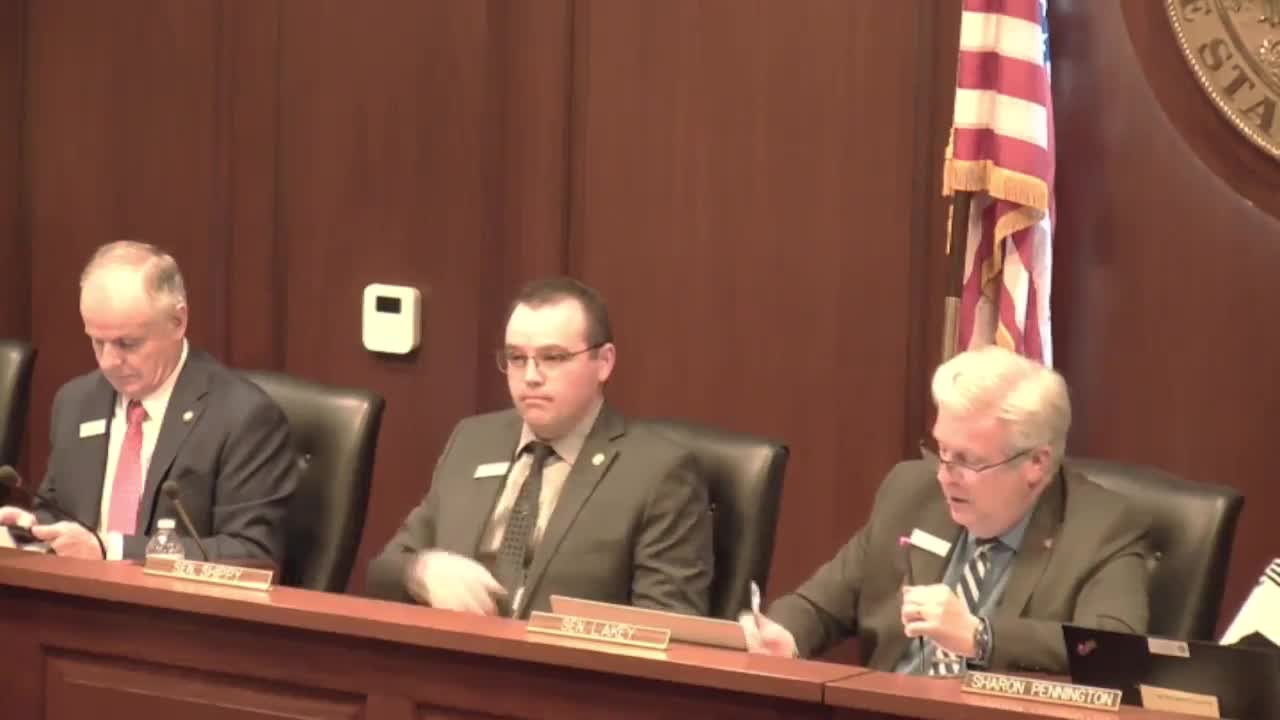
Senate Judiciary & Rules advances anti‑SLAPP bill, SB 1001, after bipartisan testimony
Summary
The Senate Judiciary & Rules Committee voted to send Senate Bill 1001, a Uniform Public Expression Protection Act (anti‑SLAPP) bill, to the Senate floor with a due‑pass recommendation after sponsor testimony and supporters from the Uniform Law Commission, public‑interest groups and businesses urged passage.
Senate Bill 1001, a measure creating an expedited court process to dismiss meritless “strategic lawsuits against public participation” (SLAPPs), advanced out of the Senate Judiciary & Rules Committee on a voice vote Tuesday and was recommended for a due pass to the Senate floor.
The bill’s sponsor, Senator Brian Lenny of District 13, told the committee SB 1001 would give judges “another tool in the tool belt” to dismiss meritless lawsuits early and protect ordinary Idahoans and small organizations from protracted litigation aimed at chilling speech. "Good lawsuits are good lawsuits. And if there's a lawsuit that has merit, this will not affect it at all," Lenny said.
The nut graf: supporters said the bill would create an early judicial review and stay of discovery for cases that appear on their face to lack merit, allowing courts to resolve frivolous suits faster and reduce legal costs for defendants, while preserving existing defamation and other civil liability standards.
Testimony supporting the bill came from Caitlin Wolf of the Uniform Law Commission, who described the process: a defendant could file a motion that halts discovery and prompts an expedited hearing in which the judge assesses whether the complaint states a viable cause of action. Wolf said defendants could still obtain limited discovery at the judge’s discretion and that the bill mirrors provisions adopted in other states.
Catherine Hartley, an attorney with the Pacific Justice Institute, said anti‑SLAPP protections preserve public debate by limiting “meritless, harassing or frivolous lawsuits” that chill speech. Ken McClure, representing the Idaho Liability Reform Coalition, and Cynthia Gibson of the Idaho Conservation League also testified in favor, while David Jensen, chair of Idaho’s Uniform Law Commissioners, noted the state commission’s endorsement.
Resident Matthew K. Jensen described receiving numerous legal threats over social media and told the committee, “the process is the punishment,” arguing that SB 1001 would protect ordinary speakers from being bankrupted by litigation costs.
Committee members asked whether the bill changes the substantive elements of causes of action; witnesses and the sponsor said it does not—rather the bill creates an early‑threshold procedural mechanism for the court to assess whether the complaint, on its face, establishes a prima facie case sufficient to proceed.
The committee motion to send SB 1001 to the Senate floor with a due pass recommendation was offered by Senator Acdi and seconded by Senator Forman; the committee approved the motion by voice vote. The sponsor asked for and received a due‑pass recommendation.
Ending: With the committee’s recommendation, SB 1001 will move to the full Senate for further consideration and floor debate.