Get Full Government Meeting Transcripts, Videos, & Alerts Forever!
Get email alerts on the Education Standards topic
No spam. Unsubscribe anytime.
State education staff brief committee on 2024 standards, special education manual and proposed graduation requirement changes including a new digital literacy,\
Summary
The State Department of Education briefed the Senate Education Committee on administrative dockets that incorporate the 2024 content standards, update the Special Education Manual to meet federal rules, and propose graduation-rule changes including a new 1-credit digital literacy requirement.
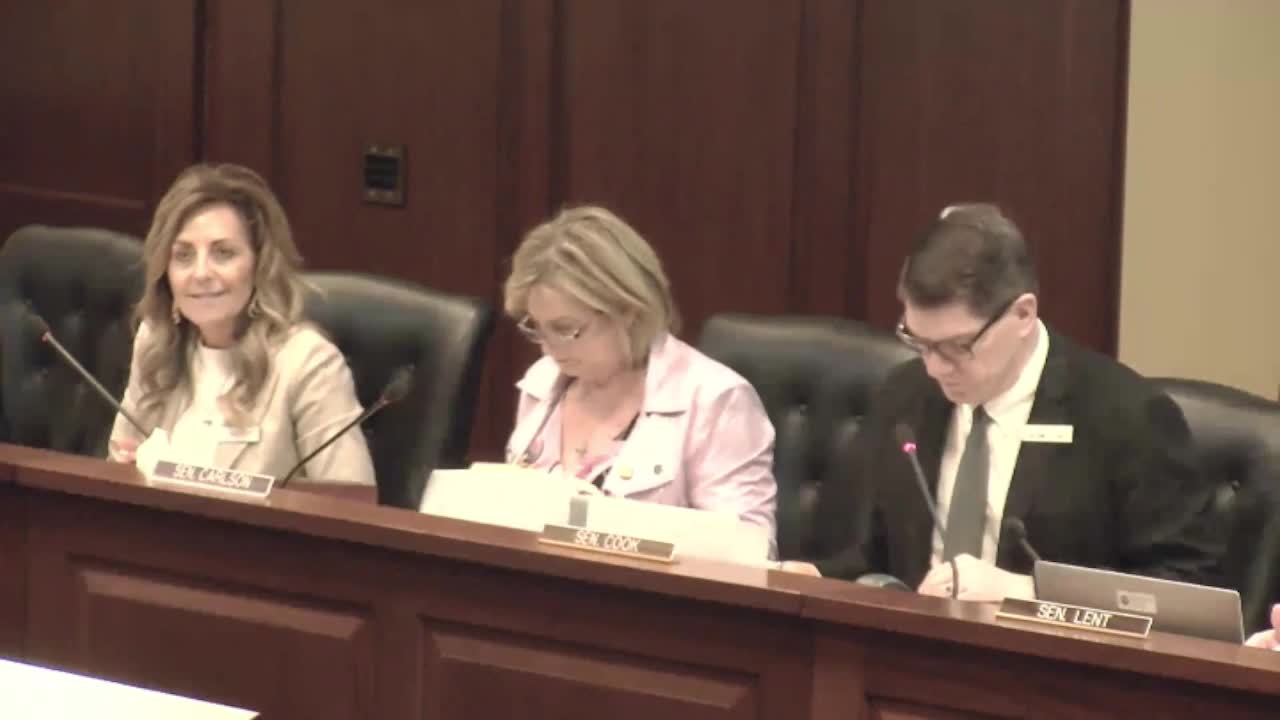
The Senate Education Committee heard a detailed presentation from Greg Wilson, chief of staff at the Idaho State Department of Education, on several administrative dockets that update content standards, the Special Education Manual, and statewide high-school graduation requirements.
Wilson said the department used the state board of education’s process to review and recommend updates to the Idaho content standards reviewed in 2024, including arts and humanities, computer science, driver education, information and communication technology, and social studies. “The department's task is to review, is to facilitate the review process and make recommendations to the board,” Wilson told the committee.
He described a multi-stage review that began in 2023 with committees of educators and stakeholders, multiple drafts, regional outreach and State Board approval in June and November 2024. The temporary rules incorporate the approved standards by reference to ensure continuity for teachers while the formal rule-adoption process proceeds.
On special education, Wilson said the department revised its Special Education Manual after a December 2023 letter from the U.S. Office of Special Education Programs (OSEP) found some eligibility criteria noncompliant with the Individuals with Disabilities Education Act. He said the department used a temporary rule to put the manual into effect so schools would begin the year in compliance.
Wilson then outlined proposed changes to statewide graduation rules, which the department said preserve the statewide minimum of 46 credits but increase flexibility: districts could award core credit for aligned CTE or work-based learning; technical competency credits would be replaced by microcredentials; and the existing senior project would transition to a “future readiness” project that requires an experiential component (work-based, service-based, research-based, or portfolio-based experience). Wilson described the future readiness project as a culminating experience “demonstrating a student's application of the college and career competencies.”
One notable substantive change is a proposed 1-credit digital literacy graduation requirement for the class of 2028 to teach computer science concepts, internet safety, digital citizenship and issues such as algorithms and generative AI. “Digital literacy empowers students to adapt to rapid changes, including learning and relearning roles, technology and equipment,” Wilson said. He described the department’s draft content standards and a stakeholder process for a model course and said the department would support districts in implementation.
Committee members asked multiple questions. Several raised concerns about removing a standalone communications/speech credit, worried that rural districts could lose in-person speech instruction if the communications requirement is subsumed into English language arts or offered online through the Idaho Digital Learning Academy (IDLA). Wilson said communications standards remain embedded in English language arts and that districts that offer standalone speech courses could continue to do so as electives. He emphasized the department’s goal to avoid adding a new mandatory statewide credit beyond the proposed digital literacy credit.
Other discussion items included the removal of a laboratory specification from the science requirements (Wilson said the requirement was editorially unnecessary), proposed localized pathways that districts would develop (a minimum of two) to align coursework with postsecondary or career goals, and the timeline for implementation. Many changes were described as applying to the graduating class of 2028.
Public comment followed. Sam Lair of the Idaho Freedom Foundation’s Center for American Education criticized the proposed social studies standards and urged the committee to reject the State Department of Education’s rulemaking for social studies, saying the standards prioritize “diversity over cultivating civic virtue” and that language in some standards echoes what he characterized as post-colonial frameworks. Wilson had no immediate rebuttal during the public comment period but stated earlier that the department had solicited feedback and responded to written concerns.
At the meeting’s end the committee took two final roll-call/voice motions to adopt specific dockets. Senator Summeral (mover) and Senator Sessions (second) moved to approve docket 08-0113-2401; the committee approved by voice vote. Senator Summeral then moved to approve docket 08-0201-2401, seconded by Chairman Lent, and the committee approved that docket as well. The transcript records voice approval on those dockets without a named recorded tally.
Wilson and committee members said they will provide links and written responses to earlier letters about standards and continue outreach ahead of formal rule adoption and any legislative review required.