Get Full Government Meeting Transcripts, Videos, & Alerts Forever!
Get email alerts on the Education School Choice topic
No spam. Unsubscribe anytime.
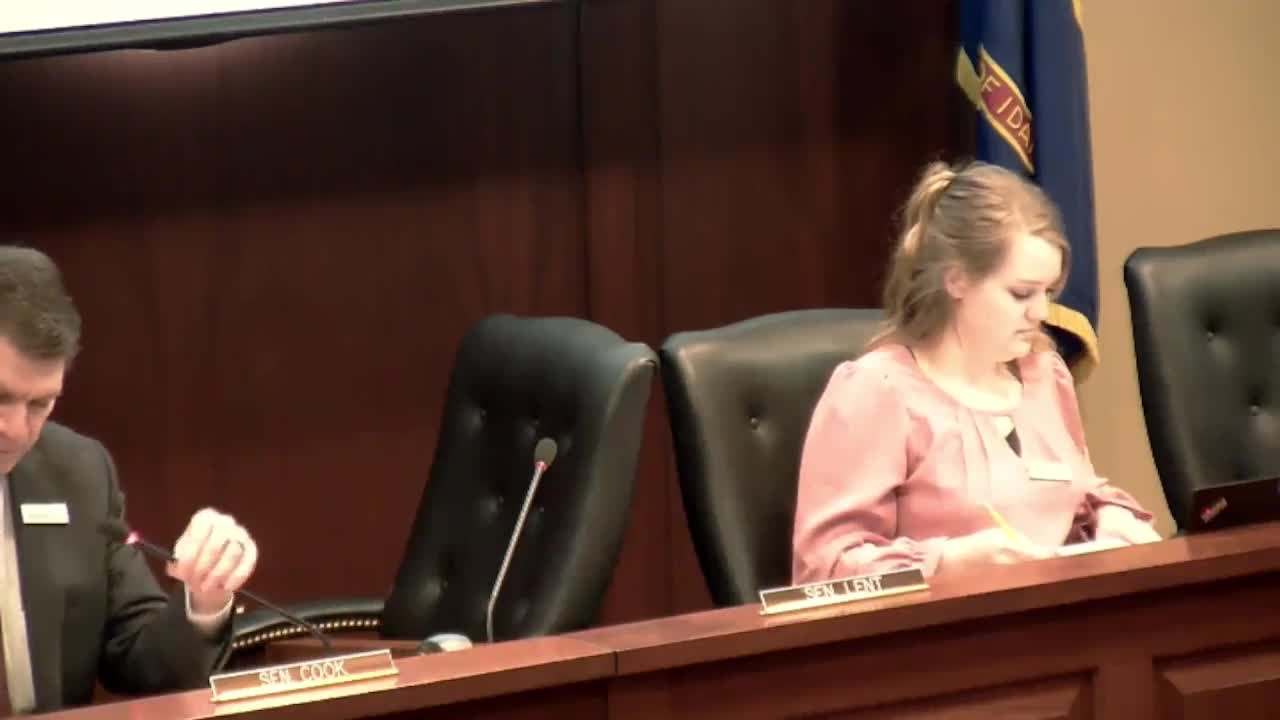
Senate Education Committee votes to print school-choice bill RS 31992 after policy debate
Summary
The Senate Education Committee voted to send RS 31992 to print for drafting after members debated accountability, funding caps and open-enrollment changes. Sponsors described the plan as expanding parental choice while opponents called it a voucher bill.
The Senate Education Committee voted to print RS 31992, a proposed school-choice measure that would add $50 million in new state funding to a program already carrying $30 million and create a set of accountability and open-enrollment changes, senators said during a committee meeting.
Senator Dave Lynn, who introduced RS 31992 to the committee, framed the proposal as an attempt to expand parental choice while building guardrails and accountability. “Choice is very important,” Lynn said, and described the bill’s objectives as “fair, accountable, responsible, and transparent.” He told senators the measure would cap new funds at $50,000,000 while utilizing the existing $30,000,000 in the Empowering Parents program, producing an $80,000,000 total pool in his description of the plan.
The bill’s sponsor and presenters said the draft would: establish accountability thresholds for private and religious schools that receive public dollars; allow tuition use under “significant guardrails”; target the majority of funds to households with adjusted gross income at or below $80,000; reduce state reporting requirements that are not federally required; and refine open-enrollment rules to manage district special-education capacity.
Supporters said printing the bill would allow lawmakers and the public to see the full mechanics and to define the meanings of “fair,” “accountable,” “responsible” and “transparent.” Senator Summerer said he would vote to print the bill for that reason: “In order for us as a legislative body to get closer to, agreeing on what we want fair, accountable, responsible, and transparent to look like, this is our starting point. So I will be supporting this bill.”
Opponents cautioned that the measure resembled a voucher plan. Senator Ward Engelking said, “this, at this point, looks like a voucher bill to me and that’s just a line in the sand for me, so I’ll be voting no.” The motion to print passed by voice vote; committee staff recorded individual requests to be recorded for the roll at the clerk’s discretion.
Committee members stressed the vote to print should not be read as support for final passage. Several senators asked that the printed bill come back with detailed mechanics for public review and committee deliberation.
Votes at a glance
- Motion to approve minutes of Jan. 16, 2024: moved and seconded, approved by voice vote; no roll-call tally recorded in the transcript. - Motion to print RS 31992 (school-choice bill): moved by Senator Woodward, seconded by Senator Burton Shaw; passed by voice vote after discussion. Senator Ward Engelking registered a “no” vote on the record; Senator Summerer registered a “yes” vote on the record. (The transcript does not include a full roll-call tally.)
What happens next
By committee practice, printing RS 31992 sends the measure to drafting so the Legislature and the public can review detailed statutory language. Committee members asked for a subsequent public hearing to examine the bill’s mechanics, fiscal impacts and special-education implications before any further committee action.