Get Full Government Meeting Transcripts, Videos, & Alerts Forever!
Get email alerts on the Dental Compact topic
No spam. Unsubscribe anytime.
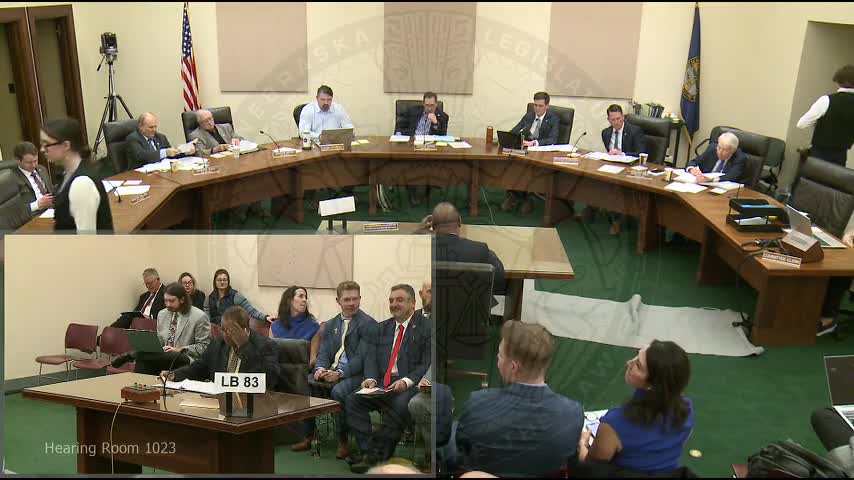
Committee hears LB83 to join dental compact as part of strategy to expand access and ease licensure
Summary
Senator Victor Rountree told the committee LB 83 would let dentists and dental hygienists who hold active unencumbered licenses in compact states obtain practice privileges in Nebraska through an interstate compact.
Senator Victor Rountree introduced LB 83 to have Nebraska join the Dentist and Dental Hygienist Compact, telling the HHS Committee the compact "would allow a licensed dentist or dental hygienist who wishes to move into a member state to use their existing license as proof that they are qualified to receive a license in the new state."
Amy Behnke, CEO of the Health Center Association of Nebraska, said dental workforce shortages prevent community health centers from expanding dental services and that mobile units and new clinic sites are idle because centers cannot hire providers. She said joining the compact "is a critical component" to recruit and staff clinics in underserved communities.
Jessica Meeske, president of the Nebraska Dental Association, said 10 states already have joined the compact and 17 more are considering it. She said the compact is "pro business and pro access," and would support multi‑state practice, military spouses, and reduce the burden of maintaining multiple licenses. Creighton and UNMC dental school representatives said the compact and related statutory updates make Nebraska more competitive in recruiting graduates and faculty.
Student witnesses described burdens when graduates take different clinical licensure exams and the financial cost of multiple exams; a third‑year student said the compact and reciprocity changes would ease a path for new graduates to remain and practice in Nebraska. Several committee members asked about crossover with recent state action on universal recognition of out‑of‑state licenses (LB16) and about compact fees and governance; neutral testimony earlier in the session noted LB16 reduced some need for compacts but also highlighted that compacts create a formal interstate governance body that states must follow. No formal committee action or vote was recorded in the hearing.