Get Full Government Meeting Transcripts, Videos, & Alerts Forever!
Get email alerts on the Electrical Board Nec 2023 topic
No spam. Unsubscribe anytime.
Senate committee approves Idaho Electrical Board's NEC 2023-based rules, sets early effective date and holds companion docket
Summary
The Senate Commerce and Human Resources Committee on Jan. 21, 2025 approved Docket 24-3910-2402 to align Idaho’s rules with the 2023 National Electrical Code while maintaining exemptions and creating a new residential electrician license.
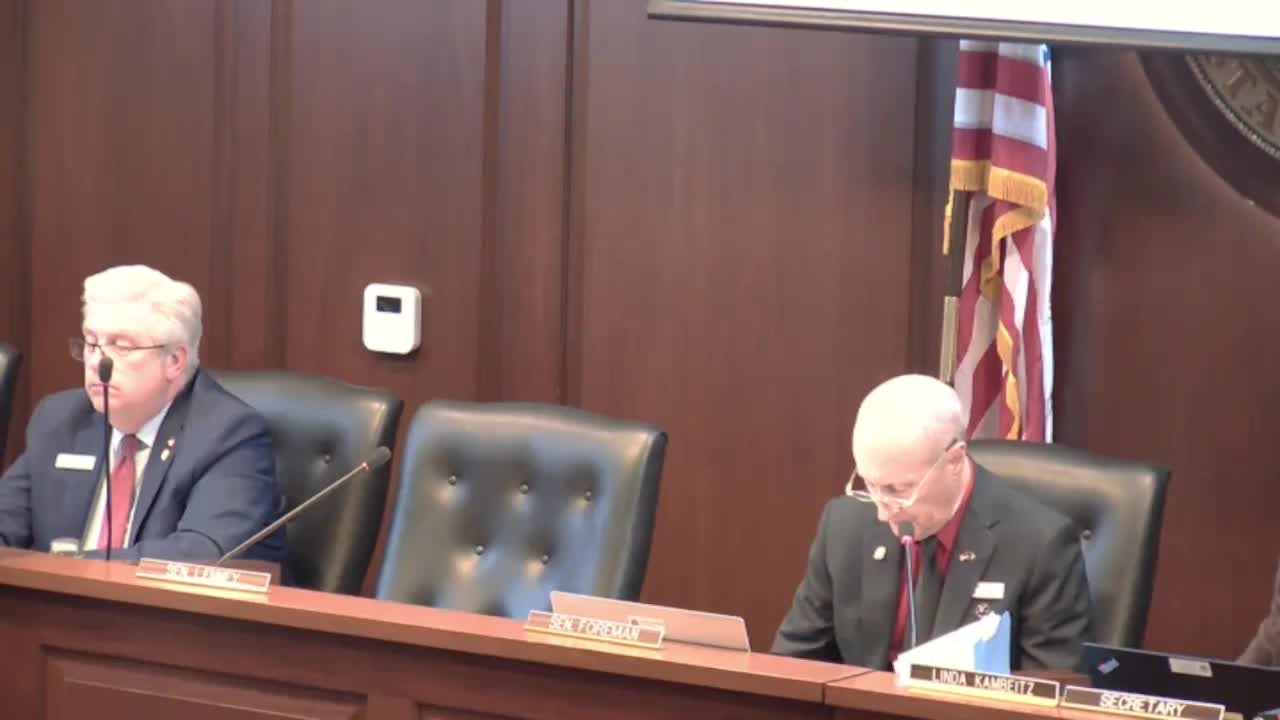
The Senate Commerce and Human Resources Committee on Jan. 21, 2025 approved Docket 24-3910-2402, the Idaho Electrical Board’s rules implementing provisions tied to the 2023 National Electrical Code (NEC), and approved making the rules effective upon sine die. The committee also voted to hold a companion docket, 24-3910-2401, subject to the call of the chair.
Amy Lorenzo, bureau chief for the Building Construction and Real Estate Bureau and executive officer for the Idaho State Electrical Board, told the committee the agency conducted extensive negotiated rulemaking and outreach. "We held a total of 8 public hearings. We met in Pocatello, Rexburg, Twin Falls, Boise, Moscow, and Coeur d'Alene," Lorenzo said, adding the agency met with "over a 100 stakeholders" and identified "at least 75 unique stakeholders," including contractors, inspectors, apprentices and industry associations.
Key changes Lorenzo highlighted include the creation of a residential electrician license and a framework for that license (a two-year approved program plus 4,000 work hours), clarified supervision limits if a residential electrician acts as a supervising electrician, and a separate license type for well driller vs. pump installer with a distinct exam. The rules also revise provisions on GFCI (ground-fault circuit interrupter) and AFCI (arc-fault circuit interrupter) exemptions, provide an allowance to install outlets on islands and peninsulas consistent with 2017 practice rather than the more restrictive 2023 NEC approach, and make surge protection and emergency disconnects allowable but not required in residential settings.
On solar installations Lorenzo said the rules clarify rapid-shutdown language and distinguish between a "building" and a "structure" so that standalone solar structures without other building uses are not inadvertently brought under unrelated building-code requirements.
Stakeholder testimony was supportive. Ken Burgess of Veritas Advisors testified on behalf of the Idaho Home Builders Association, saying the association participated in the negotiated rulemaking and supported the presented rules. Jeff Fitzloff, representing Independent Electrical Contractors, said the industry participated in the negotiation and "support the rules as presented."
Committee action: Senator Lakey moved to approve Docket 24-3910-2402 and later made a separate motion to set the rules to become effective upon sine die; both motions were seconded and carried. The committee then approved a motion to hold Docket 24-3910-2401 in committee subject to the call of the chair; that motion was seconded and carried.
Why it matters: The rules define licensure pathways and technical exemptions that directly affect electricians, contractors, home builders and inspectors. The residential electrician license creates a shorter pathway (two-year program plus 4,000 hours) intended for one- and two-family residential work and multifamily dwellings up to three stories; supervision and scope limits are intended to restrict residential electricians from supervising work outside that scope.
Ending: With committee approval and the motion to make the docket effective upon sine die, the board’s updated NEC-linked rules move toward implementation. The companion docket remains held for further consideration by the committee.