Get Full Government Meeting Transcripts, Videos, & Alerts Forever!
Get email alerts on the Newborn Screening topic
No spam. Unsubscribe anytime.
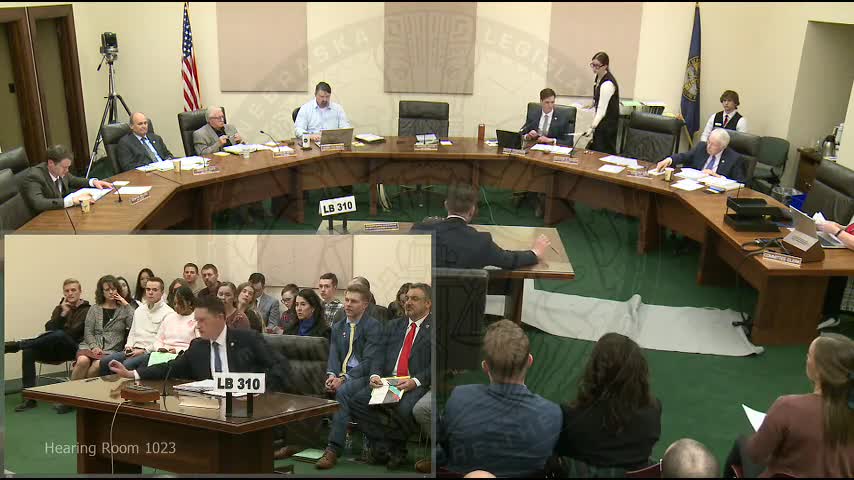
Committee hears hours-long debate over LB310, a bill to allow parents to opt out of Nebraska newborn screening
Summary
Ben Hansen, a state senator and introducer of LB 310, told the Health and Human Services Committee the bill would add an opt‑out for parents who proactively decline newborn screening and that "47 other states acknowledge that parents have a right to object to newborn screening."
Ben Hansen, a state senator and introducer of LB 310, told the Health and Human Services Committee the bill would add an opt‑out for parents who proactively decline newborn screening and that "47 other states acknowledge that parents have a right to object to newborn screening." He said the bill preserves routine screening for parents who do not opt out and that his amendment (AM 79) would require a written refusal form and information for parents before they decline.
The bill drew a lengthy public record of personal testimony and expert opposition. Supporters, including multiple parents and home‑birth advocates, urged the panel to protect parental authority over medical decisions. Novelin Shipman, a proponent, said, "This is my child... I would ask that the state... allow me to make the best decision for my child." Alexis Stangel testified she was threatened with child‑welfare action after being told the state would "turn me into the state for child neglect" when she could not find an affordable facility for the test.
Medical witnesses and public‑health officials urged the committee not to adopt the change. Dr. Anne Andersonberry, medical director of the Nebraska Perinatal Quality Improvement Collaborative and a neonatologist, said Nebraska's newborn screening program "has been designed by state DHHS and Nebraska health care professionals based on evidence and supported for decades by our legislature to protect newborns by early identification and intervention of illnesses that would otherwise be devastating or even deadly." Dr. Timothy Tesmer, chief medical officer, Division of Public Health, Nebraska Department of Health and Human Services, testified the state destroys blood spots after 90 days to protect privacy and that "timely detection of genetic, metabolic, and endocrine disorders enable swift medical intervention, often preventing or minimizing the development of severe symptoms and complications or death." He also said the Department receives $20 of the current $87.65 screening fee to support specialized medical nutrition therapy.
Proponents repeatedly emphasized parental‑rights and informed‑refusal themes and cited cases and personal experiences involving home births, alleged threats from DHHS, and out‑of‑pocket costs for the test, with several witnesses reporting hospital bills in the hundreds to thousands of dollars. Several witnesses and the introducer cited prevalence figures to show rarity: the introducer said that, by his review, "in 2022, 67 out of 24,609 births tested positive," and multiple proponents used a widely cited figure of "0.2%" testing positive for one of the conditions screened. Medical witnesses noted different ways to count positives and that when hemoglobinopathies are included the percent with abnormal screens is higher (about 2% in 2021, per testimony).
Committee members asked about logistics of implementation, enforcement, and the fiscal note. Senator John Fredericksen, vice chair, and others asked whether a refusal form would address DHHS recordkeeping and liability concerns; the introducer said AM 79 was intended to create a hospital‑maintained refusal record. Senators also pressed clinicians on whether parent testing could replace newborn testing; Dr. Andersonberry and Dr. Tesmer said parental testing would not substitute for newborn screening because many screened conditions are metabolic or de novo and must be assessed in the newborn.
No formal committee action or vote on LB310 was recorded in the hearing. Discussion included: how the law treats blood specimens and whether DHHS may use specimens for research; cost and billing practices at hospitals versus state screening fees; the 48‑hour collection requirement; reported incidents where families said the state threatened child‑welfare action if screening was not done; and whether written informed‑refusal materials plus a hospital refusal form would address DHHS enforcement and reporting concerns. Proponents asked the committee to advance the bill; opponents urged retaining the mandatory program to protect infants from delayed diagnoses.
The hearing covered public‑comment testimony from more than two dozen proponents and a comparable number of medical and family witnesses opposed. Committee members asked for data and clarifications; several witnesses said more up‑to‑date program statistics beyond 2021 were not immediately available in the hearing. The hearing ended without a committee decision on LB310; the committee recorded online positions (120 proponents, 69 opponents, 1 neutral) during the hearing period.