Get Full Government Meeting Transcripts, Videos, & Alerts Forever!
Get email alerts on the Parkland Trust Grants topic
No spam. Unsubscribe anytime.
Bozeman staff propose $220,000 community grant program to fund park capital projects
Summary
Park Planning and Development Manager Addie Jaden presented a proposed competitive Community Grant Program that would use $220,000 in cash‑in‑lieu parkland funds to finance capital improvements in city parks, with staff pre‑screening, board scoring and director approval; applications would prioritize equity, low‑service areas and PRAT plan goals.
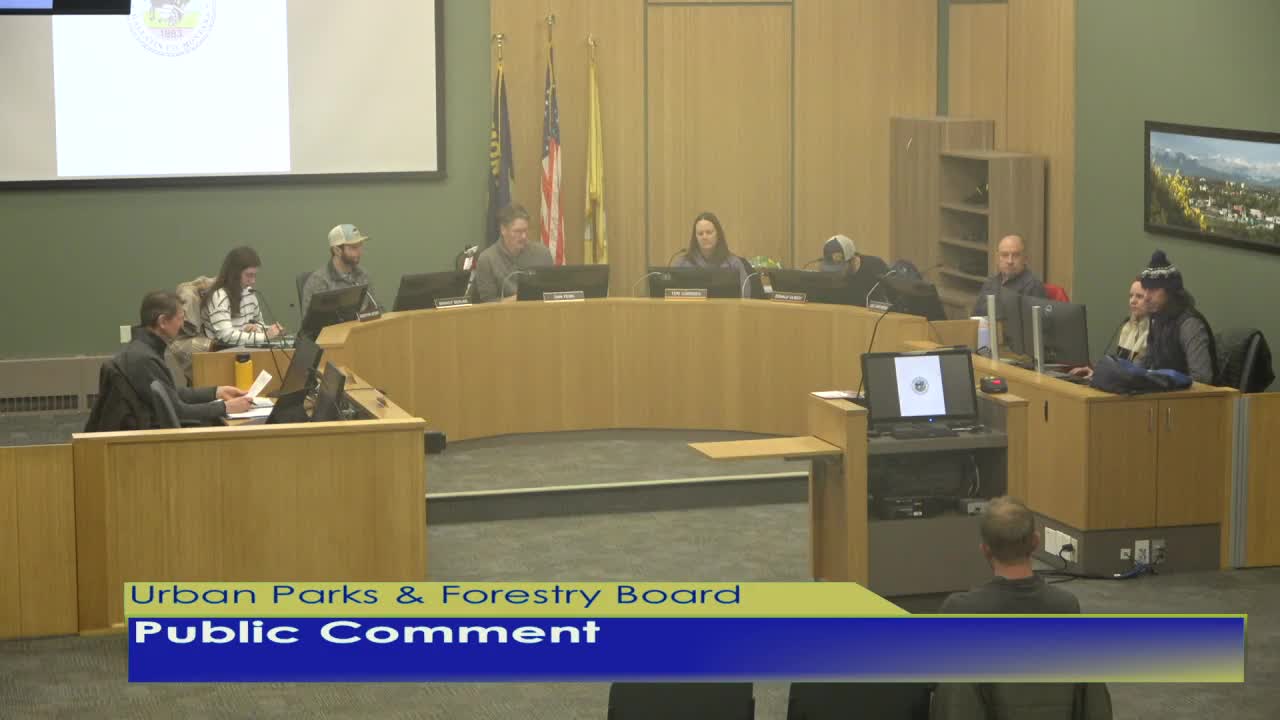
Park Planning and Development Manager Addie Jaden told the Urban Parks and Forestry Board on Jan. 23 that staff will launch a formal Community Grant Program using $220,000 set aside in the capital plan to fund capital improvements in city parks.
Jaden said the money comes from cash in lieu of parkland given by developers and that the funds must be used for capital work — “actual physical trails or bridges or playgrounds or tree planting. We can't use it to say, you know, Hey, our group wants to come in and run a soccer club in this park,” she said. The program is intended to operationalize priorities in the city’s PRAT plan and to direct projects to neighborhoods with lower levels of park service.
The board heard that city staff proposes an application and scoring process with eight criteria. The first three would be an internal, staff‑level review for basic eligibility and feasibility (theme alignment, maintenance implications, fit for the park type). Criteria four through eight would be scored by the board. Staff would collect individual board scores for tallying and would remove names during the scoring process. Staff will provide guidance statements describing what merits high or low points to improve consistency across reviewers.
Jaden summarized schedule and constraints: the $220,000 allocation was approved in the capital plan and is expected to be spent by the end of June but city staff can carry funds forward into subsequent fiscal years. She told the board she plans to return with a formal draft in February, open a two‑month application window (tentatively March–April), and bring scored applications to the board for recommendation in May. Because the cash‑in‑lieu funds are geographically tied to where the development originated, staff will require applicants to consult with staff early to confirm a project's eligibility and location. “There are some restrictions on where the funding can be spent, and applicants are encouraged to contact me,” Jaden said.
Board members asked how awards would be sized and whether multiple awards would be possible. Staff said multiple awards and partial awards are expected; there is not yet a fixed ceiling on individual requests. The board discussed encouraging partnerships between neighborhood groups and experienced nonprofits to reduce the administrative burden on volunteer applicants and to improve project feasibility. Jaden said grant agreements would document responsibilities and that the department may purchase materials for volunteer‑led projects while contracting more complex work to vendors.
On maintenance, members confirmed that long‑term upkeep of completed capital improvements generally shifts to the Parks & Recreation operations budget after project completion; some applications may include short‑term maintenance commitments from applicant groups. Staff also clarified that cash‑in‑lieu funds may be used, under state law, for limited maintenance periods tied to capital work (for example, three years of establishment care for plantings).
Public comment emphasized partnering with nonprofit ecological stewards and streamlining applications. Lily McClain, restoration director for the Gallatin Watershed Council, urged the board to keep natural‑resource priorities and to limit application/reporting burden for nonprofits. “The more we can streamline the application and the reporting process, the further that money can go for the real impact on the ground,” McClain said.
Next steps: staff will revise the draft application and scoring language based on tonight’s feedback, return with a formal proposal for board approval next month, and begin outreach once the board and parks director authorize the program.
Votes at the meeting did not decide grant awards; program design and a recommended schedule will return for formal action.