Get Full Government Meeting Transcripts, Videos, & Alerts Forever!
Get email alerts on the Sports Facility Turnback topic
No spam. Unsubscribe anytime.
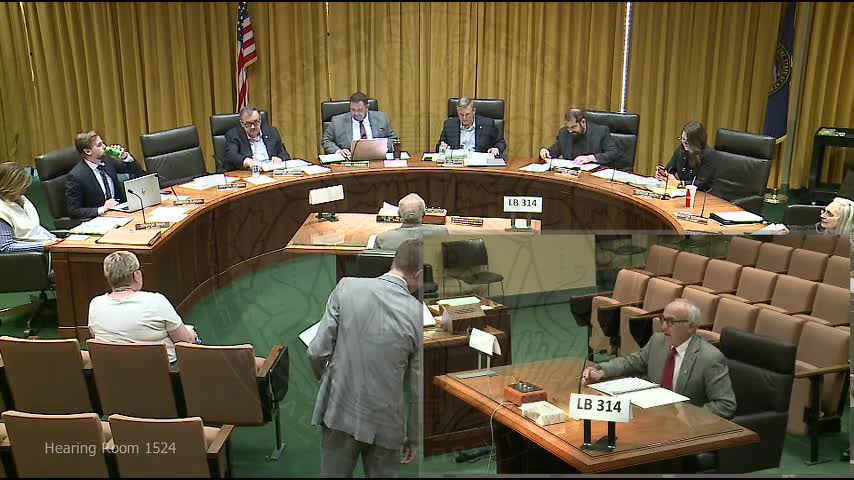
Committee hears cleanup bill to clarify sports facility "turn back" process and lease terms
Summary
Senator Tony Sorrentino presented LB 314 to clarify when public/private co-applicants may seek turn back sales-tax funds for sports facilities and to cap lease terms at 20 years; proponents said improved clarity would help development and cited sizable local economic impacts from youth sports events.
Senator Tony Sorrentino told the Revenue Committee that LB 314 is a cleanup bill to clarify provisions in the Sports Facility Financing Assistance Act that govern so-called "turn back" sales-tax districts for qualifying sports facilities. The bill would clarify when co-applicants — a political subdivision and a nonprofit organization — may apply for turn back funds, and would limit lease terms for public use of a privately owned sports facility to no more than 20 years.
Sorrentino described the application timeline and eligibility currently in law: the turn back zone measures increased sales tax revenue within 600 yards of a qualifying facility, comparing 24 months before construction to 48 months after completion. He said LB 314 would allow co-applicants to apply earlier once both applicants have approved a resolution to acquire, construct, equip or improve a facility, and would rescind approval if construction is not completed within 24 months. "If the co applicants are approved by the board, if the building is not completed within 24 months, the approval is rescinded," Sorrentino told the committee.
The bill also adds an explicit cap on the length of any lease for governmental use of the facility: no more than 20 years. Sorrentino said the original statute did not specify a lease period and the addition is intended as a reasonable limit.
Anthony Carrow, director of Nebraska League Volleyball, testified in support and described the potential economic impact of new indoor sports facilities. Carrow said Nebraska’s events draw teams and visitors from across the country and Canada and estimated the association’s Presidents’ Day Classic brings almost $10,000,000 in annual economic impact to Omaha; he said the organization turned away nearly 100 teams this year because of lack of space, representing an estimated $1,700,000 loss in 2025 economic impact.
Committee members asked clarifying questions about ownership, how turn back dollars can be used, and the practical effect of authorizing leases to private facilities. Sorrentino said the bill does not rewrite the statute’s core purposes but clarifies applicant order, timing, and the permitted uses of state assistance: leasing a facility for governmental use, promoting public sporting events, or repaying debt issued by a nonprofit co-applicant with voter approval.
No opponents testified in the hearing and Senator Sorrentino waived his closing remarks. The committee took no formal vote during the hearing; staff and the introducer left the committee with the option to refine language if members request further clarification on ownership thresholds or other technical details.