Get Full Government Meeting Transcripts, Videos, & Alerts Forever!
Get email alerts on the Workforce Training topic
No spam. Unsubscribe anytime.
Bill would allow earlier retest option for barber licensure after two failures; educators support, some owners urge caution
Summary
LB 160 would let barber applicants who have failed the state exam twice attempt a competency evaluation after 250 hours of remedial instruction instead of completing 500 hours before re‑testing. The barber board and school instructors told the committee the change addresses post‑COVID declines in written‑test performance; some school owners urged
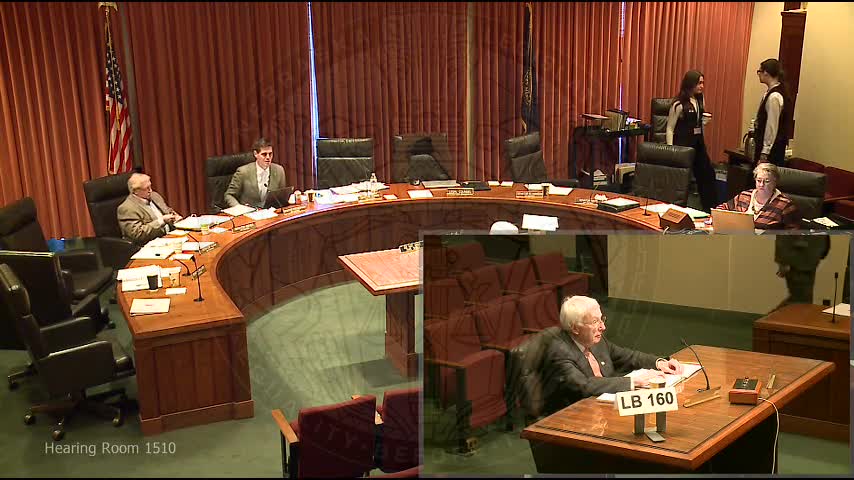
Senator Merv Riepe introduced LB 160, a technical change to Nebraska’s barber licensing statute that would let applicants who fail the licensing exam twice become eligible for an early competency evaluation after 250 hours of additional training (half of the statute’s current 500‑hour remedial requirement). If the applicant passes that evaluation, they may retake the exam without completing the remaining 250 hours; if they fail the evaluation, the statute still requires completion of the full 500 remedial hours before another attempt.
The nut graf: proponents argued the change gives capable students a faster path back to testing — addressing post‑pandemic declines in test performance and reducing unnecessary time and cost — while preserving the existing remedial hour requirement for candidates who do not demonstrate competency at the 250‑hour evaluation.
Ken Allen, director of the Nebraska Board of Barber Examiners, and Barber instructors from the College of Hair Design said written scores have fallen in recent years and that the proposed early evaluation would let students who have mastered practical skills but struggle with standardized written testing to move forward. "All of the applicants who have taken the additional training after failing the first two examinations have passed the next examination from the first track," Allen told the committee. Instructors said many students now require more focused classroom time due to learning disruptions during COVID and increased prevalence of learning differences.
School representatives testified they already offer rigorous remediation and would support an evaluation at 250 hours. Several instructors and program directors said the early evaluation would not lower standards because the full 500 hours remain required for those who do not demonstrate competency. Educators also noted the practical exam remains a key competency check and that written testing — not hands‑on skills — accounts for many recent failures.
Some school owners raised concerns in neutral testimony about limiting retake attempts and the potential cost burden of additional classroom hours when students must pay out of pocket: Zenon Academy’s director of education urged further study and suggested offering additional test attempts before requiring remedial hours in recognition of test‑anxiety and adult learning challenges.
Ending: Sponsor Riepe said he will work with stakeholders on clarifying language and implementation details. The committee did not take final action at the hearing; senators asked the board and schools for follow‑up information on pass rates and comparative state practices.