Get Full Government Meeting Transcripts, Videos, & Alerts Forever!
Get email alerts on the Prison Records Access topic
No spam. Unsubscribe anytime.
Bill to clarify inmate access to their records draws department concerns about safety and staff burden
Summary
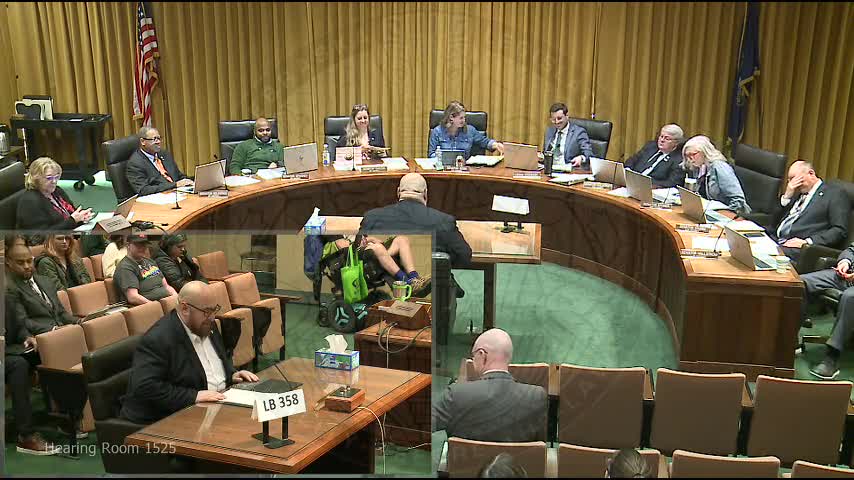
Lawmakers considered LB358, a bill to clarify that people incarcerated in Nebraska facilities can request access to their institutional file without a court order by submitting a written request to the facility chief executive.
Senator (introducer) introduced LB358, a bill to clarify that people incarcerated in Nebraska's correctional facilities may obtain their individual institutional file through a written request to the chief executive of the facility rather than requiring a court order.
Why it matters: Supporters say the bill removes a procedural roadblock that prevents incarcerated people from obtaining grievance records and other documents they need to pursue legal claims or reentry planning. Opponents, chiefly Department of Correctional Services director Rob Jeffreys, warned that unrestricted access to full institutional files could endanger inmates and staff by exposing security‑sensitive material.
Supporters’ case: Grant Friedman, staff attorney for the ACLU of Nebraska, told the committee the change fixes a “circular logic” problem: attorneys will not accept a prison‑conditions case unless they can see a detained person’s grievances; the detained person cannot access those grievances without a court order. He described problems with carbon copies of grievances that are illegible or retained by private attorneys, and noted some facilities are moving to digital grievance systems that sometimes do not provide inmates with paper copies.
Department and safety concerns: Rob Jeffreys, director of the Nebraska Department of Correctional Services, said individual files can contain sensitive material — investigative reports, security‑threat designations and witness statements — and making those files available on demand could create targets inside facilities and invite retaliation against staff or other inmates. He also said implementation could strain staffing and resources.
Committee discussion and possible refinement: Senators and testifiers discussed whether the bill should be narrowed to require access only to grievances and grievance responses rather than the entire institutional file. The department described a recent rollout of electronic grievance tablets and said the system produces timestamps and digital copies, but questions remained about whether the tablets provide consolidated access to an inmate’s full grievance history prior to release.
Next steps: Committee members suggested working with the department on targeted amendments — for example, clarifying which documents are available and whether redactions are allowed — and indicated willingness to consider a narrower approach to address the circular‑access problem without creating security risks.