Get Full Government Meeting Transcripts, Videos, & Alerts Forever!
Get email alerts on the Clean Slate topic
No spam. Unsubscribe anytime.
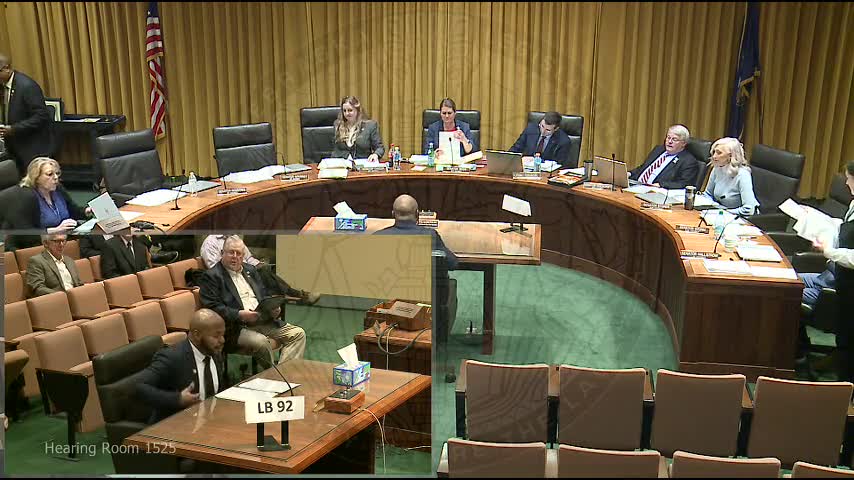
Bill to seal certain eviction records (LB92) draws strong support and opposition on housing equity and landlord risk
Summary
Sen. Terrell McKinney introduced LB92 to create a "clean slate" pathway to seal eviction records for dismissed, vacated or pandemic-era evictions and to permit petitions after a three-year period; proponents said it reduces barriers to housing and homelessness; landlords warned it would hide risk and increase costs.
Lincoln — Sen. Terrell McKinney introduced LB92, the Residential Tenant Clean Slate Act, asking the Judiciary Committee to allow petitions or automatic sealing of certain eviction records to reduce long-term barriers caused by filings and to provide routes back into housing markets.
"LB 92 provides a sensible, compassionate solution to this injustice," McKinney said, framing the bill as a means to restore opportunity for tenants whose lives changed after eviction filings or judgments.
Nut Graf: Supporters emphasized that eviction filings and even dismissed actions can remain available to landlords and third-party tenant-screening companies and can block housing access for years. Groups including Legal Aid Nebraska, the Women's Fund of Omaha, Nebraska Appleseed, the ACLU and domestic-violence advocates argued LB92 would reduce homelessness and promote housing stability. Opponents, including property-owner associations and apartment managers, warned that sealing records would make it harder for landlords to evaluate rental risk, that consumer-screening data use varies, and that broad sealing could encourage repeated abuses.
Proponents described multiple mechanisms in LB92: automatic sealing of records tied to the COVID-19 emergency period; petition-based sealing for dismissed, vacated, reversed judgments or other defined circumstances; and a three-year petition option for older judgments. Legal Aid and housing clinics detailed how even dismissed filings appear in tenant-screening products and lead to denials despite later reversals. "There are currently no viable mechanisms under Nebraska law to remove eviction filings from public view," said Rachel Tomlinson of the University of Nebraska College of Law's Housing Justice Clinic.
Opponents focused on landlord risk and practical landlord safeguards: property managers, mom-and-pop landlords and trade groups asked for limits to prevent concealment of violent or high-risk conduct, suggested programmatic protections such as tenant education or evidence of sustained positive tenancy, and requested a centralized, standard reporting mechanism so background-check firms can update their databases accurately when a court seals a record. The Consumer Data Industry Association urged the committee to require standard-format court orders and a monthly centralized list of court sealing orders so consumer-reporting companies can reliably update records.
Ending: The hearing was long and contentious. Senators asked about procedural safeguards including narrow eligibility categories, notice to prior landlords, and a process that preserves landlords' access to information on violent or dangerous incidents while giving low-risk tenants a clear path to relief. Sponsors and many opponents said they were open to technical changes; the bill remained in committee.