Get Full Government Meeting Transcripts, Videos, & Alerts Forever!
Get email alerts on the Execution Methods topic
No spam. Unsubscribe anytime.
Debate over nitrogen hypoxia in LB432: introducer says method is painless; opponents cite Alabama execution
Summary
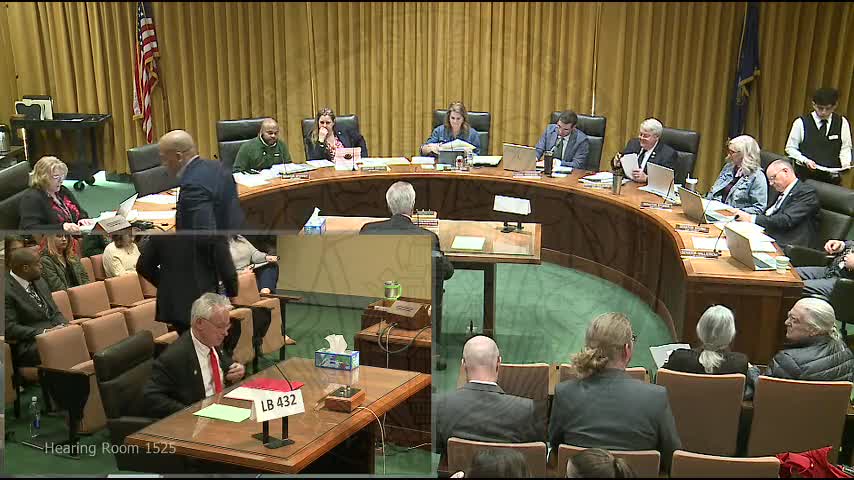
Senator Loren Lippincott introduced LB432 to the Judiciary Committee, proposing nitrogen hypoxia as an authorized method of execution and calling it “painless, peaceful and plentiful.”
Senator Loren Lippincott, sponsor of Legislative Bill 432, told the Judiciary Committee the bill would add nitrogen hypoxia to the list of allowable methods of execution in Nebraska, describing the technique as “painless” and “peaceful.”
Nut graf: Supporters framed LB432 as a humane, practical alternative to lethal injection when drug shortages arise; opponents responded with eyewitness accounts and institutional objections and urged the committee not to authorize an untested or ethically fraught method.
What the sponsor said: Lippincott, who described his experience as an Air Force pilot during testimony, said hypoxia causes loss of consciousness quickly and observed that nitrogen is abundant. “Nitrogen is painless. It is peaceful, and it's plentiful,” he told the committee, and he cited the Alabama attorney general's letter regarding a January 2024 execution that used nitrogen.
Opponents’ central points: Jason Whitmer of ACLU Nebraska recounted witness descriptions from Alabama’s 2024 execution of Kenneth Smith and said the episode was “anything but peaceful,” quoting a spiritual adviser who described minutes of struggle and visible distress. Other opponents — correctional practitioners, veterans’ groups, clergy and the Nebraska Nurses Association — warned of ethical and professional prohibitions, noted the death penalty’s broader injustices, and raised legal risks under recent US Supreme Court rulings (testimony referenced Ramirez v. Collier, 2022, in the context of chaplain access at executions).
Technical and procedural concerns: Critics said the Alabama execution lasted substantially longer than proponents described and produced movements and evidence witnesses characterized as distressing; some correctional groups noted a 22‑minute window reported in news accounts and described staff surprise at the outcome. The Nebraska Department of Corrections and nursing organizations warned the bill could require medical and corrections personnel to participate in procedures that violate professional ethics.
Committee questions and follow‑up: Senators asked about the medical evidence for painlessness and cited published accounts and the Alabama attorney general's report; Lippincott referred the committee to that attorney‑general letter and to pilot training experience on hypoxia. Opponents urged the committee to review the Alabama record and professional‑association guidance before advancing the bill.
Next steps: The bill remains under committee consideration; the hearing closed with committee members noting written comments and witness statements on both sides.