Get Full Government Meeting Transcripts, Videos, & Alerts Forever!
Get email alerts on the Electronic Notice topic
No spam. Unsubscribe anytime.
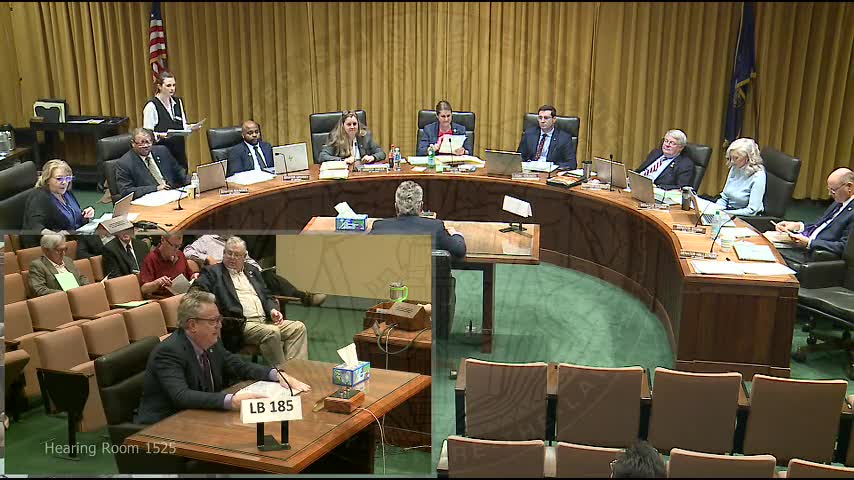
Judiciary committee hears bipartisan support for electronic landlord-tenant notices (LB185)
Summary
Sen. Dover's LB185 would allow tenants to opt in to receive statutory landlord-tenant notices electronically; proponents said it would modernize communications and reduce missed notices, while some managers urged streamlined opt-in/out procedures to reduce administrative friction.
Lincoln — Sen. Dover introduced LB185 to allow tenants to opt in (and later opt out) to receive statutorily required landlord-tenant notices electronically, mirroring earlier statutory language used elsewhere in state law.
"My bill simply allows for a tenant to opt in, or, and opt out, opt in, opt out, whenever they want to, to use electronic notification," the senator said, adding clarifying amendments to ensure there would be no penalty if a tenant withdrew consent.
Nut Graf: Landlord associations, property managers and tenant-advocacy groups generally supported the modernization: proponents said e-mail and text notices better match everyday communication and avoid unreliable postal delivery. Several managers and larger property handlers urged the committee to simplify the opt-in tracking and to default to first-class mail when delivery receipts are not available.
Representatives of the Statewide Property Owners Association and apartment managers said the change would match current practice and cited the insurance-industry precedent where similar authorization is in use. "We believe it would work just as well for our industry," Lynn Fisher said. Opponents were limited; a neutral witness, Paula Gardner of the Nebraska Equal Opportunity Commission, said the change would expand the commission's jurisdiction and asked clarifying language.
Ending: Committee members and stakeholders agreed to follow up on operational details such as delivery receipts and junk-mail handling; the bill drew broad support and was viewed as amenable to narrowly tailored amendments.