Get Full Government Meeting Transcripts, Videos, & Alerts Forever!
Get email alerts on the Patient Rights topic
No spam. Unsubscribe anytime.
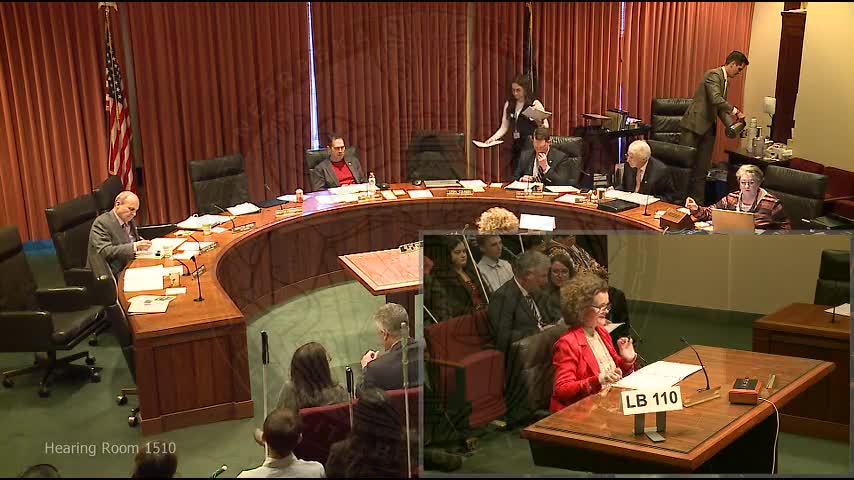
Committee hears bill to require informed consent before intimate exams on unconscious or anesthetized patients
Summary
LB 110 would require informed consent before manual or internal pelvic, breast, prostate or rectal examinations on unconscious or anesthetized patients, with emergency exceptions; the bill drew broad support from advocates and some health‑care witnesses.
Senator Jana Hughes introduced LB 110 to the Health and Human Services Committee, asking that Nebraska require informed consent before health care providers perform manual or internal pelvic, breast, prostate or rectal examinations on unconscious or anesthetized patients.
Hughes said the proposal is preventive: "I would like to state for the record that I've looked into this and I've now found no evidence that this has happened in our hospitals or care facilities here in Nebraska. That being said, if we can address this before it happens, prevent miscommunication or worse, then we should do that." The bill, as amended, would expand the consent requirement beyond pelvic exams to other intimate examinations and would allow exceptions for emergency care, court‑ordered evidence collection, and consent by someone with health care power of attorney.
Nut graf: proponents framed LB 110 as a patient‑protection and survivor‑safety measure that codifies guidance already issued to teaching hospitals; supporters asked the Legislature to make informed consent explicit statewide and to adopt an amendment expanding covered exams.
Medical and advocacy proponents told the committee that nonconsensual sensitive exams have occurred elsewhere and that codifying consent reduces the risk of retraumatizing survivors of sexual violence. Dr. Erin Feichtinger of the Women's Fund of Omaha said professional medical groups have long endorsed the practice: "Examinations on an anesthetized woman that offer her no personal benefit and are performed solely for teaching purposes should be performed only with her specific informed consent," she said, citing guidance from the American College of Obstetricians and Gynecologists. Researcher Sophia Stockham summarized published findings and federal guidance, noting the U.S. Department of Health and Human Services issued guidance in April 2024 affecting teaching hospitals that receive Medicare/Medicaid funds.
Sponsor Hughes said LB 110 imposes no criminal penalty; it creates professional discipline as the enforcement mechanism and allows the possibility of informed consent being provided in an appropriate documented form. She also told committee members she has received suggested language changes, and that AM 63 would define "intimate examinations" to include breast, prostate and rectal exams and to exclude visual‑only inspection.
Committee members raised scenarios and sought assurances the bill would not impede emergency care. Senator Ben Hansen and others pressed whether a written signature was required; Hughes said she would work with the committee and stakeholders and was open to alternatives such as documented informed consent consistent with clinical practice. Several witnesses noted that hospitals in Nebraska already require consent in obstetric contexts: witnesses said Nebraska Medicine implemented written consent for such exams in 2021.
Ending: After extensive testimony from survivors, clinicians, and researchers, the committee left the record open for further drafting and indicated potential placement of the bill within the Uniform Credentialing Act to reflect professional‑discipline enforcement. Senator Hughes said she would remain engaged to refine the language and exceptions with stakeholders.