Get Full Government Meeting Transcripts, Videos, & Alerts Forever!
Get email alerts on the Death Penalty topic
No spam. Unsubscribe anytime.
Sen. McKinney, supporters ask Nebraska voters to abolish death penalty
Summary
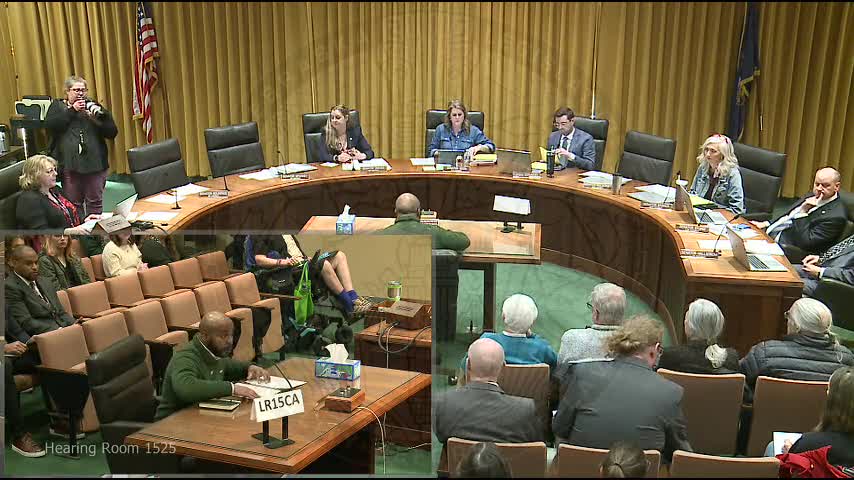
Senator Terrell McKinney, who represents District 11 in North Omaha, opened a Judiciary Committee hearing on LR15CA, a proposed constitutional amendment that would abolish the death penalty in Nebraska.
Senator Terrell McKinney, who represents District 11 in North Omaha, opened a Judiciary Committee hearing on LR15CA, a proposed constitutional amendment that would abolish the death penalty in Nebraska.
McKinney said the state’s existing punishment amounts to “what amounts to a mental torture penalty” and called the death penalty “fundamentally inhumane.”
Why it matters: The amendment would put abolition before voters, enshrining the change in the state constitution rather than leaving it to court rulings or legislative action. Supporters told the committee abolition would reduce unnecessary government spending, reduce the risk of irreversible error, and address racial and economic disparities in who receives capital sentences.
Supporters' arguments: Dozens of testifiers described the moral and fiscal case for repeal. Alex M. Houchin of Nebraskans for Alternatives to the Death Penalty told the committee the presence of capital punishment on the books costs taxpayers even when no executions occur, citing a Creighton University estimate adjusted for inflation that the death penalty cost Nebraska roughly $19,000,000 per year beyond the cost of life imprisonment. Jason Whitmer of the ACLU of Nebraska said capital punishment “inherently violates the constitutional ban against cruel and unusual punishment” and highlighted statistical disparities in who receives death sentences.
Faith groups and victims’ family members also testified. Tom Bensor, executive director of the Nebraska Catholic Conference, read updated church teaching and said modern detention systems can protect public safety without imposing death. Several people who had witnessed or accompanied executions described lasting trauma to witnesses and corrections staff.
Opponents and cautions: A small number of speakers raised concerns about whether abolition serves victims or whether politics, rather than careful policy review, shapes the debate; others asked for more investment in crime prevention and victim services. No formal vote occurred during the hearing; the measure remains under committee consideration.
Details and figures discussed: Testifiers pointed to national and state-level research and historical numbers: at least about 190 people nationwide had been exonerated from death sentences since 1973 (testimony cited national exoneration counts); Creighton University estimates of state costs were discussed ($14.6 million per year in earlier reporting; supporters cited higher adjusted estimates for recent years). Testifiers also noted that Nebraska had carried out four executions since 1977 and that the death penalty statute remains on the books despite years with no executions.
What’s next: The Judiciary Committee will decide whether to advance LR15CA to a committee vote or to place it on the ballot for voters. McKinney closed by urging the committee to give voters the choice.