Get Full Government Meeting Transcripts, Videos, & Alerts Forever!
Get email alerts on the Professional Licensing topic
No spam. Unsubscribe anytime.
Nebraska hearing spotlights cosmetology licensure compact as supporters tout mobility, opponents warn of lower training standards
Summary
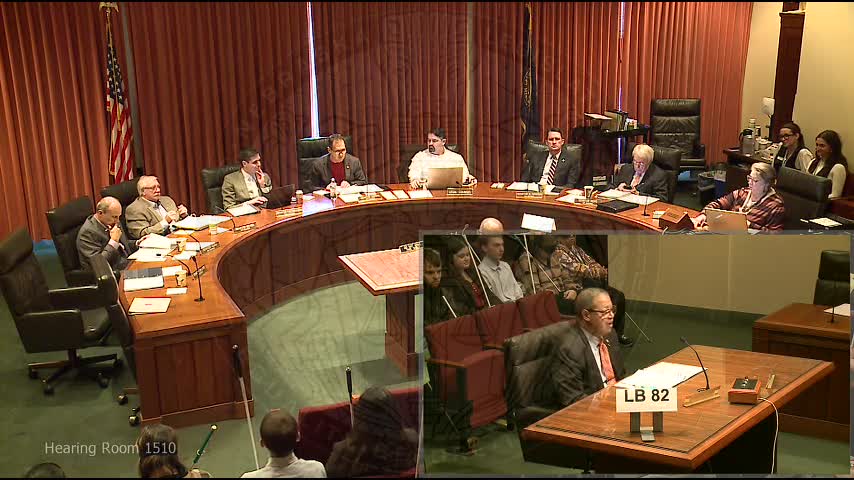
LB 82, a bill to have Nebraska join the cosmetology licensure compact, drew mixed industry support and regulator caution at a Health and Human Services Committee hearing.
LB 82, a bill to have Nebraska join the cosmetology licensure compact, drew a mix of industry support and concern during a public hearing before the Nebraska Legislature’s Health and Human Services Committee. Senator Victor Rountree, who represents Legislative District 3 (Bellevue and Papillion), introduced the measure and said the compact aims to increase workforce mobility for licensed cosmetologists across member states.
The bill would let cosmetologists licensed in a compact member state apply to practice in other participating states through a centralized process. "This legislation . . . allows employers to draw from a larger pool of employees, allows cosmetologists who come to your state to get to work immediately, and reduces workload related to reciprocity applications in your regulatory agency," Leslie Rossi of the Future of the Beauty Industry Coalition testified.
The nut graf: supporters argued the compact reduces administrative delays that keep licensed professionals — including military spouses and disaster-displaced workers — from working immediately in a new state. Opponents and Nebraska regulators urged caution, noting big differences in training hours and in what a cosmetology license allows from state to state.
Proponents emphasized practical benefits for employers and licensees. "In many states, this proof of good standing form can take months to be sent . . . creating a situation where someone needing to work is unable to," Rossi said, summarizing the compact's intent to streamline cross‑state practice. Keith Buckhout of the Council of State Governments, who helped develop the compact model, told the committee the compact was drafted with state licensure boards and would leave scope‑of‑practice questions to the states while providing a shared data resource for licenses and disciplinary history.
Opponents focused on training and scope differences. Stephanie Moss, a licensed cosmetologist, cosmetology instructor and owner of Zenon Academy, said Nebraska requires 1,800 hours of training while many compact states require substantially fewer hours. "Joining the compact, I don't believe is the right answer," Moss said. Linda Pohop, director of education at Zenon Academy, told senators she and other educators had advised that applicants from some jurisdictions arrive with little or no hands‑on experience: "In her entire training, all of her work was done on mannequin heads. She had never touched a person to do a skill on before she came to our school."
Nebraska Board members also took a guarded stance. Siobhan Kozisek, a licensed aesthetician who sits on the statewide board, said the board is neutral on LB 82 because implementation questions remain: "Nebraska is not quite ready to enter a compact licensure with our current statutes. We have valid concerns regarding the licensing requirements and scope of practice with participating states already in the cosmetology compact." She urged legislative cleanup on scope and age/education requirements before Nebraska would join a compact.
Committee members pressed specifics about hours, scopes, and whether related licenses such as barbering and aesthetics would be included; witnesses said the cosmetology compact lets each state define its own cosmetology scope and that the compact does not change a receiving state's scope of practice. Buckhout said member states might face modest IT costs to connect state systems with the compact's database and that the compact itself leaves scope decisions to states.
Ending: Senator Rountree closed by inviting board and industry participants to the table for further work, saying he was open to drafting changes based on testimony. The committee did not vote on LB 82 during the hearing; the bill advanced to further consideration with lawmakers signaling a desire for follow‑up discussions about scope, training hours, and guardrails for consumer protection.