Get Full Government Meeting Transcripts, Videos, & Alerts Forever!
Get email alerts on the Waste Management Renewables topic
No spam. Unsubscribe anytime.
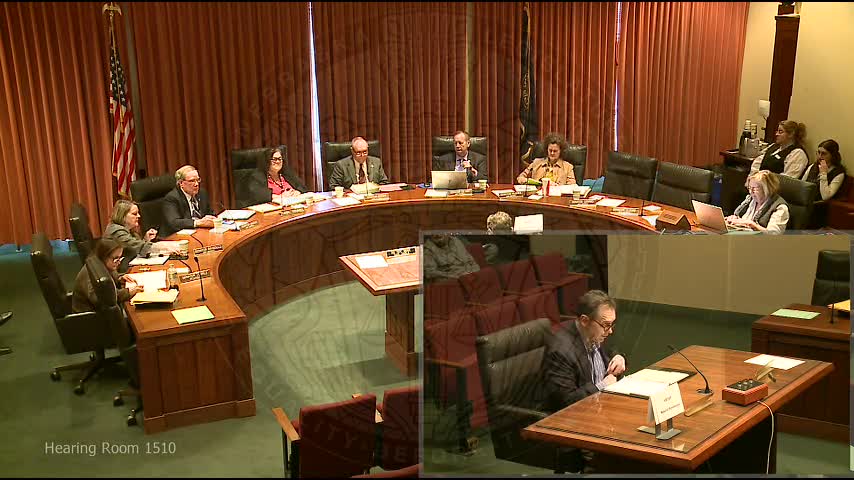
Nebraska hearing examines bill to ban landfill disposal of solar panels and wind turbine blades
Summary
Senator Brian Hardin introduced LB121 to prohibit the land disposal of solar panels and wind turbine blades, prompting debate about groundwater risks, recycling options and economic impacts; no vote was taken during the Natural Resources Committee hearing.
Senator Brian Hardin introduced LB121 on behalf of Western Nebraska lawmakers, proposing to ban the land disposal of solar panels and wind turbine blades in Nebraska.
The measure seeks to prohibit burial of whole panels and turbine blades in state landfills, citing concerns that composite materials used in blades and components of solar panels resist decomposition and could pose a long-term contamination risk to groundwater, including the Ogallala Aquifer. Hardin said, “LB121 will ban the land disposal of solar panels and wind turbine blades in our state.”
The bill’s sponsor framed the measure as a response to the disposal challenges of modern renewable-energy equipment, noting that wind turbine blades can exceed 100 feet in length and are made of durable composites that are difficult to recycle. He also said Nebraska sits atop “one of the largest fresh water aquifers in the world,” and expressed concern about potential contamination if such components are buried and allowed to break down in landfills.
Committee members and witnesses discussed alternatives and practical limits. Senator Jana Hughes asked whether there are viable recycling or repurposing technologies; Hardin and testifiers acknowledged that recycling options exist but are currently limited and often cost-prohibitive. John Hansen, president of the Nebraska Farmers Union, told the committee about companies that “recycle and reuse the components of wind turbines” and urged Nebraska to remain open to business opportunities tied to recycling and clean-energy development.
Other witnesses described existing disposal pathways. A committee member noted that Lincoln Electric System’s decommissioned turbine components were broken down and used in cement production and that clean metals were recycled, leaving a small residual amount for landfill disposal. Edison McDonald of GC Revolt, testifying in opposition, said the bill “imposes blanket restrictions on disposal without providing a clear market driven pathway forward” and urged policies that incentivize recycling rather than an outright ban.
Senators also raised site‑planning and cross‑state disposal concerns. Hardin said some states and private operators are exploring using abandoned mine openings for blades or mechanically crushing blades, and several senators asked whether Nebraska might become a regional disposal site or whether local landfills are accepting out‑of‑state materials. Testifiers and committee members said specifics about which landfills accept decommissioned components were “not specified” in testimony.
The hearing record shows a mix of written positions: the introducer noted there were 18 online proponents and eight online opponents during the hearing; committee staff later recorded 18 letters of support and seven letters in opposition. No formal vote occurred during the committee hearing; Senator Hardin waived closing remarks and the item was left for further committee consideration.
The discussion left several open questions the committee may seek to resolve in future work: whether the state should define allowable end‑of‑life processes (recycling, co‑processing in cement, shredding and reuse), whether to permit limited residue in landfills, and what role state policy should play in encouraging private recycling capacity. The bill drew both rural and urban viewpoints: proponents and many written supporters were concentrated in Western Nebraska, while some opponents were from Lincoln and Omaha.
No committee action or vote was recorded at the hearing; the bill remains pending before the Natural Resources Committee.