Get Full Government Meeting Transcripts, Videos, & Alerts Forever!
Get email alerts on the Evictions topic
No spam. Unsubscribe anytime.
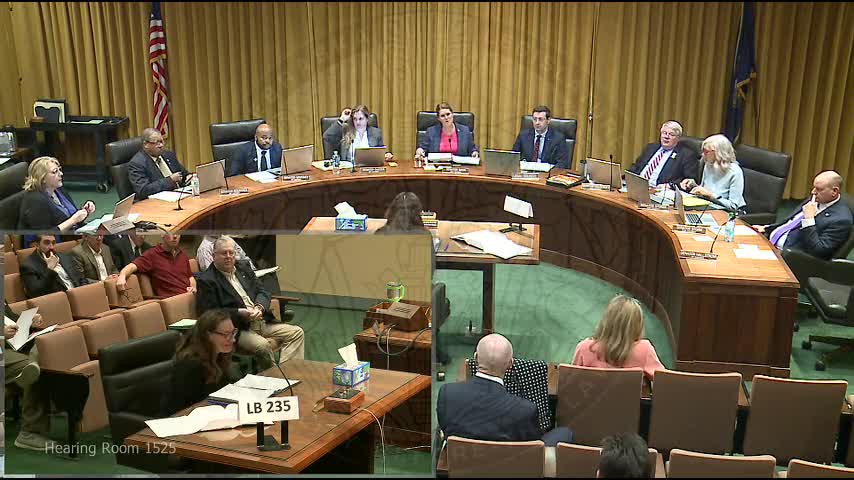
Nebraska hearing on LB235 would set minimum 10-day window before evictions are enforced
Summary
Sen. Danielle Conrad and tenant advocates urged the Judiciary Committee to require a minimum interval of 10 days between an eviction judgment and execution of a writ of restitution; landlords and owners warned of increased cost and administrative burdens.
Lincoln — Sen. Danielle Conrad introduced LB235 to the Judiciary Committee, proposing to amend Nebraska's Uniform Residential Landlord and Tenant Act so that, in most cases, a trial for possession takes place not less than 10 days but not more than 14 days after issuance of a summons.
Conrad told the committee the bill is meant to harmonize Nebraska Revised Statutes 76-1446 and 76-1443 and to bring uniformity to current practice: "I'm here today to introduce LB 2 35," she said, explaining judges already sometimes grant more time and that codifying a minimum period would reduce abrupt displacements.
The nut graf: Supporters said the change would give tenants time to challenge wrongful judgments, find replacement housing, or secure help; opponents said existing local practices and court discretion already protect tenants and that a mandatory minimum would increase costs and delay landlords' ability to regain property.
Tenant advocates and Legal Aid Nebraska provided examples of quick turnarounds that left people at risk. "If LB235 had been in place, there would have been more time...for that family to at least make some arrangements," said Scott Mertz of Legal Aid Nebraska, who described a case in which a mother with a developmentally disabled child nearly faced same-day lockout. Rachel Tomlinson of the University of Nebraska's Housing Justice Clinic said the change would give tenants "some clarity about their time frame" and help reduce additional trauma and homelessness.
Property owners' representatives and industry groups opposed the bill. Lynn Fisher of the Statewide Property Owners Association said practical steps such as posting notices and scheduling locksmiths typically create several days between a judgment and enforcement and that a mandatory 10-day delay would be costly. Nathan Haugen of the Metropolitan Omaha Property Owners Association said landlords already try to work with tenants and that further mandated delay would increase vacancy and turnover costs.
Committee senators asked about court practices and whether existing continuance rules already allow judges to grant additional time for good cause. Proponents said the bill seeks uniformity across counties where practice varies; opponents said judges already have, and regularly use, discretion under current statute.
The hearing drew many proponents and opponents; committee staff recorded written testimony. No final vote was taken during the hearing; the measure remained before the committee for possible amendment and future action.
Ending: Committee members signaled they wanted more information and local-court input on the practical effects and possible compromise language (for example, a shorter mandated minimum), and proponents and opponents said they would continue negotiations outside the hearing.