
Public Utilities Commission budget review: commissioner pay, equipment replacements and document management
Get AI-powered insights, summaries, and transcripts
Sign Up Free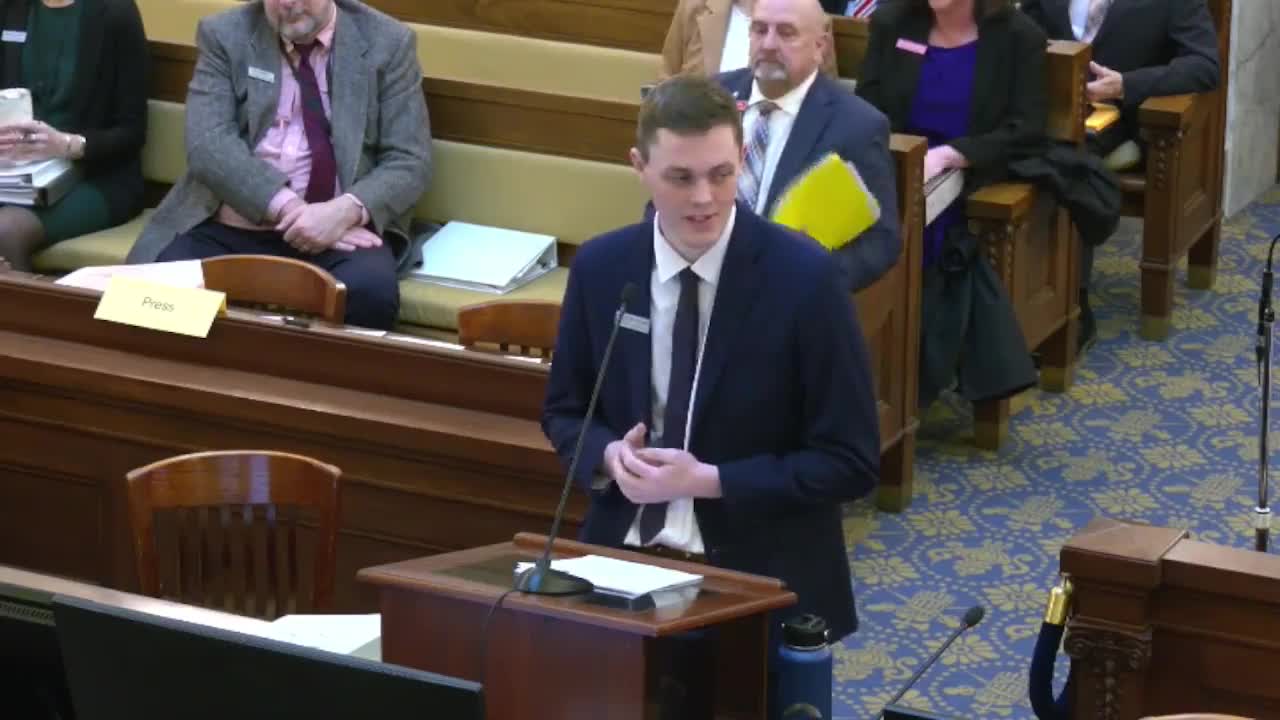
Summary
Legislative analysts reviewed the Idaho Public Utilities Commission's budget, including a governor‑recommended 5% commissioner pay increase, one‑time equipment replacements and the commission's document‑management workload.
Kellan McGurkin, budget and policy analyst with Legislative Services, presented the Public Utilities Commission’s budget history and FY2026 requests to the Joint Finance‑Appropriations Committee, noting that PUC is funded by dedicated regulatory fees rather than general fund revenue.
Highlights presented: - The PUC is authorized 48 FTEs and commonly maintains an ending free fund balance near 60% of its total appropriation to manage timing of biannual assessments from regulated utilities. - The governor recommended a 5% increase for the three commissioners, shown on the analyst’s slide as $23,100 in total ongoing cost; statutory commissioner salaries are set in Section 61‑215, Idaho Code, and require a statutory change to implement any adjustment. - One‑time dedicated requests totaled $114,100 and included a $40,500 replacement pipeline‑safety truck and $73,600 for items recommended by the Office of Information Technology Services, such as replacement laptops, network switches and software licensing.
Document management and staffing: Commissioner Eric Anderson said the agency maintains a long historical record, consolidated filings and a decision meeting each Tuesday to place filings into the official record. Anderson said PUC has four staff handling administrative and document duties and keeps secure records going back to the early 1900s.
Why it matters: PUC regulates investor‑owned telecommunications, electric, gas and water utilities and issues orders and rate decisions that affect consumers; the commission’s funding is tied to the industries it regulates and thus caregul fund balance management is important to meet seasonal assessment receipts and legal defense costs.
Ending: Commissioner Anderson thanked the committee and encouraged members to contact the commission’s policy staff with questions. Analysts and commissioners stood ready to provide additional written detail if the committee wanted further breakdowns of one‑time equipment costs or commissioner compensation adjustments.