Get Full Government Meeting Transcripts, Videos, & Alerts Forever!
Get email alerts on the Finance Liquor Division topic
No spam. Unsubscribe anytime.
Idaho Liquor Division asks JFAC for IT, security and store upgrades, modest pay increases for temps
Summary
At a Joint Finance-Appropriations Committee hearing, the Idaho State Liquor Division presented budget requests that include IT and security upgrades, retail store improvements, and incremental pay increases for temporary store clerks as part of a strategy to reduce turnover and modernize operations.
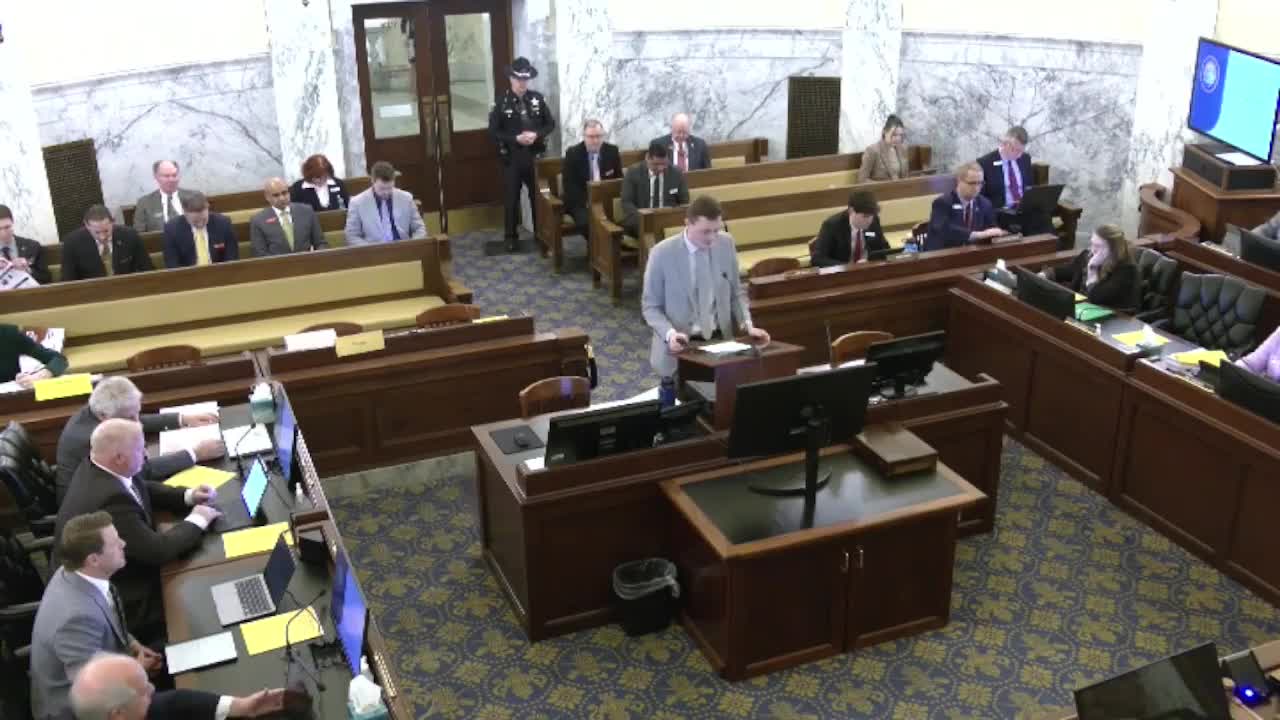
The Idaho State Liquor Division told the Joint Finance-Appropriations Committee on Oct. 12 that it is seeking a mix of one-time and ongoing appropriations to upgrade IT and store infrastructure and to modestly raise pay for temporary retail staff.
The requests matter because the Liquor Division is a revenue-generating agency whose net income and statutory distributions support state and local funds. Agency staff told the committee the requests are intended to improve store operations, reduce high turnover among temporary clerks and modernize network and security systems.
Kellen McGurkin, a budget and policy analyst with the Legislative Services Office, opened the Division’s budget presentation and described the Division’s statutory authority under Title 23 of Idaho Code and the distribution rules in Idaho Code section 23-404. He reviewed the agency’s personnel complement and noted the agency currently has an FTP cap of 257.25 positions and a filled rate of about 93 percent.
Director Andrew Arulanandam and Chief Deputy/CFO Tony Grama answered committee questions. Arulanandam said turnover for temporary retail clerks has fallen from about 140 percent per year before recent pay increases to roughly 84 percent after the committee approved earlier raises. He described the Division as “a revenue-generating agency” that must balance operating needs with distributions required by statute.
Specific requests presented to the committee included an FY2026 ongoing request for $131,400 in dedicated funds consisting of:
- $57,400 to raise temporary retail staff hourly pay from $15.00 to $15.45 per hour; the director said these temporary employees are state employees who are not eligible for automatic CEC increases. - $72,000 to cover shrink-wrap requirements under a new freight contract.
One-time requests included:
- $200,000 for network security firewalls and managed switches (the agency said this is part of an OITS-led network modernization to move stores from DSL/T1 to cellular connectivity and to improve monitoring and security). - $100,000 to upgrade the agency website for web content accessibility (ADA) compliance; Director Arulanandam told Senator Cook the agency consulted an expert and expects multiple fixes, not just a single menu change. - $980,300 for replacement items, including an estimated $775,000 for retail store improvements (shelving, signage, flooring, counters) and $205,000 for motorized warehouse equipment and vehicles. - $235,000 for additional IT and security replacement items (including battery backups, servers and security systems for stores).
Analysts described a decline in the Division’s free fund balance between FY2022 and FY2024, attributing that change in part to a one-time surge in higher-margin direct-to-consumer sales during the COVID-19 pandemic and subsequent spending of those balances. The Division also noted capital outlay and lease costs for retail locations and continuing staffing turnover as drivers of recent appropriations and expenditures.
Committee members pressed the agency on whether the website upgrade truly required $100,000 and on whether incremental pay changes for temporary clerks were sufficient to reduce turnover. Senator Cook asked whether the website work was limited to a single menu fix; Arulanandam said an expert had identified multiple items and that the agency sought a one-time upgrade to reduce legal risk from potential ADA litigation. Senator Wintrow questioned whether the Division’s pay structure constrained the agency’s ability to retain staff, and Arulanandam said the Division's pay lags some private-sector employers and that the agency prefers incremental adjustments.
No formal appropriation votes were taken at the hearing; staff stood by for questions and to provide supplemental materials to committee members as requested.
The committee moved on after the presentation; the Liquor Division’s requests will be considered as part of broader budget deliberations this session.