Get Full Government Meeting Transcripts, Videos, & Alerts Forever!
Get email alerts on the Public Defense Appellate topic
No spam. Unsubscribe anytime.
Appellate public defender asks JFAC for deputy attorney to reduce outside counsel costs
Summary
The State Appellate Public Defender told the Joint Finance-Appropriations Committee that rising post‑pandemic appellate caseloads and turnover have driven some cases to outside counsel. The office asked for a funded deputy position it says will reduce contract costs and for reappropriation authority for one‑time funds from prior years.
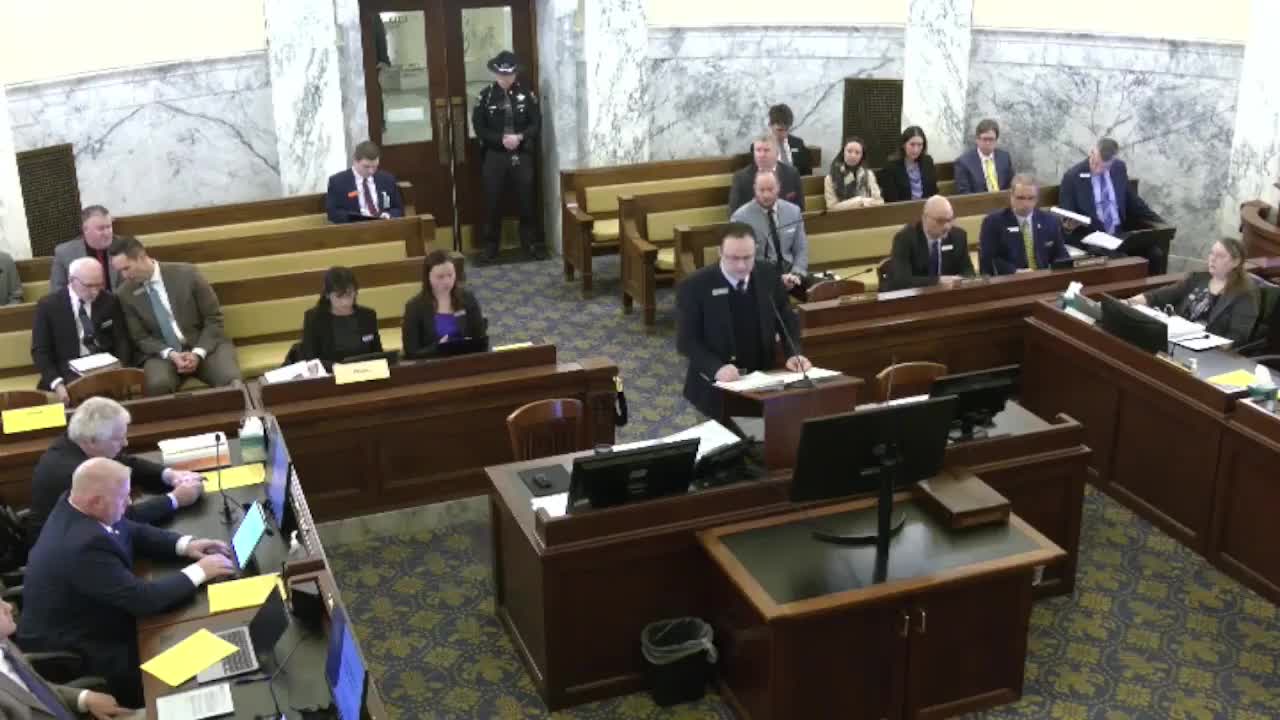
At a Joint Finance‑Appropriations Committee budget hearing, the State Appellate Public Defender requested funding for one additional deputy appellate public defender and authority to reappropriate remaining one‑time funds, arguing the move would reduce reliance on outside counsel.
The office, which provides appellate representation for indigent defendants, has an authorized 26 full‑time positions and reported no vacancies as of mid‑December, but said turnover earlier in the year and a sharp post‑pandemic caseload increase strained resources. Christopher LaHoset, budget and policy analyst with the Legislative Services Office, told the committee that the office’s five‑year average personnel appropriation is nearly $2.8 million and that roughly 85% of recent expenditures were personnel costs.
Why it matters: Committee members were told contracting out overflow and conflict cases costs the state more than hiring in‑house attorneys. The office seeks a permanent attorney to handle noncapital felony, misdemeanor and juvenile appeals and asks for reappropriation authority for remaining one‑time funds left from a fiscal‑year 2023 supplemental.
The request and cost comparison were presented in testimony by Christopher LaHoset and by Eric Leightonen, State Appellate Public Defender. LaHoset said the agency estimates continued contracting would generate bills from outside firms “of about $254,000 per year,” and that hiring an in‑state attorney at an estimated $140,000 salary would produce savings. Leightonen described the proposed position as “our 13th attorney in our appellate unit,” and said the office currently expects to handle roughly 650 cases in the current fiscal year and “anticipate something similar for next year as well.”
Committee members pressed on hiring, turnover and how the new position would change internal case assignment. Leightonen explained that case loads are assigned based on experience and that a new hire would receive a proportional share of cases while less experienced attorneys are not assigned the most complex first‑degree murder appeals. He said the office has historically used salary savings to fund occasional overflow contracting and that about 14 cases went to outside counsel over the last year and a half.
The office also asked the committee to authorize reappropriation of roughly $1.26 million of one‑time funds from fiscal year 2023 to continue covering costs related to an influx of cases; LaHoset noted that amount could decline as the funds are spent. The committee discussed the office’s conflict counsel budget (LaHoset said approximately $200,000 is earmarked) and the limits of contracting for conflict cases, which must be handled outside the office when a conflict of interest exists.
The committee asked about vacancy and turnover drivers; Leightonen cited the creation of the State Public Defender and related staff movement as factors that lengthened recruitment time. He said that at the moment the appellate office was fully staffed but noted imminent departures in administrative staff, and he described recruiting as difficult in the current labor market. Justin Curtis, chief of the appellate unit, and Rachel Murray, office administrator, were introduced by Leightonen in committee testimony.
Ending: The presentation closed with the analyst reiterating the office’s personnel‑heavy cost profile and the director thanking the committee. No formal committee action or vote occurred during the hearing; committee members signaled interest in the cost‑savings rationale but also asked for further details on contracting history and the reappropriation balance.