Get Full Government Meeting Transcripts, Videos, & Alerts Forever!
Get email alerts on the Unemployment Insurance topic
No spam. Unsubscribe anytime.
Idaho Department of Labor seeks $7.33M in dedicated funds to sustain unemployment operations
Summary
Department director Janie Rivera told the Joint Finance-Appropriations Committee the department requests increased authority to spend dedicated funds as federal grant support declines, and explained trust-fund mechanics and benefit-duration rules.
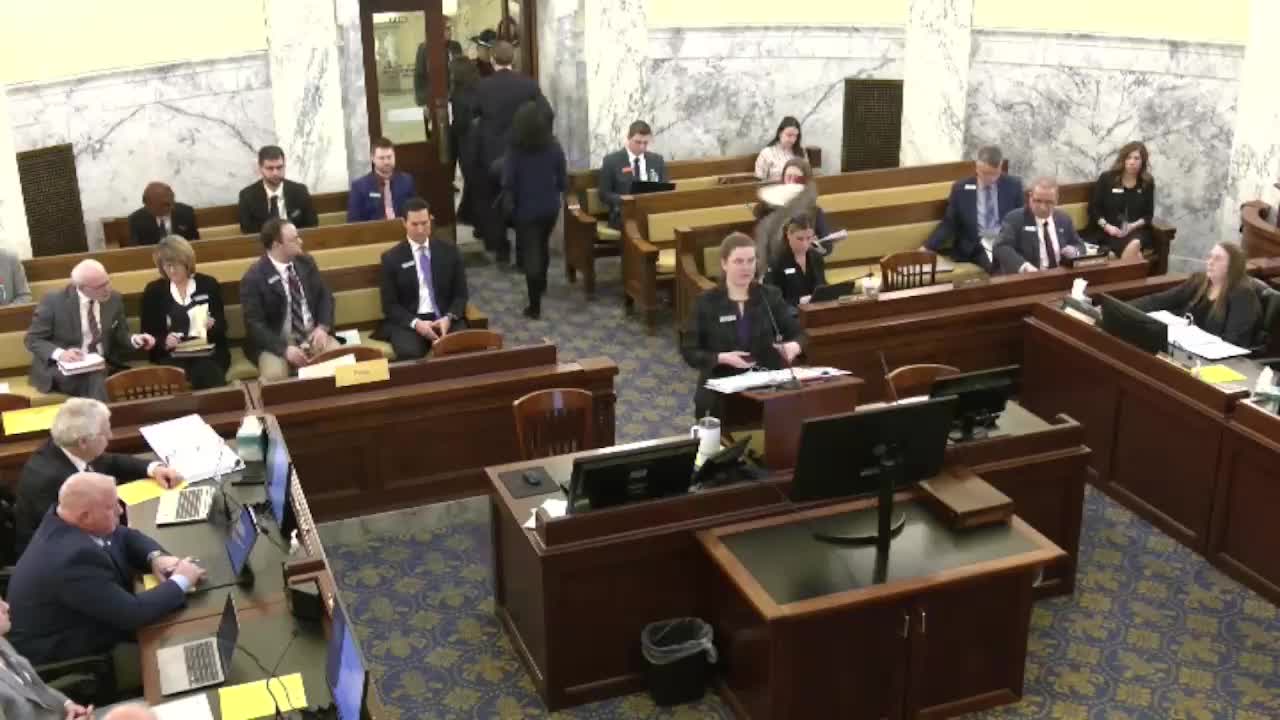
The Joint Finance-Appropriations Committee on Oct. 12 heard from Idaho Department of Labor Director Janie Rivera about several FY2026 budget requests, including $7,330,000 in additional dedicated fund spending authority for unemployment insurance operations and a proposed cash transfer between unemployment-related funds.
Rivera told lawmakers the $7.33 million request would offset declining federal grant dollars that previously funded staff and operations: "During the pandemic, the department got a significant increase in federal grants ... As these federal dollars are declining, we need to keep all of those operations going," Rivera said. She told the committee the request is for dedicated fund authority and not general fund.
Why it matters: The request is intended to preserve the department's ability to operate unemployment insurance determinations, appeals and compliance should a future economic downturn increase claims while federal administrative funding falls. Committee members pressed for details on how trust-fund mechanics, staffing and federal grant formulas affect long-term budgeting.
Key figures and program mechanics
Analyst Brooke Dupree walked the committee through the department's consolidated fund analysis, showing estimated FY2026 ending balances absent legislative action. The department requested a $4,868,600 transfer from the Unemployment Penalty and Interest Fund into the Employment Security Fund to correct an accounting mismatch; agency staff said that transfer would reduce a projected ending fund balance by about $4 million.
Rivera described the state's unemployment trust fund and statutory tax-setting methodology, saying the fund is large enough to cover major recessions today. "We have about a $1,000,000,000 trust fund," she told the committee, and the department currently projects the trust fund is "very solvent" and that shortfalls in extreme events could be addressed through bond issuance or federal loans as needed.
Benefit duration and staffing
Rivera explained how benefit duration is tied to state unemployment rates and statute: "It's a low of 20 weeks at, below 3% and it goes up to a high of 26 weeks at over 8%...right now we're at 21 weeks because we have 3.7% unemployment." She and lawmakers also discussed staffing patterns: during the pandemic the department hired roughly 100 additional staff to respond to claim volume; the $7.33 million request would allow the department to use dedicated funds to maintain base operations as federal administrative dollars decline, rather than relying on general fund.
Follow-ups and committee requests
Legislators asked for more granular staffing and spending data. Senator Galloway asked whether the requested dollars would pay for staff or simply be reserved for future benefits; Rivera said the money would be used to cover operations and existing staff when federal grants shrink. Senator Cook and Representative Handy asked the department to provide historical staffing levels and scenarios showing how staff needs change in downturns. The committee asked the department and analysts to provide the federal-grant calculation methodology and a clearer multi-year projection before final budget action.
No formal votes occurred during the presentation.