Get Full Government Meeting Transcripts, Videos, & Alerts Forever!
Get email alerts on the Agriculture Budget topic
No spam. Unsubscribe anytime.
Idaho agriculture budget highlights quagga‑mussel response, investigator pay and vehicle replacements
Summary
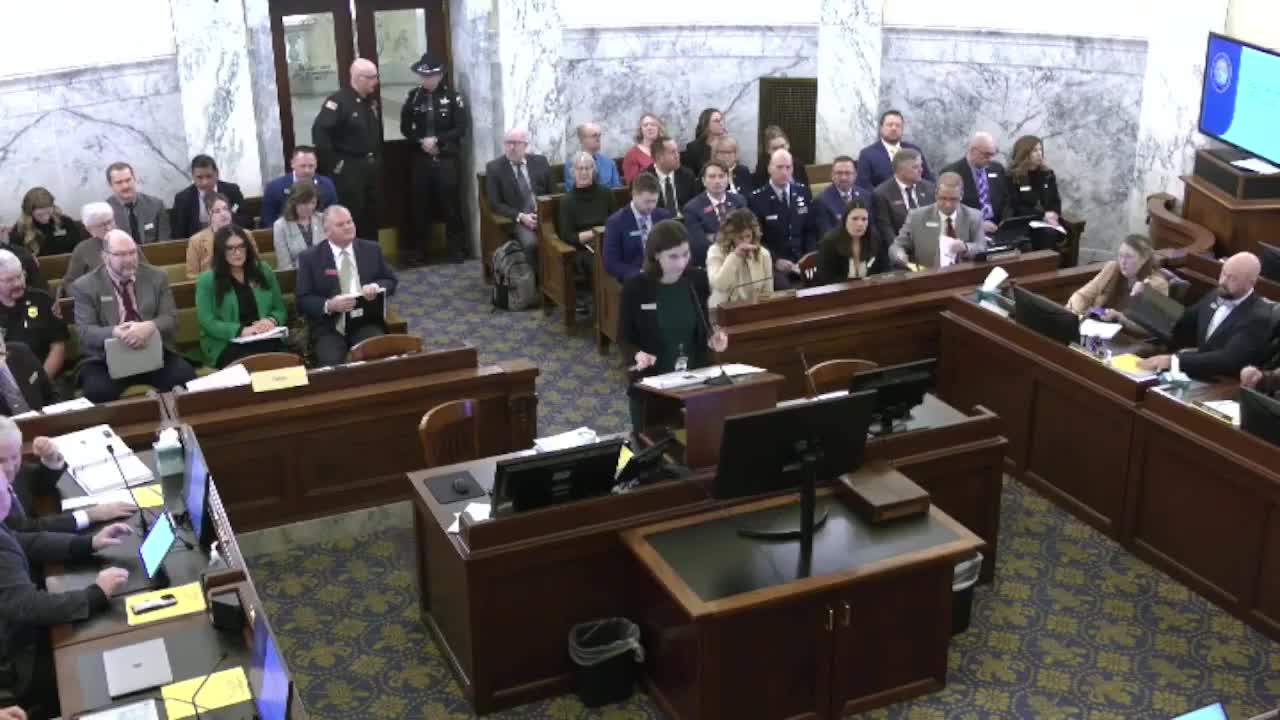
The Joint Finance-Appropriations Committee heard the Idaho State Department of Agriculture detail fiscal year requests tied to invasive quagga‑mussel response, a proposed career ladder for agricultural investigators, and one‑time replacement of vehicles and IT equipment.
Frances Lippert, budget and policy analyst with Legislative Services, told the Joint Finance-Appropriations Committee the Idaho Department of Agriculture’s budget reflects substantial spending to respond to invasive quagga mussels and to maintain core inspection programs.
The request includes prior legislative action of a $5,000,000 general‑fund cash transfer into the invasive species fund and an ongoing general‑fund appropriation of about $1.5 million for quagga‑mussel staffing and check‑station operations, Lippert said. "This projected decline that you see in the fund balance reflects the extent of that effort rather than any decline in sticker fee revenue," she said.
Why it matters: The department oversees plant and animal health, pesticide licensing, dairy and waste inspection, shipping point inspections and other services that affect producers, consumers and recreational water users. Committee members pressed officials on whether the quagga response is funded from fees or the general fund and on the sustainability of current fund balances.
Director Chanel Tewell, identified as director of the Idaho State Department of Agriculture, described programmatic changes and operational impacts. She said the department doubled its statewide sampling and inspections the year after a major Snake River detection and expanded staffing and check stations. "By every measure, that work has increased," Tewell said. She added the department treated a population of the invasive species on the Snake River in 2024.
Budget and personnel details presented by Lippert and Tewell: - The department is organized into eight budget programs and was authorized 231 full‑time equivalent positions in the year shown, above its five‑year average of 220.7. Lippert said the department maintained a 91% staffing rate and on average expended 81% of appropriated personnel dollars. - Appropriations have ranged from about $47.5 million to $67.1 million in recent years; FY2024 expenditures were reported as $42,986,900 with 59.5% for personnel costs. - The department requested $518,300 in ongoing enhancements for FY2026, including $340,400 described as funding to create a pay structure for 53 agricultural investigators to improve retention and career progression. Lippert said "23 have been working for the department less than 2 years and only 9 have 10 or more years of experience." - The agency requested $1.1 million in one‑time funds, with replacement items and IT hardware listed; committee members asked for a vehicle list when Lippert noted roughly 17 vehicles—mostly pickup trucks and a few SUVs—were included among replacement requests.
Committee members asked detailed process questions about cash transfers and appropriations. Lippert explained that a general‑fund cash transfer into a dedicated fund creates an appropriation both in the receiving dedicated fund and against the general fund, which can make the bookkeeping appear as a larger gross appropriation offset by the transfer.
Clarifying details and unresolved items: Lippert referenced a pest control fund balance that reflects a FY2024 deficiency warrant and higher Mormon cricket treatment costs; the transcript contains a fiscal‑figure line for an ‘‘exotic species’’ deficiency warrant that is not clearly rendered in the record and should be treated as not specified pending written materials. Committee members asked for a vehicle inventory and for confirmation of the ongoing and one‑time amounts in the written budget documents.
Tewell emphasized investigator workload and travel: some investigator positions cover multi‑county geography and require specialized training and time on the road. "These are the first responders to that kind of issue," she said, describing work from animal care to pesticide complaints.
Ending: Analysts and agency staff offered to follow up with the committee on flagged questions, including the precise breakdown of one‑time replacement costs and the detailed vehicle list. Lippert concluded the agriculture presentation and made written materials available for follow‑up review.