Get Full Government Meeting Transcripts, Videos, & Alerts Forever!
Get email alerts on the Bsu Launch Student Success topic
No spam. Unsubscribe anytime.
Boise State highlights LAUNCH enrollment, student success and non‑taxpayer defense of lawsuit at JFAC hearing
Summary
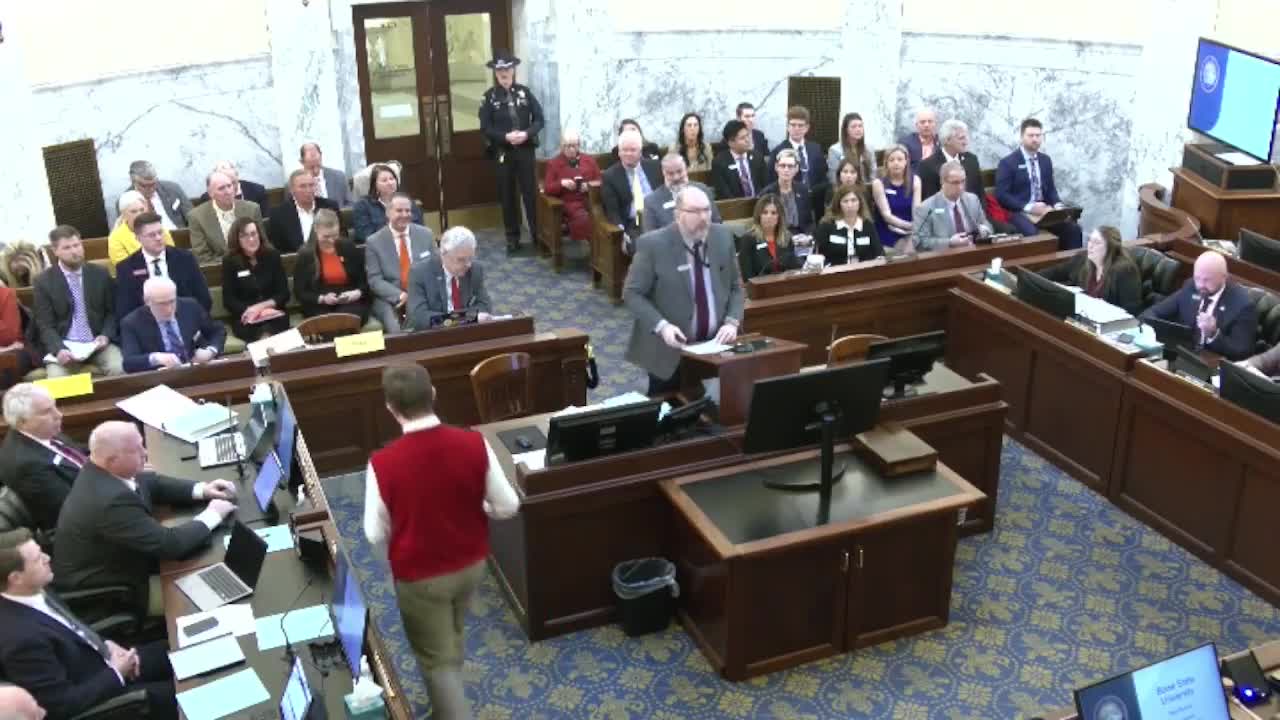
Boise State University President Marlene Trump told the Joint Finance‑Appropriations Committee on Jan. 29 that about 1,300 students are enrolled in the LAUNCH program, the university has restructured student‑support centers around student success and that the university used non‑taxpayer funds (about $1.5 million) to defend a lawsuit.
Boise State University President Marlene Trump told the Joint Finance‑Appropriations Committee on Jan. 29 that the university’s LAUNCH program serves about 1,300 students and that 600 of those students rely on LAUNCH as their only financial support. Trump said the program broadens access to fields such as nursing, computer science, radiologic sciences, business and elementary education.
Trump described Boise State’s recent reorganization of student‑support operations in response to state directives and institutional review. She told the committee that Boise State examined centers and programs across higher education, reduced staff associated with some preexisting centers and shifted focus to student success. “The reduction in numbers of staff is 5,” Trump said, noting the university’s work to consolidate and redesign services to support rural students, first‑generation students and other groups. She said Boise State’s graduation rate has improved materially over the past five years.
When asked about a pending or concluded lawsuit related to a campus vendor, Trump told the committee the university “used only non‑taxpayer funds to support the defense of that lawsuit” and reported that the university has spent about $1,500,000 on the defense so far. She said employees who appeared at trial did so as members of general counsel or by taking personal time; she offered to provide a detailed cost breakdown to the committee.
Trump described the university’s Institute For Advancing American Values, which she said brings a range of speakers to campus and that, in turn, helped the faculty senate and student government adopt the Chicago Principles on free expression. She said that model has been used to broaden civic dialogue through programs such as “Idaho Listens.”
On federal funding uncertainty raised previously in the hearing, Trump said the university is reviewing federal guidance and court actions and will comply with applicable law. Both presidents in the hearing said they monitored federal developments closely; Boise State’s presentation and president noted concerns about potentially affected federal research and student support grants but said a court injunction paused the most disruptive action while legal review proceeds.
Trump also explained Boise State’s budget model, saying the university uses a responsibility‑centered management approach and has tied revenue and expense responsibility to academic units. She said that model helped Boise State close a structural deficit and maintain a balanced budget. She emphasized affordability figures in her closing remarks: “54% of Boise State grads have $0 in federal student loan debt,” she said, and added that students who do borrow have relatively low average debt.
Senators and representatives asked for additional written assurances that course offerings comply with state law prohibiting discriminatory practices in public education and for itemized breakdowns of litigation expenses; Trump agreed to provide further detail to the committee.