Get Full Government Meeting Transcripts, Videos, & Alerts Forever!
Get email alerts on the Earned Wage Access topic
No spam. Unsubscribe anytime.
House committee hears earned-wage access bill; supporters and consumer advocates urge more safeguards
Summary
House Bill 1125 would license and regulate earned-wage access (EWA) providers in Indiana. Supporters, including large EWA vendors and employer-integrated firms, said the bill adds consumer protections and legal clarity; consumer advocates recommended adding caps, APR disclosure and a centralized verification system to limit repeat borrowing.
House Bill 1125, a proposed licensing and oversight framework for earned-wage access (EWA) services, was presented to the House Financial Institutions Committee and received extended testimony from advocates, industry providers and consumer groups. Committee members held the bill for further amendment and invited follow-up discussions.
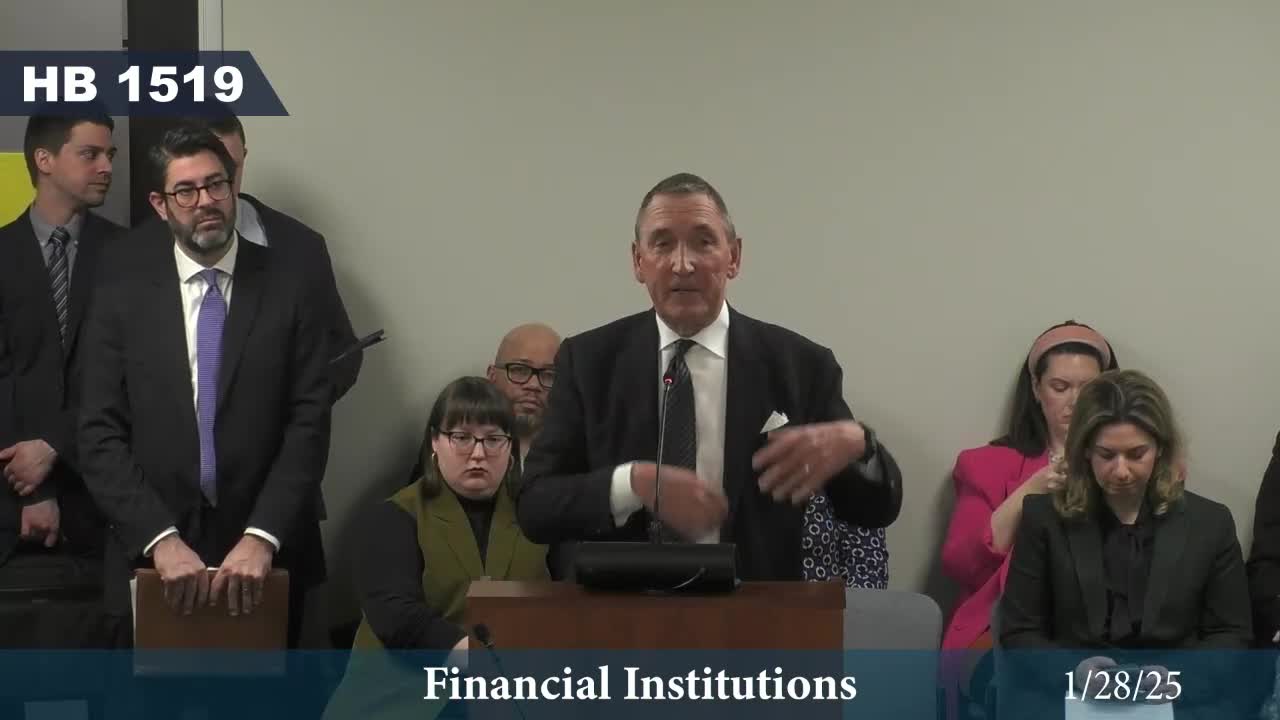
Representative Teska (Chairman of the committee) opened the bill by describing EWA as a product that "gives workers access to the money that they've already earned," and said the bill would require licensing, ban credit checks and credit reporting, prohibit late fees and interest, and require a no-cost transfer option.
Consumer advocates voiced guarded support for licensing but pressed for stronger protections. Erin Macy, director of the Indiana Community Action Poverty Institute and co-chair of Hoosiers for Responsible Lending, said the bill currently sets no limit on overall charges and is outside Indiana's small-loan statutes. Macy recommended: APR disclosure to help consumers compare costs; a minimum reasonable repayment term to reduce rapid reborrowing; limiting ACH debit attempts to reduce bank overdrafts; mandatory public disclosure of enforcement actions and aggregated provider data; and opposing discretionary waivers by the director of the Department of Financial Institutions.
Industry witnesses said the existing market demonstrates lower-cost alternatives to payday and other small-dollar credit. Ben LaRocco, senior director of government relations for EarnIn, said EarnIn has served hundreds of thousands of Indiana users and that most transactions are free or low cost; he described optional tips and instant-transfer fees but emphasized that the product is access to wages already earned. LaRocco said a majority of EarnIn users pay nothing for access, and typical voluntary tips average about $1. DailyPay, an employer-integrated provider, said about a third of employees who download its app never access funds early; when used, the average early access was roughly $150.
Industry witnesses supported a limited regulatory framework and noted features in HB 1125 that they favor: mandatory free-option transfers, bans on interest and recourse, no credit reporting, and disclosure requirements. Catalyst and trade groups urged the committee to consider a centralized verification system or shared database so providers can detect multiple outstanding advances across platforms and reduce repeat borrowing. Andrew Welch of DailyPay said the company could provide usage data to the committee on reborrowing and repayment patterns if requested.
Committee members asked about key risk metrics. Representatives sought data on reborrowing rates and default patterns; advocates pointed to analyses from other states showing high APR equivalents for some EWA use cases and urged the inclusion of APR disclosure and caps or a comparison metric for consumers. Representative Miller asked for a clearer distinction from payday lending; witnesses emphasized the product difference — that EWA provides access to wages already earned rather than a loan against future wages — and that most providers offer a free ACH option and have no recourse.
Chairman Teska said the committee would hold the bill for a week and encouraged follow-up conversations on topics including tipping, APR disclosure, centralized verification, ACH-debit limits and public reporting requirements. No vote was taken.