Get Full Government Meeting Transcripts, Videos, & Alerts Forever!
Get email alerts on the Isu Budget Accountability topic
No spam. Unsubscribe anytime.
Idaho State University president says forensic-lab funds will be returned, pledges tighter controls
Summary
At a Jan. 29 Joint Finance-Appropriations Committee hearing, Idaho State University President Rob Wagner described steps to return funds tied to a proposed Eastern Idaho forensic pathology lab, pledged improved tracking of legislative appropriations and outlined ISU's FY2026 budget priorities and operational changes.
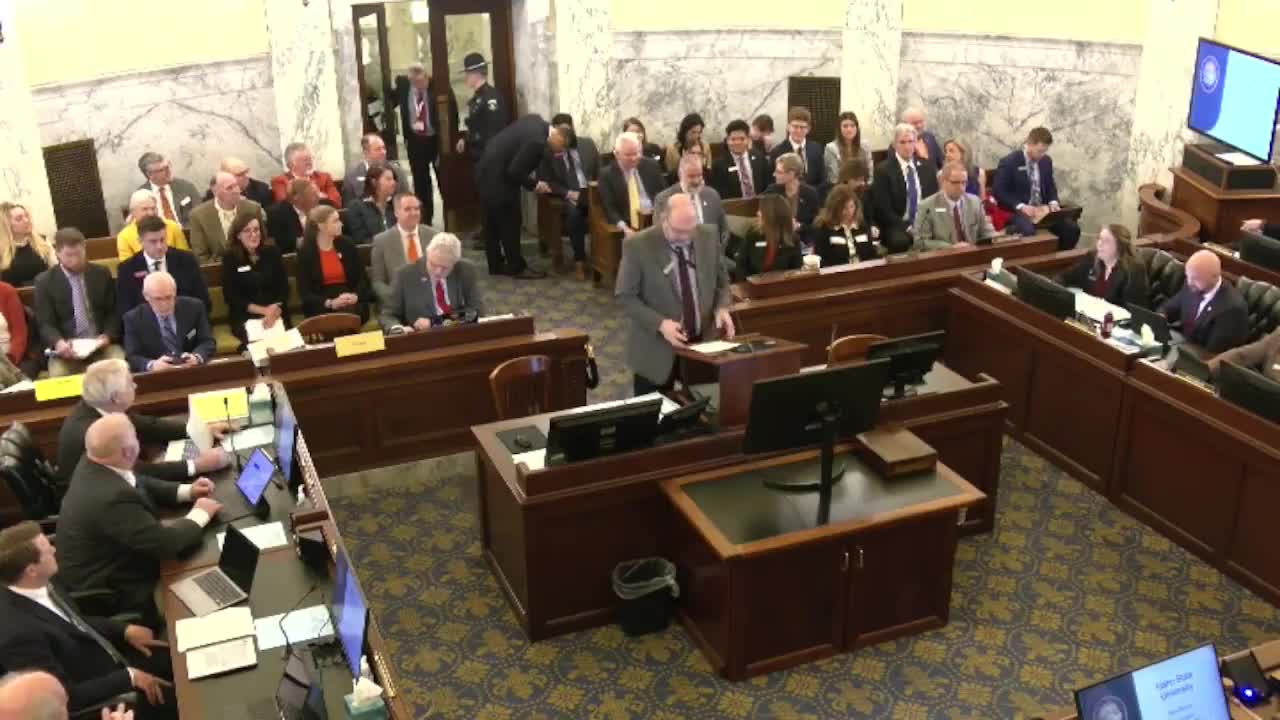
Idaho State University President Rob Wagner told the Joint Finance-Appropriations Committee on Jan. 29 that the university will return state funds connected to a proposed Eastern Idaho forensic pathology laboratory and that ISU will tighten controls to ensure legislative intent is followed.
Wagner made the remarks after a Legislative Services Office analyst outlined ISU’s budget and identified a technical reporting error in tuition-and-fees balances. Kevin Campbell, a budget and policy analyst with the Legislative Services Office, told the committee his review of state-treasury records showed, “ISU has not overdrawn its bank account.” Wagner repeated the administration’s conclusion that the university must do better at tracking and owning legislative funds, saying, “legislative intent is law” and promising steps to improve accountability.
The report and the committee exchange came after media coverage about a planned Eastern Idaho Forensic Pathology Center. Wagner said ISU was originally appropriated the funds to house a lab on its Pocatello campus and that the university supported the project’s clinical and student-training benefits. He said additional parties and changing county preferences led, by late 2023, to a memorandum of understanding that transferred remaining funds to the county. Wagner told the committee he believes ISU should have retained responsibility and invoiced the county for operating costs; under his leadership the university is preparing invoicing and ownership protocols for legislative funds.
Campbell presented ISU’s finances from the legislative budget book. He said ISU’s enrollment exceeds 12,000 students, supported by roughly 12.44 full‑time equivalent staff, and a base budget the analyst reported as about $171.1 million. Campbell noted a technical error in the tuition-and-fees slide used for the presentation and promised to correct the record as needed. He explained that estimated expenditures presented in the legislative materials include reappropriated tuition and fees (an accounting practice that aligns the academic year and budget cycle) and cautioned that reappropriation is not the same as unspent or uncommitted funds.
Campbell summarized multi‑year budget movements: personnel accounts are the largest ISU expense (about 74.8 percent of expenditures on the slide), operating costs roughly 21.2 percent and capital outlay about 3.9 percent. He walked members through reductions and adjustments since FY2021, including general‑fund rescissions, enrollment workload adjustments and consolidations of audit and risk functions to statewide offices.
Wagner also discussed programmatic changes at ISU after his arrival last year. In response to a state board directive and internal review of student success, ISU closed two campus resource centers—the Diversity Resource Center and the Gender Resource Center—and reassigned the two full‑time equivalent positions associated with those centers. Wagner said one FTE moved to student involvement to support student clubs and activities and one moved to the university’s Office of Equal Opportunity and Title IX, which now reports to the president. He said ISU created the Bengal Success Center to centralize academic support for traditional and nontraditional students.
Committee members thanked Wagner for the review and for the decision to return the forensic‑lab funds to the state. Several legislators pressed for specifics on new internal controls; Wagner said the university is developing procedures to identify ownership of legislative funds, track invoices and ensure accountability when multiple governmental partners are involved.
Wagner and Campbell also described ISU’s FY2026 requests as presented in the legislative budget materials. The transcript records ISU seeking operational capacity enhancement and enrollment workload adjustment funding (the presentation listed specific ISU figures for those items; Campbell noted and will correct technical reporting errors if needed). Campbell closed his prepared remarks and the committee moved to questions.
The committee did not take a formal vote on any budget line at the Jan. 29 hearing. Members asked that ISU and Legislative Services supply corrected fund‑balance figures and additional detail on the new procedures Wagner described; Wagner pledged to follow up with the committee.
Wagner closed by emphasizing ISU’s statewide mission and the university’s intent to expand workforce and health‑sciences capacity while improving student completion.