Get Full Government Meeting Transcripts, Videos, & Alerts Forever!
Get email alerts on the Financial Services topic
No spam. Unsubscribe anytime.
Committee hears bipartisan plan to license earned-wage access; advocates and consumer groups urge changes
Summary
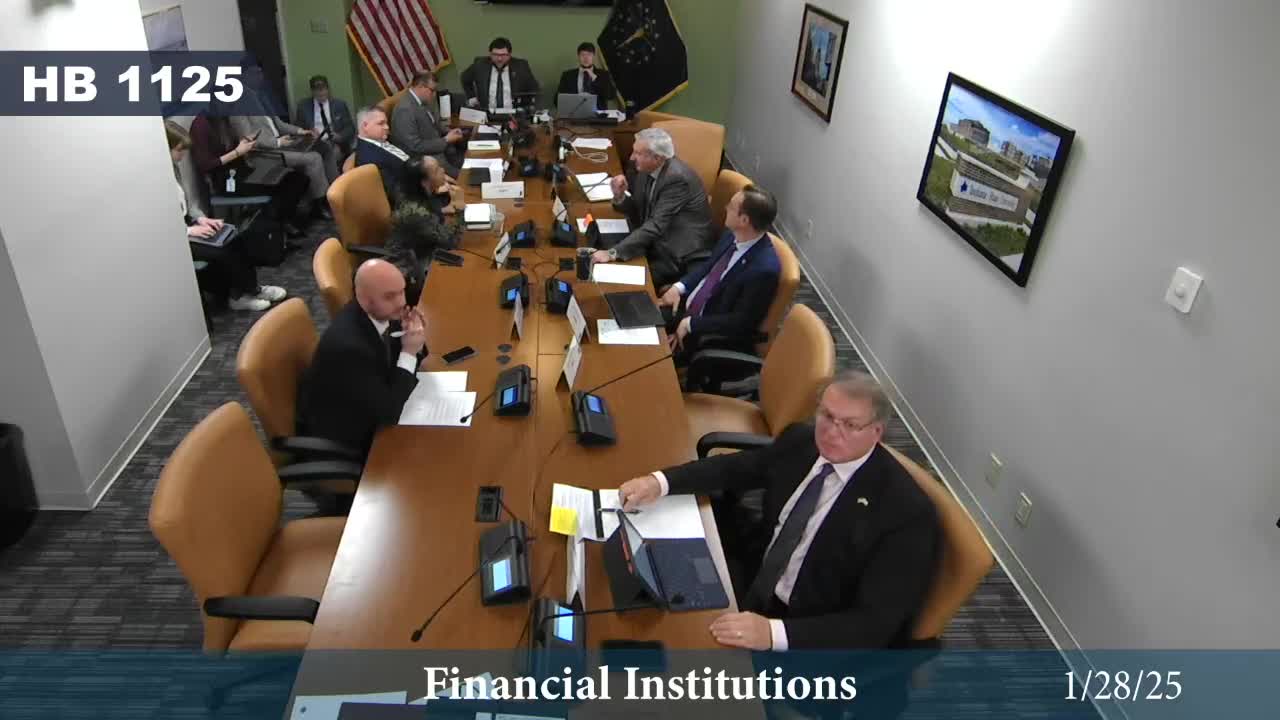
The House Financial Institutions Committee heard testimony on House Bill 1125, which would license and set consumer protections for earned-wage-access companies that allow workers to access wages they have already earned between pay cycles.
The House Financial Institutions Committee heard House Bill 1125, a proposal to create a licensing framework and consumer protections for earned-wage-access (EWA) services that let workers access wages they have already earned between pay cycles. Committee members and stakeholders described the measure as an attempt to bring regulatory certainty to a product currently offered without a specific state licensing structure.
Representative Chairman Teschka presented the bill and framed the issue as a modern iteration of an old practice: "This bill really just creates the licensing structure for those EWA providers. It also gives the Department of Financial Institutions some clear oversight over the product," he said, summarizing key consumer protections such as prohibitions on late fees and credit reporting and a requirement that at least one cost-free option be available.
Supporters: multiple EWA companies, employer-integrated providers and trade groups testified in favor. Ben LaRocco, senior director of government relations for EarnIn, said EarnIn has served more than 100,000 Indiana residents and described the product as giving workers access to wages already legally earned. "Our mission is simple: creating a more worker-friendly payroll system by giving workers access to the wages they've already earned when they need it," LaRocco said.
Andrew Welch of DailyPay, an employer-integrated EWA provider, said the service is credit invisible, charges no originations or late fees, and offers both instant delivery (for a fee) and a no-cost ACH option. "EWA solves for a frequency-of-pay problem due to biweekly or even monthly pay periods," Welch said, adding that his company's data show many users never advance funds and that typical advances are modest.
Industry trade groups including the American Fintech Council, Financial Technology Association and Chamber of Progress testified in support, emphasizing an explicit no-cost option, transparency requirements and tailored oversight to keep the product available to workers and employers.
Concerns from consumer advocates: Erin Macy of the Indiana Community Action Poverty Institute, co-chair of Hoosiers for Responsible Lending, testified in neutral and urged several changes before licensing is finalized. Macy flagged the bill's omission of a cap on total charges and recommended APR disclosure so consumers can compare costs across credit products. She also urged a time-to-repay minimum to reduce repeat short-term advances and asked the committee to require regular public reporting and limit the number of ACH debt-collection attempts to reduce overdraft risk.
Catalyst and other consumer groups recommended a centralized verification database so providers cannot unknowingly over-advance workers who use multiple EWA platforms. John Barnes of Catalyst also suggested stronger public reporting to allow regulators and legislators to monitor average loan size, repeat borrowing and borrower income levels.
Committee action: members questioned providers and advocates about repeat borrowing, fee structures and practical effects on households. Providers said their incentives are aligned to avoid customer overextension because many bear the repayment risk and some transactions are free; advocates pointed to published data showing high-frequency repeat usage in some markets and asked for statutory guardrails. The committee did not hold a final vote on HB 1125 and indicated the measure will be held for amendment and further review next week.
Ending: Sponsors said they welcome continued stakeholder conversations this week on fee transparency, reporting requirements and whether a centralized verification tool should be added to the bill before the committee votes.