Get Full Government Meeting Transcripts, Videos, & Alerts Forever!
Get email alerts on the Earned Wage Access topic
No spam. Unsubscribe anytime.
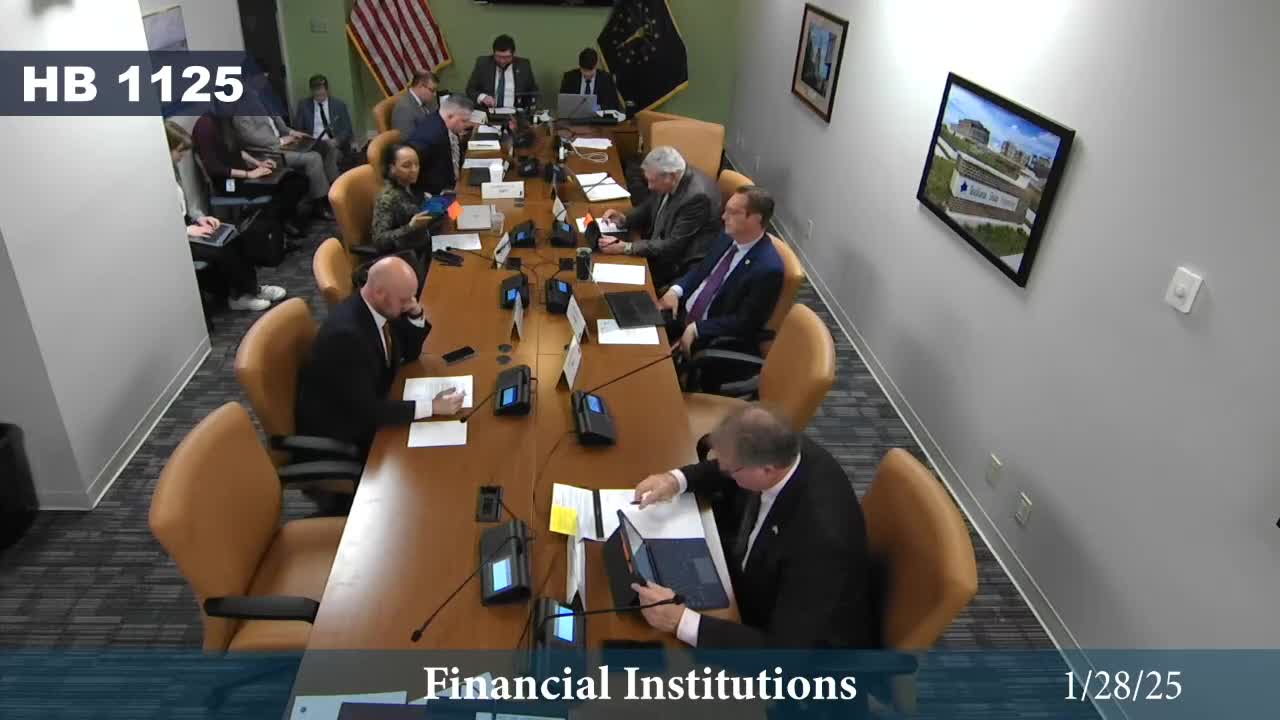
Committee hears earned‑wage access bill; supporters and advocates seek added consumer safeguards
Summary
House Bill 1125, which would license earned‑wage access services and require at least one free transfer option, received hours of testimony from providers, consumer advocates and industry groups; lawmakers will hold the bill for amendment.
Lawmakers heard several hours of testimony on House Bill 1125, a bill that would create a licensing framework and consumer protections for earned‑wage access (EWA) services that let workers access wages they have already earned before regular payday. The committee took testimony from consumer advocates, EWA providers and industry trade groups and said it will hold the bill for amendment and continued discussion.
The bill’s sponsor, Chairman Teska, described the proposal as a tailored regulatory framework for a product that does not fit neatly into existing small‑loan or payday statutes. He said HB 1125 bans interest and late fees, prohibits credit checks and credit reporting, requires transparency and guarantees at least one cost‑free transfer option.
Supporters argue EWA is a low‑cost, consumer‑friendly option. Ben LaRocco of EarnIn said the company offers a free ACH transfer and an optional instant fee; "about a third of the people don't pay anything at all for our service," he testified. Andrew Welch of DailyPay, an employer‑integrated provider, said two‑thirds of employees who download the app never access funds early and that users who do access funds average about $150 per transaction.
Consumer advocates and state‑level groups urged further safeguards. Erin Macy of the Indiana Community Action Poverty Institute, representing a coalition, said the bill leaves room for large charges because it excludes EWA from existing small‑loan rate caps and recommended requiring APR disclosure, a reasonable minimum term, limits on ACH reattempts and mandatory public reporting of enforcement actions. "Because we're classifying earned wage access products as outside of the scope of Indiana's lending laws, they are not subject to rate caps, fee limits, or our criminal loan sharking statute," Macy told the committee and urged stronger data and reporting requirements.
Other witnesses recommended a centralized verification database so providers can track advances across platforms and prevent customers from becoming overextended. John Barnes of Catalyst noted states that have required centralized verification to limit duplicate advances and recommended a similar safeguard for Indiana.
Industry representatives, including the American Fintech Council, Financial Technology Association, Chamber of Progress and EarnIn and DailyPay, said the bill’s guardrails — no required fees, mandatory free option, no credit checks, and nonrecourse repayment — protect consumers and urged the committee to adopt a measured regulatory standard that preserves access while deterring bad actors.
Next steps: Committee members repeatedly said they would hold the bill for further negotiations and possible technical amendments. Members asked for additional data (reborrowing rates, APR calculations, average loan size and repayment lengths) and discussed whether APR disclosure or placing EWA under the small‑loan statute would better protect consumers. The committee planned to hold the measure over for amendment and a future vote.
Ending: Lawmakers signaled broad interest in regulating EWA while continuing to weigh consumer‑protection measures such as APR disclosure, limits on automated collection attempts and a centralized verification system.