Get Full Government Meeting Transcripts, Videos, & Alerts Forever!
Get email alerts on the Financial Services Earned Wage Access topic
No spam. Unsubscribe anytime.
Committee hears competing views on earned-wage access; bill to be held for amendment
Summary
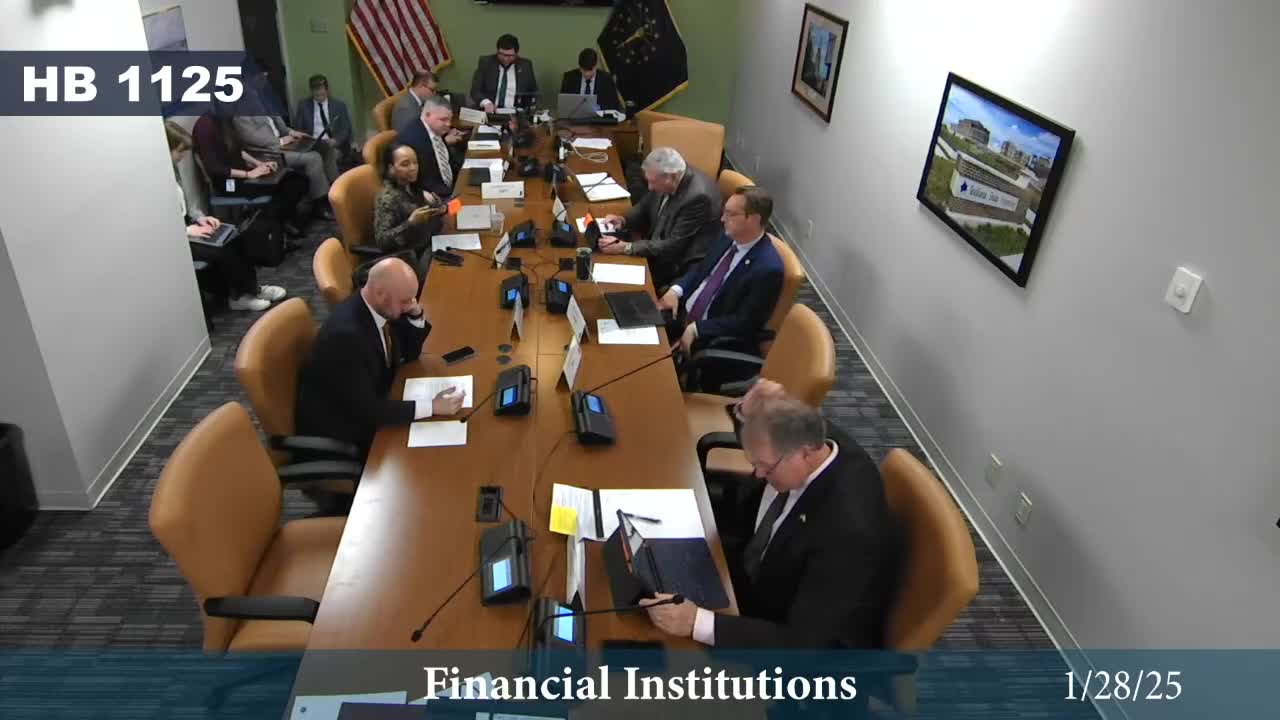
Indianapolis — The House Financial Institutions Committee considered House Bill 1125, which would license and regulate earned-wage access providers, but the committee held the measure for amendment after hours of testimony from industry representatives, consumer advocates and regulators.
Indianapolis — The House Financial Institutions Committee on Wednesday considered House Bill 1125, legislation to create a licensing and oversight framework for earned-wage access (EWA) providers. Committee members did not vote; the bill was held for amendment and further review.
Representative Tescha Teschka, who presented the bill to the committee, said HB 1125 "creates the licensing structure for those EWA providers" and includes consumer protections such as bans on late fees, credit checks and credit reporting. "It also provides regulatory certainty for this burgeoning industry," he told the panel.
Supporters from the industry said regulated EWA can offer low-cost alternatives to higher-cost credit products and provide financial flexibility for workers. Ben LaRocco, senior director of government relations for EarnIn, said: "Our mission is simple, creating more worker friendly payroll system by giving workers access to the wages they've already earned when they need it instead of waiting for an arbitrary pay cycle." Andrew Welch of DailyPay said users access "only ever their net wages they have already earned" and highlighted that the company offers a free transfer option and an instant option for a small per-transaction fee.
Consumer advocates and community organizations said the bill needs additional guardrails. Erin Macy of the Indiana Community Action Poverty Institute, testifying in a neutral stance, warned the bill "sets no limits on overall charges" and recommended requiring APR disclosure, limits on ACH collection attempts and stronger public reporting. Macy said industry data show "reborrowing makes up a significant share of the market" and that typical users can take many advances per year; she urged minimum repayment terms and mandatory transparency to help consumers compare costs.
Other neutral witnesses recommended a centralized verification system so providers can avoid extending multiple advances across different apps to the same worker. John Barnes of Catalyst said a centralized database "would help close this loophole, ensuring borrowers are protected while keeping the system fair and responsible for providers."
Why it matters: Supporters argue EWA provides hourly and low-balance workers flexible access to pay they have already earned and can reduce overdraft and late-fee exposure. Opponents and neutrals stressed the need for measurable consumer protections, data reporting, and durable regulatory tools to prevent overextension and protect vulnerable households.
Next steps: The committee held HB 1125 to allow further negotiation on issues raised during testimony, including fee caps or APR disclosure, centralized verification, frequency reporting and whether tipping provisions should remain voluntary and transparent. The bill's sponsors invited committee members to continue discussions in the coming week.