
'Build Up Aurora' task force launches outreach plan; consultants outline research-driven ballot planning
Get AI-powered insights, summaries, and transcripts
Subscribe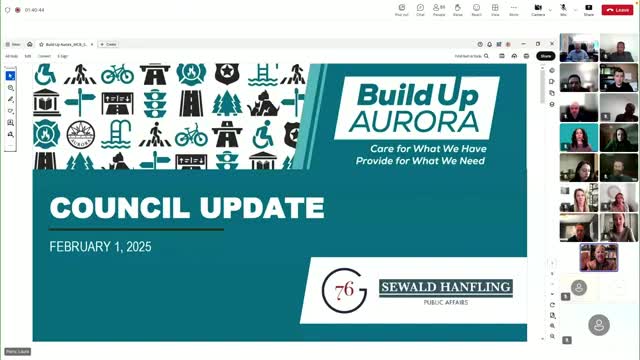
Summary
Consultants and city staff briefed the council on the newly created infrastructure task force (Build Up Aurora), describing an 18-month research and public-engagement plan aimed at developing voter options for infrastructure funding and coordination with the council.
The council received a briefing on the Build Up Aurora infrastructure task force and its outreach plan as the city prepares for an extended public-engagement process that could lead to one or more ballot measures in 2026.
Laura Perry, deputy city manager, introduced consultants RD Seawold (Seawold Hampling) and Jake Zambrano (the 76 Group). Jake said the firms will work with council-appointed task-force members and staff to build a research-driven public process and communications campaign leading to a council decision about whether to place a funding question before voters.
RD Seawold described the approach as research-first and “disciplined,” saying the process will include polling and neighborhood-level engagement so the task force can recommend options that reflect community priorities. Jake characterized the community-outreach checklist as broad and iterative: staff will poll, host town halls, create a microsite and coordinate neighborhood and business outreach, with the task force meeting monthly.
Why it matters: council members voiced support for a transparent, evidence-based process. Several council members requested regular, monthly check-ins and made specific requests about making outreach accessible (in-person and online survey options, multiple time windows, and short explainer materials for residents). The task-force consultants said they'll deliver materials and metrics for the council to track progress.
Key elements of the consultants' plan - Timeline and goals: consultants said their work is intended to identify priorities, test options with statistically valid polling and neighborhood input, and present a recommended ballot question (if any) well in advance of a 2026 election cycle. - Outreach: a microsite (BuildUpAurora), digital surveys, targeted meetings with HOA and metro-district leaders, multi-ward town halls, and repeated opt-in polling to measure changes in public opinion over time. - Transparency and process protections: consultants emphasized early disclosure of task-force membership and conflict-of-interest statements, repeated updates to council and staff, and using third-party polling to drive the task force’s recommendations rather than starting from a pre-determined question.
Council direction and concerns Council members pressed consultants and staff on accessibility of engagement tools, the size and sampling method for polling, and how the outreach would reflect ward-level differences. The consultants said they will provide a microsite and multiple participation channels and will run at least two rounds of statistically representative polling to test options and language. Council members also advised coordinating any potential ballot question with other revenue proposals under consideration to avoid overloading a single election ballot.
Next steps The consultants and staff will continue monthly task-force meetings, finalize community-research plans during Q1–Q2, and bring a set of vetted options and polling results back to the council and task force before any formal council action to place a question on the ballot. Laura Perry and the consultants committed to disclosing conflicts of interest and to frequent reporting to council as the work proceeds.