Get Full Government Meeting Transcripts, Videos, & Alerts Forever!
Get email alerts on the Consumer Finance topic
No spam. Unsubscribe anytime.
Committee hears bill to regulate earned-wage access; advocates urge data and fee limits
Summary
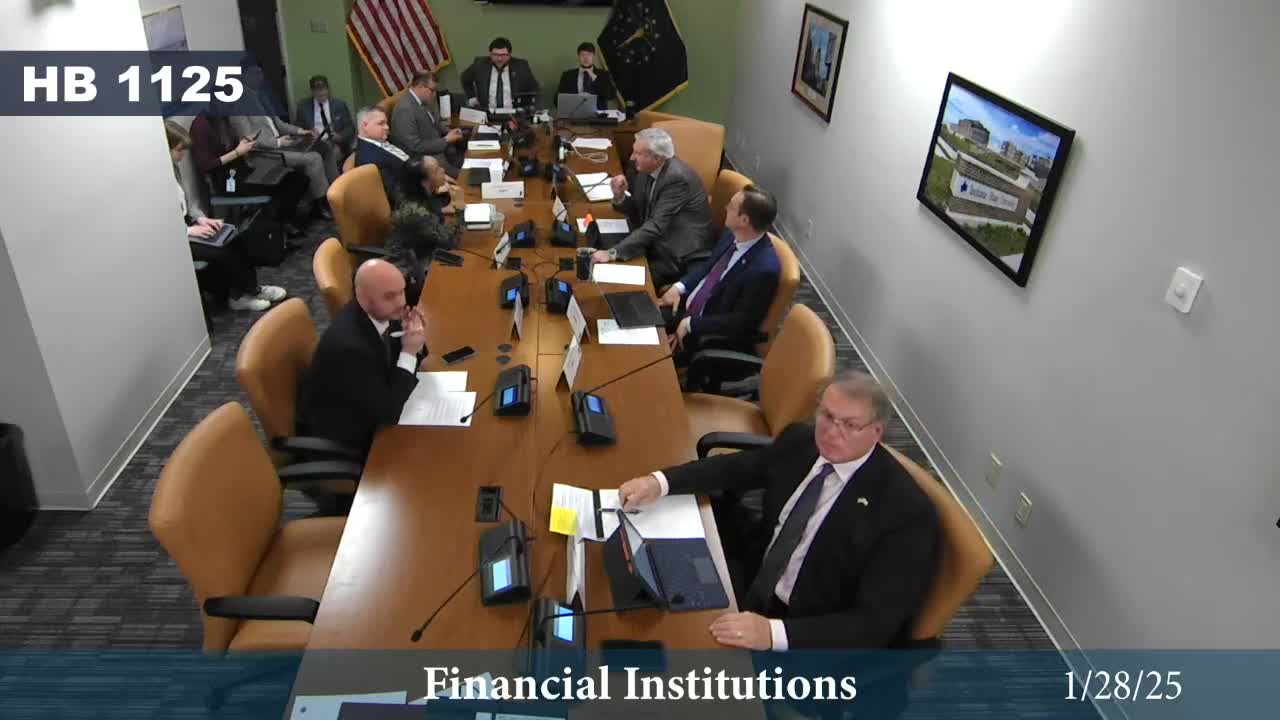
House Bill 1125, a measure to create a licensing and oversight framework for earned-wage-access providers, drew both industry support and consumer-advocate caution in the House Financial Institutions Committee.
House Bill 1125, a measure to create a regulatory framework for earned-wage-access (EWA) providers, drew a mix of industry support and consumer-advocate caution in the House Financial Institutions Committee. Committee members heard approximately three hours of testimony and then elected to hold the bill for further amendments and review.
The bill would license EWA providers, require consumer disclosures and a no-cost transfer option, prohibit credit checks and credit reporting for EWA use, and bar recourse and interest or late fees. Proponents told the committee the product is distinct from small-dollar lending because it gives workers access to wages they have already earned, is typically fee-based rather than interest-based, and often offers a free ACH transfer. Earnin, DailyPay and other providers said EWA reduces late fees and overdrafts and can improve employee retention for participating employers.
Ben LaRocco of Earnin and Andrew Welch of DailyPay both testified in support. Earnin said more than 100,000 Indiana residents have used its product and described a voluntary tipping model (average tip roughly $1; many users report paying no fee at all). DailyPay, an employer-integrated provider, said it serves more than 115,000 employees in the state through 625 in-state employers and reported that a third of employee-downloaders never access funds early; when they do access pay early the average advance is about $150.
Consumer and anti-poverty advocates testified cautiously or neutrally. Erin Macy, director of the Indiana Community Action Poverty Institute and co-chair of Hoosiers for Responsible Lending, said HB 1125 creates useful licensing but omits several protections. Macy urged limits on total charges because EWA products are excluded from Indiana's small-loan rate limits under the bill, asked for APR disclosure to aid consumer comparisons, urged a minimum term to reduce rapid re-borrowing and requested limits on the number of ACH debit attempts to reduce overdraft and NSF fees. Macy cited national analyses showing high APR equivalents and behavioral patterns: in some studies the average EWA user had dozens of transactions per year and re-borrowing made up a significant share of volume.
Other witnesses urged a centralized verification system (a shared database) so providers can avoid inadvertently allowing customers to overextend themselves across multiple EWA platforms. Consumer advocates also pressed for mandatory public reporting of enforcement actions and more frequent aggregated data sharing by the Department of Financial Institutions (DFI).
Industry witnesses defended current practices: providers described product differences (employer-integrated vs direct-to-consumer), the availability of a no-cost option, low per-transaction fees for instant transfers (Earnin cited $2.99'$4.99; DailyPay cited around $3.49), and business incentives to avoid repeated defaults because many providers bear repayment risk or are integrated with payroll. DailyPay and Earnin argued a licensing framework will provide legal clarity, a level playing field, and consumer protections while still allowing low- or no-cost options.
Committee members asked about re-borrowing and default patterns, the interplay with Indiana's payday and small-loan laws, the appropriateness of APR-style disclosure for a fee-based product that is not structured as a loan, and the voluntary tipping model. Consumer advocates reiterated a desire to cap charges, require APR-equivalent disclosure and limit ACH attempts. Several committee members signaled interest in crafting amendments to require more public data, limit ACH recovery attempts, and explore a centralized verification database.
The committee did not take a final vote; HB 1125 was held for amendment and further negotiation. Sponsors and stakeholders agreed to continue conversations over the next week on fee caps, reporting, and operational safeguards.