Get Full Government Meeting Transcripts, Videos, & Alerts Forever!
Get email alerts on the Broadband Investment topic
No spam. Unsubscribe anytime.
Commerce highlights broadband investments, BEAD timeline and workforce priorities
Summary
The Department of Commerce presented its FY 2026 request and described state and federal broadband funding—including a $35 million state broadband fund, about $120 million in ARPA capital projects and the $580 million BEAD program—while the department emphasized workforce, housing and childcare as barriers to business growth.
Brooke Dupree of the Legislative Services Office reviewed the Department of Commerce’s FY 2026 budget materials and the departmental reorganization that created a standalone broadband office. Director Tom Keeley and members of his leadership team described how state and federal broadband dollars are being deployed alongside Commerce priorities for workforce, housing and industry recruitment.
Ramon Sanchez, the Commerce broadband manager (identified in the hearing as Ramon Jabe Sanchez), walked the committee through the state broadband fund and the federal timelines. “26 and a half million of that is already obligated, so there's about 8.5, 8.7 remaining,” he said of the $35 million Idaho Broadband Fund. He added that the $120 million capital projects fund is contracted across 18 projects to connect roughly 35,000 homes and businesses, and that the BEAD program (referred to by its federal acronym) is a roughly $580 million federal program for which Idaho is completing prequalification and will open funding applications later this calendar year.
Why it matters: the Commerce briefing covers large, multi‑year broadband investments that could materially expand high‑speed internet to unserved and underserved Idaho households and businesses while the department also addresses workforce and community infrastructure challenges that affect economic growth.
Key points
- Broadband funds and status: The state created an Idaho Broadband Fund of $35 million (general fund transfer); approximately $26.5 million is already obligated. The federal capital projects funding (ARPA) of about $120 million is under contract for statewide projects expected to reach tens of thousands of locations. The BEAD program—about $580 million nationally as implemented in Idaho—was described as in prequalification; Commerce expects to open funding applications for eligible projects later in the calendar year and to submit its federal package thereafter.
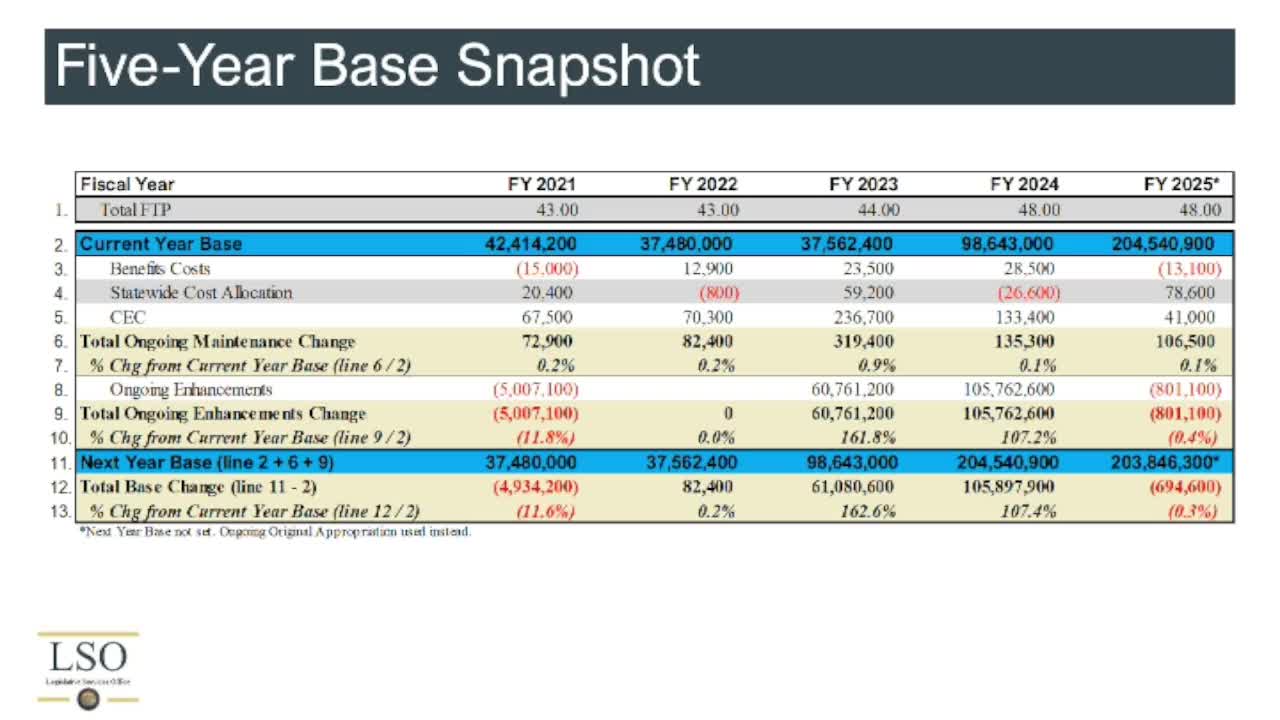
- Office structure and staffing: Commerce reports about 48 FTP across its commerce and broadband programs (42 FTP for commerce, 6 FTP for the broadband office after the recent reorganization), with recent increases in FTP tied to managing federal broadband grants. The department noted roughly 81% average staff fill rates.
- Partnerships with private providers and local jurisdictions: Sanchez emphasized collaboration with internet service providers and local governments. Idaho’s approach to BEAD planning included using some planning funds to grant local jurisdictions for project planning—the state said it is the only state using planning funds for local planning grants, which the office used to support 15 local planning efforts.
- Workforce, housing and other business needs: Director Keeley linked broadband work to broader Commerce priorities—workforce development, childcare, housing and energy—citing partnerships with workforce development councils, local economic organizations, and the state’s tech and energy initiatives.
Questions from the committee
- Technology choices and futureproofing: Committee members asked whether satellite (low‑earth orbit) services such as Starlink would make fiber builds obsolete in some locations. Sanchez said federal guidance prioritizes fiber and licensed fixed wireless but allows alternative technologies where appropriate; he said fiber remains the most reliable medium but low‑earth orbit satellites may be a component for very remote locations.
- Timeline and execution risk: Commerce said it is roughly two years into BEAD planning work. The office expects to open the funding application phase this year, evaluate proposals through the summer, and submit a final federal package before federal review. The office said BEAD funds could begin moving approximately a year from application submission, subject to federal approval.
Ending
The committee received the Commerce presentation and asked for clarifications on timelines and partnerships. No formal appropriation votes were taken during this hearing; Commerce’s requests and federal program timing will continue through the appropriation and federal review processes.