Get Full Government Meeting Transcripts, Videos, & Alerts Forever!
Get email alerts on the Liquor Division Budget topic
No spam. Unsubscribe anytime.
Idaho Liquor Division outlines staffing, IT and accessibility requests in budget briefing
Summary
The Idaho State Liquor Division told the Joint Finance-Appropriations Committee it needs continued staff pay increases, IT and store capital to address turnover, aging infrastructure and cybersecurity; lawmakers pressed the agency on website ADA compliance and use of temporary store clerks.
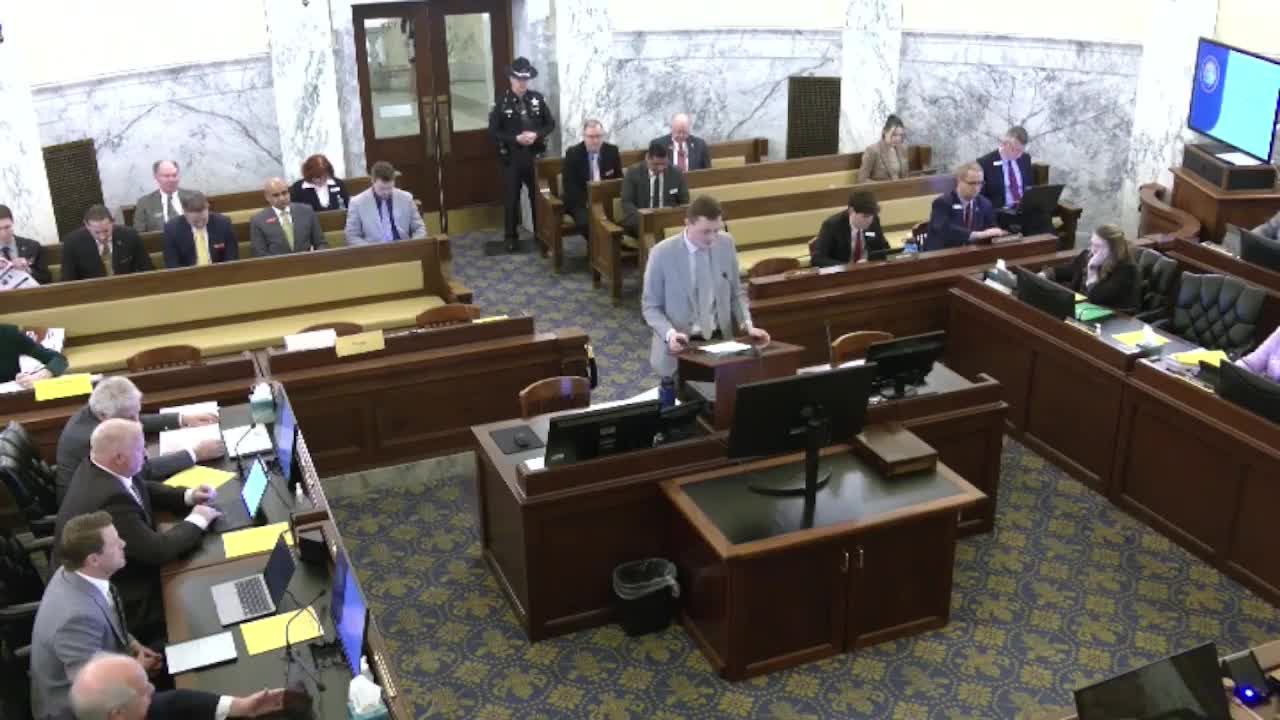
Kellen McGurkin, a budget and policy analyst with the Legislative Services Office, opened the Joint Finance‑Appropriations Committee briefing on the Idaho State Liquor Division’s FY 2026 budget and dedicated funds, describing the agency’s statutory charter and its revenue distributions to courts, cities, counties and the general fund.
The Liquor Division’s director, Andrew Arulanandam, and members of his leadership team answered committee questions on staffing, store openings, IT modernization and a requested website accessibility upgrade. “My name is Andrew Arulanandam…please call me Andrew,” Arulanandam said when introduced. He later described the agency as “a revenue generating agency” and framed the division’s staff as state ambassadors serving Idahoans.
Why it matters: the Liquor Division operates a network of state retail stores and contract outlets that generate revenue distributed by statute. Lawmakers focused on how the agency’s staffing and IT choices affect operations, public access and the state’s risk exposure to litigation and cyberthreats.
Key details from the presentation
- Staffing and turnover: The division has an FTP cap of 257.25 positions, concentrated in retail operations (about 210 full‑time retail positions). The agency uses roughly 185 part‑time store clerks (not counted in FTP) and works with about 106 contract liquor stores. The division reported a filled FTP rate near 93% and said it spends about 96% of its appropriated personnel costs on payroll. The agency told the committee it previously experienced turnover as high as about 140% for temporary clerks and has reduced that to roughly 84% after prior pay increases and position conversions.
- Temporary clerks and pay: The agency requested ongoing dedicated funds to increase temporary retail staff pay from $15.00 per hour to $15.45 per hour if approved. Tony Grama, introduced in the hearing as chief deputy and CFO of the Liquor Division, said, “our temporary, store clerks are state employees. We don't hire them through an agency,” and explained that temporary clerks are not eligible for automatic CEC adjustments; pay increases require a line‑item enhancement.
- Financials and fund balances: The presentation showed the division’s free fund balance fell from roughly $38 million in FY 2022 to about $14 million in FY 2024. The agency reported total reported sales and noted it splits available distributions after operating needs; slide references were given for the committee packet. The division said it consistently expends more than 90% of its appropriation and attributed some unused appropriation to a liquor store that has not yet opened and to retail staffing turnover.
- Capital, IT and security requests: The Liquor Division requested a mix of ongoing and one‑time appropriations including: funding to cover additional temp pay (ongoing); a one‑time IT appropriations package for network modernization (firewalls, managed switches and cellular routers) and site security; a requested website upgrade to meet Web Content Accessibility Guidelines (WCAG) and reduce ADA litigation risk; and one‑time replacement items for retail store improvements (shelving, lighting, flooring, signage) and motorized warehouse equipment.
Lawmakers pressed the agency on specifics
- ADA website cost: Senator Cook asked whether the requested $100,000 for the accessibility upgrade was necessary to fix a specific problem on the site, saying, “is it really going to cost a hundred grand to fix a menu…or am I missing something?” Arulanandam replied that the division had consulted an accessibility expert and received a list of items needed to reach compliance and that attorneys nationwide pursue ADA cases based on website shortcomings.
- Sufficiency of the proposed pay increase: Senator Ward Engelking asked whether the $0.45 raise would meaningfully reduce turnover; the director said the division has taken an incremental approach after prior raises and that pay remains lower than many private sector employers. The director and Grama warned that pay alone may not fully resolve turnover and described the rationale for converting some temporary hours to full‑time positions in prior sessions.
- Contract stores and rural coverage: Senator Carlson asked how liquor sales are handled in rural areas where no state store exists. Arulanandam explained the division supplies product to contract stores and that those private operators manage their employees and labor under contract language.
What the presentation left unspecified
- Exact statutory distribution totals cited during the briefing were presented in slides and the LBB packet but some spoken dollar figures in the transcript were garbled; the committee packet was cited for the detailed dollar breakdowns for FY 2024 distributions and sales.
Ending
The committee did not take a vote during the presentation. The Liquor Division staff stood for questions and said they would be available for follow‑up on appropriation details and the requested IT and accessibility items.