Get Full Government Meeting Transcripts, Videos, & Alerts Forever!
Get email alerts on the State Public Defender topic
No spam. Unsubscribe anytime.
New State Public Defender agency outlines large funding needs, counties to retain facilities until 2029
Summary
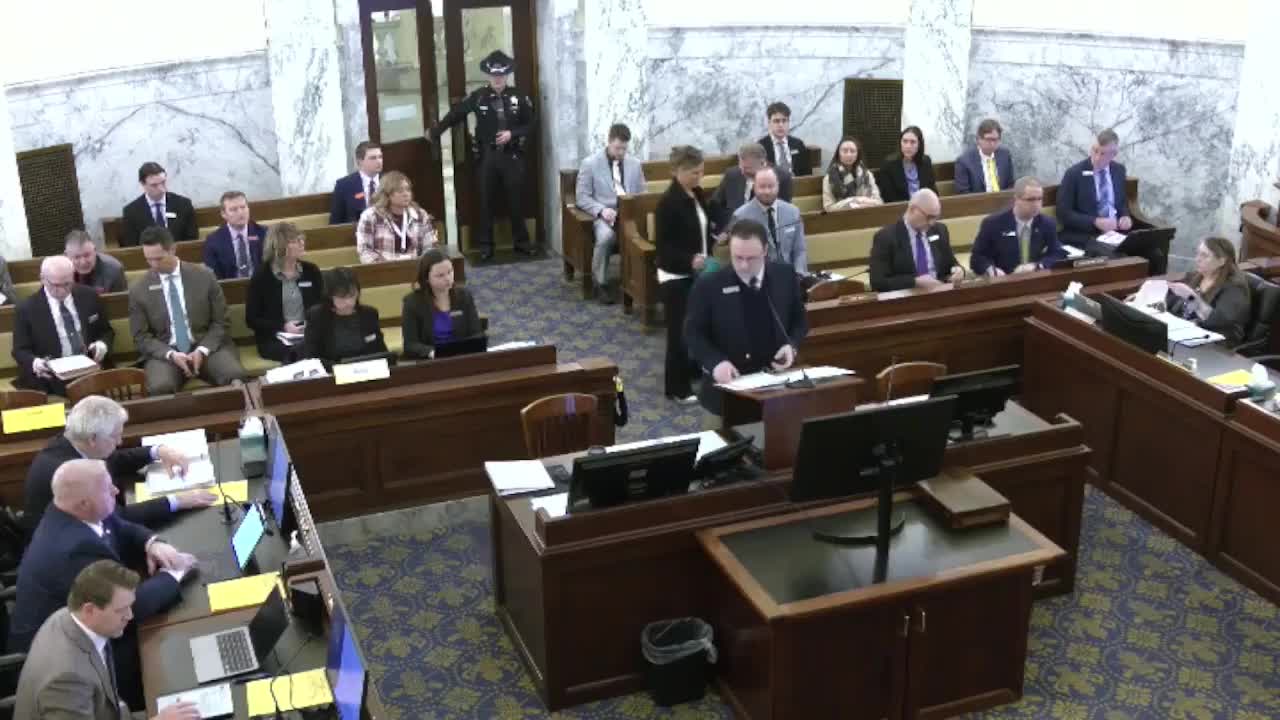
The newly formed Office of the State Public Defender told the Joint Finance‑Appropriations Committee it needs supplemental and ongoing funding to implement statewide public defense, cover transcript costs after an Idaho Supreme Court ruling and to recruit attorneys and investigators as counties are phased into the state system.
The Office of the State Public Defender presented its first full budget to the Joint Finance‑Appropriations Committee and requested a mix of supplemental and ongoing appropriations to stand up statewide operations and cover unanticipated costs.
Why it matters: The office is a new state agency created under Title 19, Chapter 60 (as referenced during the hearing) to deliver indigent defense services statewide. Committee analysts and the state public defender described gaps between initial funding assumptions and current needs, including court transcript obligations created by a December 5, 2024 Idaho Supreme Court decision (State v. Blaszek) and uncovered county costs that had not been previously disclosed to budget drafters.
Major funding items and the dedicated fund: Analyst Christopher Lahoset told the committee the State Public Defense Fund was seeded by a statutory transfer of $39 million from the tax relief fund (identified in the presentation as "section 57827 of Idaho Code"). The agency requested a one‑time supplemental appropriation of $2.5 million for the current fiscal year to fully utilize the $39 million cash transfer and to provide representation for children and parents under the Child Protective Act. The governor also recommended a one‑time supplemental of roughly $390,200 to cover transcript costs tied to the Idaho Supreme Court ruling and additional one‑time and ongoing funding to recruit and retain employees and increase contract rates for attorneys and investigators.
Agency scale and vacancies: Lahoset presented the office’s current staffing and budget snapshots and said the new agency was budgeted at roughly 360 authorized full‑time positions with 29 vacancies as of the December snapshot. He said the agency’s personnel budget is in the multiple‑tens of millions and that two‑thirds of funding comes from the dedicated State Public Defense Fund.
Operational challenges described by Director Eric Fredericksen: Fredericksen told the committee the new agency "walked into 1,300 withdrawals and cases," that he and district staff initially litigated many matters, and that the office has seen significant contractor departures. "We lost a lot of contract attorneys," he said. Fredericksen said some prior county funding streams and flat‑fee contract arrangements were not disclosed to the Public Defense Commission and that the office is working to standardize pay and contract rates across the state.
Scope and timing: Fredericksen said counties are required by the implementing legislation to provide facilities through 2029; the state may need statutory changes to alter that arrangement. He also told the committee the office is receiving appointments for many matters that are not traditional criminal defense—including custody and private‑termination cases—and that staff are litigating appointments they believe are outside the agency’s statutory scope.
County onboarding and other requests: The agency requested authorization for additional positions to open institutional offices in several counties (Benewah, Elmore, Jerome and Shoshone were named in the presentation) and noted onboarding of counties will continue in future years. The governor recommended a one‑time cash transfer of $16,867,400 from the general fund to the State Public Defense Fund to increase recruiting and contract rates.
Committee concerns and next steps: Legislators asked for more detail about the composition of "experts" and "miscellaneous" line items (e.g., psychosexual evaluations and transcript costs), whether supplementals could be delayed into the FY2026 budget, and whether anticipated economies of scale would materialize from a statewide system. Fredericksen said the agency is still learning the volume and cost structure and will provide additional detail to the committee on specific cost categories and county‑level facilities arrangements.