Get Full Government Meeting Transcripts, Videos, & Alerts Forever!
Get email alerts on the Public Defense Appellate topic
No spam. Unsubscribe anytime.
Appellate public defender asks for in‑house deputy to reduce costly outside contracts
Summary
The Office of the State Appellate Public Defender asked the Joint Finance‑Appropriations Committee for funding to add a deputy appellate public defender to absorb non‑capital appeals and reduce the office’s reliance on higher‑cost contracted firms.
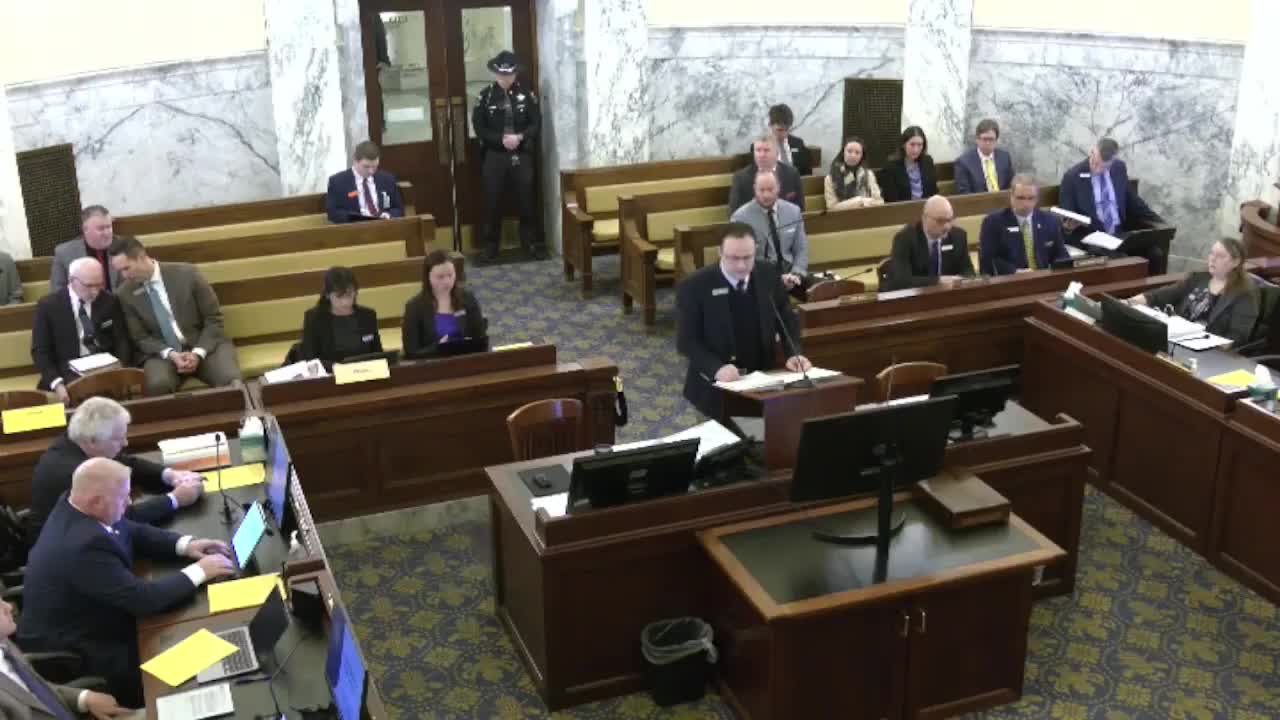
The Office of the State Appellate Public Defender requested funding for an additional deputy appellate public defender during a Joint Finance‑Appropriations Committee hearing. Budget analyst Christopher Lahoset told the committee the new position would handle non‑capital felony, misdemeanor and juvenile district and post‑conviction appeals and that hiring an in‑house attorney would be less expensive than continuing to contract overflow cases.
Why it matters: The office reported a sustained increase in appeals since the pandemic and said contracting overflow cases is more costly and can extend across fiscal years. Committee members pressed the director on turnover, contracting practices and how a new hire would change case assignments.
Budget and workload: Lahoset said the appellate office has authorization for 26 full‑time positions and, as of the budget snapshot, reported no vacancies. He told the committee the office’s estimated annual bill from contracted private firms for overflow cases would be about $254,000, while hiring an in‑state attorney at an annual salary of roughly $140,000 would generate savings for the office.
Director Eric Leightonen described a large, post‑pandemic caseload increase and periods of turnover that lengthened hiring timelines. "It has been a challenging couple of years because ... our post‑pandemic caseload has gone up pretty dramatically," Leightonen said, adding that the office tailors caseloads by attorney experience and currently manages about 650 cases in the fiscal year.
Contracting and conflicts: Leightonen explained the office must continue to contract out cases that create conflicts of interest; those funds are budgeted separately and typically run about $200,000 per year. He said the office also contracts some overflow matters when staffing or case spikes require it, and that contracting is generally more expensive than handling work in‑house and can cross fiscal years, complicating budgeting.
Committee questions and context: Committee members pressed on how the new position would change assignments (Leightonen said it would add a 13th appellate attorney and share of the caseload), why contracting is used, and how the office manages training and case complexity. Lahoset noted prior supplemental appropriations related to a large influx of cases and that approximately $1,259,000 in one‑time reappropriated funds remain available and could be drawn down.
Outlook: The director concluded by thanking the committee for consideration and expressed hope the committee would support the governor’s request for the additional position and reappropriation authority so the office can move more work in‑house and reduce reliance on higher‑cost contracts.