Get Full Government Meeting Transcripts, Videos, & Alerts Forever!
Get email alerts on the Board Governance topic
No spam. Unsubscribe anytime.
PGCPS committee recommends changes to investments reporting, postpones board reimbursement rule changes and sends several policies to public comment
Summary
On Jan. 28 the Policy & Governance Committee recommended revision of the investments policy to add monthly reporting and called for clearer communication platforms; it postponed further action on proposed board reimbursement rules and recommended three policies for public comment.
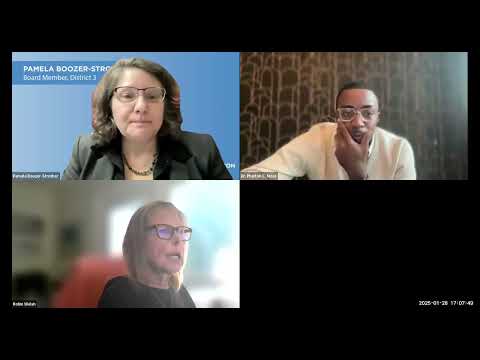
Prince George's County Board of Education Policy & Governance Committee met Jan. 28 and took several procedural votes on policies and committee reporting.
Investment reporting: The committee recommended that Policy 3.100 (Investments) be revised to move more detail from the administrative procedure into policy and to require monthly investment policy compliance reports to the board. Robin Welch, who presented the item, said the district’s treasurer already prepares a monthly portfolio report and that the proposed policy language would formalize monthly reporting requirements and provide members a listing of individual securities and the percentage of the portfolio represented by each investment type.
“I would like to add language about the communication platforms that are available between the board and the superintendent,” said Board member Briggs during discussion; the committee accepted that amendment and proceeded to recommend Policy 3.100 to the policy sponsor for revision. A subsequent roll call concluded with three affirmative votes in favor of the recommendation.
Voucher reimbursement policy postponed: The committee spent extensive time on proposed revisions to Policy 9354 (Board Member Voucher Reimbursement), including language about reimbursable local versus nonlocal travel, IRS mileage rules and a 30‑mile definition for nonlocal travel that affects overnight travel reimbursement. Members raised concerns about ambiguity on who determines whether an expense is political (for example, campaign‑related hosting during election windows) and about inconsistent historical practices for travel reimbursements (including overnight stays for the Maryland Association of Boards of Education conference in Annapolis).
After discussion, the committee voted to postpone Policy 9354 to allow staff to research legal and administrative questions — including the 30‑mile definition, the IRS mileage rules and whether internal audit should be the preapproval contact for contested expense eligibility. The motion to postpone passed on a committee roll call.
Policies sent to public comment: The committee also recommended three items to the full board for public comment: Policy 4113 (Community Involvement in the Principal Selection Process), Policy 5111 (Legal Age of Admission) and Policy 9366 (Order of Business/Parliamentary Procedures), the last of which the committee also recommended for rescission. On Policy 4113 the committee adjusted language about stakeholder panels: the superintendent’s designee must identify school population demographics and the stakeholder panel must be representative of the school; the committee agreed that, when possible, at least one stakeholder on principal selection panels should be a parent of a student receiving special education or Section 504 services, and members directed staff to codify selection procedures in the administrative procedure.
Next steps and oversight: Committee members asked that monthly investment reports be routed to a standing committee (audit or budget) and that the office of internal audit be the primary contact for preapproval questions about allowable expenses. Board Director Fitzpatrick and staff agreed to research the 30‑mile rule’s origin and produce clarified draft language for the next meeting.
Ending: The committee scheduled follow‑up work and requested staff and legal research before taking final action on the reimbursement policy; the investments policy recommendation will move forward to the policy sponsor for revision and the three policies will go to the full board for public comment.