
Board debates social-host ordinance proposal; tables formal support pending drafted language
Get AI-powered insights, summaries, and transcripts
Subscribe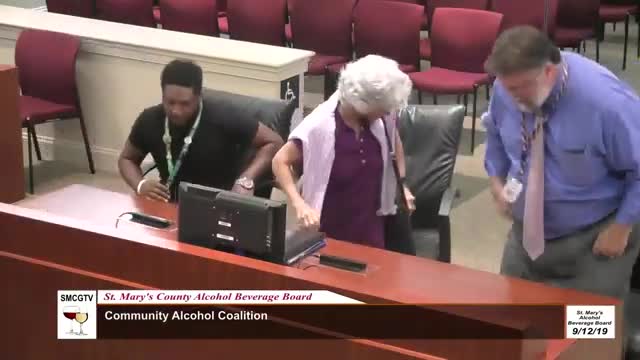
Summary
The Community Alcohol Coalition presented a proposed social-host ordinance to make certain underage-drinking violations civil citations. Board members and county health representatives discussed scope and enforcement concerns and voted to table action until a draft ordinance and more information are available.
The Community Alcohol Coalition presented a proposal on Sept. 12 to create a local social-host ordinance that would add a civil-citation option to existing criminal penalties for adults who allow underage drinking on residential premises.
Coalition representatives told the board the intent is to provide law enforcement a simpler, civil citation option — akin to a traffic ticket — for certain incidents of underage or binge drinking that currently require criminal prosecution. The coalition cited other Maryland jurisdictions that have social-host rules and noted a state proposal had been introduced and later withdrawn.
Marsha Greenberg of the county health department said the ordinance’s public-health aim is to prevent underage drinking and to open opportunities for community education; she emphasized that the proposal is intended to supplement, not replace, education and prevention efforts.
Board members expressed multiple concerns about the proposal’s draft form and possible unintended consequences. Members questioned whether fines would be levied against absentee property owners, how the citation route would interact with district court processes, and whether the approach was tailored to St. Mary’s County’s largely non–college-town context.
Several members warned the proposal, as written in comparable ordinances elsewhere, could shift enforcement burdens to property owners who do not reside at or control a rented property and could create eviction or financial hardships unrelated to the conduct of the individuals who committed the offense.
After extended discussion the board voted to table consideration and asked the coalition to return with a written draft that addresses local concerns and specifies citation procedures, penalty levels and who receives citations. The board requested the coalition to bring revised language after county commissioners and the local legislative delegation have had an opportunity to review initial proposals.