
CDA recommends village board explore community land trust and use of TID-extension funds
Get AI-powered insights, summaries, and transcripts
Subscribe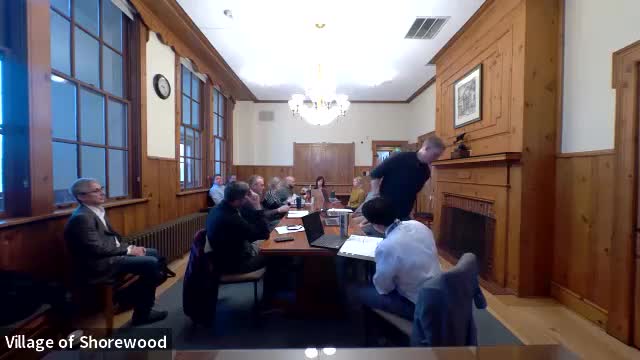
Summary
The Shorewood CDA voted to recommend that the village board pursue a community land trust property and consider allocation of TID (Tax Increment District) extension funds to support the approach. Members debated trade-offs: permanent affordability through a community land trust versus impacts on the tax base and other infrastructure priorities.
The Shorewood Community Development Authority voted to recommend that the village board pursue the concept of a community land trust (CLT) property and consider allocating TID-extension (TID 1 extension) funds to support the approach. Members discussed benefits, limits, and operational requirements, and several asked for additional detail and staff capacity analysis before any binding commitment.
Nut graf: CDA members framed the motion as a recommendation-only to the village board. The discussion weighed CLT27s potential to create in-perpetuity affordable homeownership against concerns that using TID funds to buy existing duplexes would reduce the local property tax base and might provide limited new housing units compared with new development.
Key points from discussion
- Motion on the table: One member moved that the CDA recommend to the village board that the village pursue a community land trust property and request allocation of TID 1 extension funds for that purpose; another member seconded. The CDA then debated the concept and competing priorities before putting the recommendation to a vote.
- Purpose and mechanism: A presenter described how a CLT model would work: the land trust would purchase property and sell the improvement to an owner at a restricted resale price, with an agreed-upon annual appreciation cap (example figures in discussion cited an illustrative appreciation rate range of 1.25% to 2% per year). The land would remain in the trust so the affordable resale price is preserved for subsequent buyers.
- Costs and math discussed: Participants referenced an illustrative figure of roughly $250,000 per property (described as "roughly 250,000") as the amount used in the CDA27s analysis to acquire a duplex-type property; members also discussed the village27s existing pool of funds described in the meeting as "210,000,0.0" (as stated in the transcript) and a separate developer proposal referenced at approximately $950,000. The transcript records differing views on whether the CLT would remove affordable units from the tax roll and how substantial that tax-base reduction would be.
- Tax-base trade-offs: Several CDA members raised concerns that purchasing existing duplexes would likely take already-affordable units off the market and reduce taxable value compared with supporting new development that increases the tax base. One member said, "It would be taking properties off the tax roll to provide the affordable housing." Another member noted that while the CLT model preserves affordability in perpetuity, the village would forego some property tax revenue and should weigh that against anticipated infrastructure expenses.
- Staff capacity and process: Staff and the presenter said that the largest staff responsibility would likely involve establishing assessment methodology and monitoring (assessor workload, bookkeeping and periodic monitoring similar to HOA oversight). Policy 40 (village policy governing use of funds) would need review because it had not been written explicitly with a CLT in mind.
Vote and motion outcome
The CDA placed a recommendation to the village board on the table that the board "pursue a land trust property and request allocation of TID 1 extension funds." The transcript records members asking for clarification and then voting; multiple members indicated "yes" and several indicated "no," and some named trustees were recorded during the roll-call exchange. The meeting transcript as provided includes voices and several affirmative roll-call statements (for example, names called and several members recorded as voting "yes"), and the chair then stated that the motion would be forwarded as a recommendation to the village board. Because the motion was explicitly framed throughout as a recommendation to the village board, any implementation or fund allocation would require subsequent village board review and compliance with Policy 40 and other administrative steps.
Next steps and context
If the village board pursues the CLT option, staff indicated further work would include clarifying precise funding amounts, whether to pilot with one or two properties, establishing assessment and monitoring procedures, and confirming how much of the TID-extension funds (if any) could be allocated to CLT acquisitions versus infrastructure use. Members requested timeline flexibility; staff noted communities can and do extend TID allocations over multiple years.
Ending
The CDA recommendation will go to the village board for consideration. The motion as recorded in the transcript was framed as a recommendation-only and does not itself approve any expenditure; any allocation of TID funds or staff actions will be subject to later village-board decisions and policy review.