Get Full Government Meeting Transcripts, Videos, & Alerts Forever!
Get email alerts on the Alcohol Server Age topic
No spam. Unsubscribe anytime.
Senate Labor & Commerce hears bill to let 18–20-year-olds serve alcohol, expand theater service and update warning signs
Summary
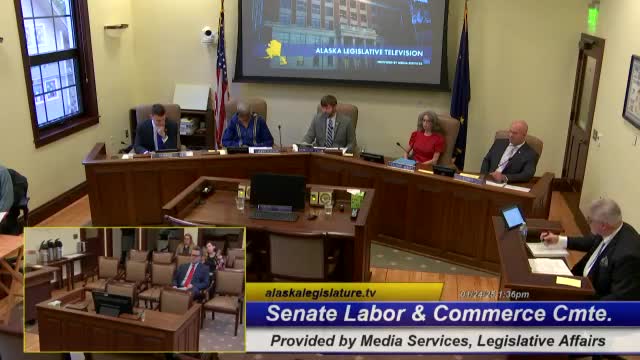
The Senate Labor & Commerce Committee heard Senate Bill 15 on Jan. 24, 2025, in Juneau, a proposal that would allow 18- to 20-year-olds to serve, sell and dispense alcoholic beverages under license-holder supervision, permit 16- and 17-year-olds to work in certain licensed premises under strict supervision, expand where theaters may serve alcohol, and replace current vendor warning signs with a statement that includes cancer risks.
The Senate Labor & Commerce Committee heard Senate Bill 15 on Jan. 24, 2025, in Juneau, a proposal that would allow 18- to 20-year-olds to serve, sell and dispense alcoholic beverages under license-holder supervision, permit 16- and 17-year-olds to work in certain licensed premises under strict supervision, expand where theaters may serve alcohol, and replace current vendor warning signs with a statement that includes cancer risks. The committee held public testimony and took no final action; members said they will take the bill up again on Jan. 26.
Senator Kelly Merrick, sponsor of SB 15, told the committee the bill aims to address worker shortages in the hospitality and service industries and to give young Alaskans “a chance to earn, learn and grow in a real world environment.” Merrick said the bill is designed to let businesses expand staffing while keeping public safety central. “SB 15 isn't just about policies and regulations. It's about opening doors, tackling challenges and empowering the next generation of Alaskans,” she said.
Legislative staff summarized the bill's sections for the committee. The presenter identified these elements: supervision of minor employees will be a consideration for licensing and renewals; licensees could employ people ages 16 through 21 if adequate supervision is provided so 16- and 17-year-olds do not obtain alcoholic beverages; adults 18–20 could serve, sell, deliver and dispense alcohol; adult-entertainment establishments would be excluded from the expanded allowances; the theater-license changes remove the current intermission-only sale limitation; and Section 12 would replace required signs with one that reads, in part, that alcohol use during pregnancy can cause birth defects and “alcohol use can cause cancer including breast and colon cancers.” The bill includes an effective date of July 1, 2025.
Supporters from the hospitality and arts sectors said the change would help address workforce shortages and align Alaska with other states. Cody Costello, president and COO of the Alaska Center for the Performing Arts and general manager for Broadway Alaska, said SB 15 would allow his venue to offer a less rushed service model during performances and increase local economic impact. “SB 15 allows us to continue this work. It expands our local business operations and revenue while enhancing the theater experience for our patrons,” Costello said.
Sarah Parlow, president and CEO of the Alaska Cabaret, Hotel, Restaurant and Retailers Association (Alaska Char), said Alaska is one of three states that require servers to be 21 and argued the restriction hurts retention and recruitment. Parlow told the committee that the industry represents thousands of businesses statewide and that the bill would help the sector address labor shortages ahead of the tourism season.
Opponents raised public-health and youth-safety concerns. Tiffany Hall, CEO of Recover Alaska, said the organization opposes the bill, arguing that exposing minors to alcohol-serving environments risks normalizing underage drinking and increases harms. “SB 15 poses a significant threat to the safety, health, and future of Alaska's youth by lowering the legal age for alcohol servers,” Hall said. Hall also argued the bill does not present evidence it would meaningfully resolve workforce shortages and urged focus on wages, working conditions and retention instead.
Committee discussion noted the bill is substantively the same as legislation that passed the Legislature last year and was transmitted from the House (the presenter said the text matches HB 189 as transmitted). Committee members asked no detailed follow-up questions after invited testimony. The chair kept public testimony open; no vote was taken. The committee scheduled further consideration of SB 15 for its Jan. 26 meeting and said it will hear an overview from the Department of Labor and Workforce Development at a subsequent Wednesday meeting.
The hearing lasted roughly 23 minutes and included invited testimony from industry and public-health advocates; multiple committee members expressed general support for revisiting the statute to address workforce concerns while public-testimony participants flagged safety and public-health tradeoffs. The bill's next committee appearance is set for Jan. 26, 2025, and public testimony will remain open until the committee resumes consideration.