Get Full Government Meeting Transcripts, Videos, & Alerts Forever!
Get email alerts on the Immigration Refugee Policy topic
No spam. Unsubscribe anytime.
Rep. Gray urges protection for recent refugees, warns of federal status is fragile
Summary
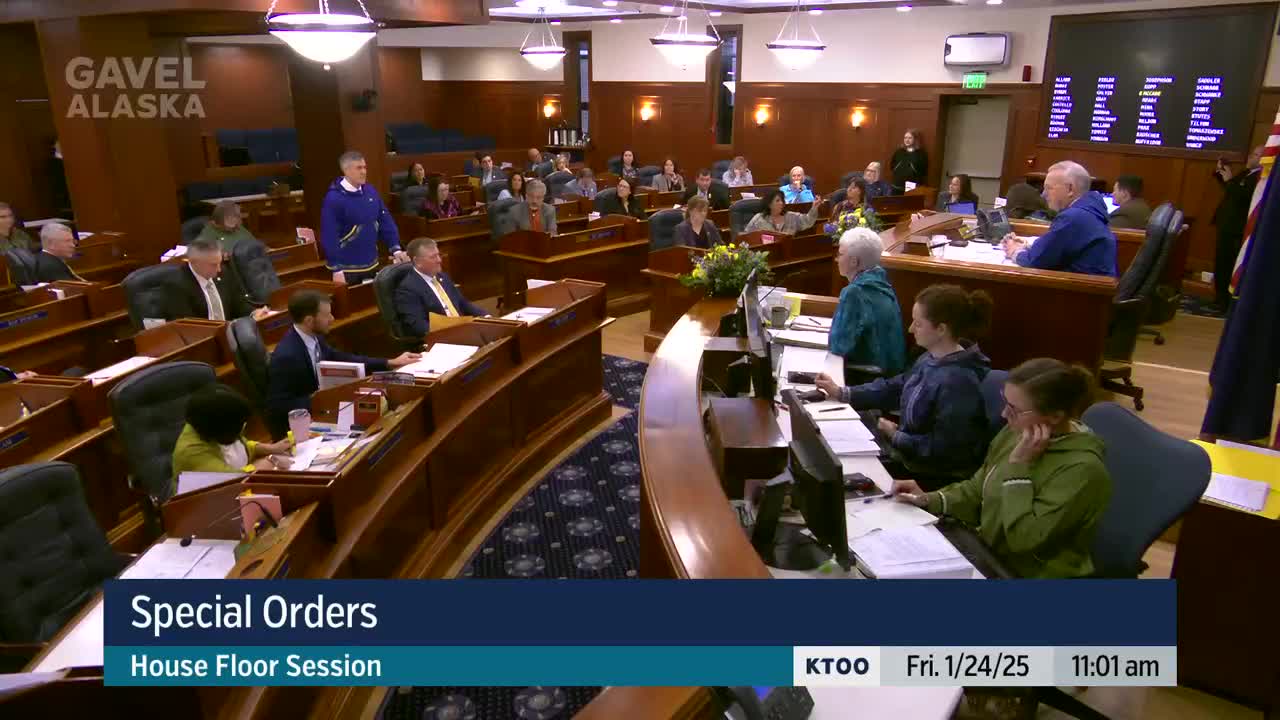
During a House floor speech in Juneau, Representative Gray said more than 2,000 refugees have settled in Alaska in the past four years, many on temporary humanitarian parole, and urged statewide enforcement of labor laws and expanded skilled-immigrant recruitment.
Representative Gray told the Alaska House that more than 2,000 refugees have settled in Alaska in the past four years and warned many rely on temporary federal statuses that could be changed by presidential action.
Gray said the state has received refugees from Ukraine and Afghanistan and described how immigrant arrivals have bolstered local workforces, urging the House to support policies that retain skilled workers. “This emergency status is temporary and at the discretion of the president of the United States,” Gray said, noting the vulnerability of people here under humanitarian parole.
The lawmaker placed the refugee program in historical context, saying the Refugee Act of 1980 shaped federal policy and that Alaska historically relied on organizations to assist newcomers. He told colleagues that Catholic Social Services has served as the federal surrogate agency in Alaska. Gray also cited federal legal arguments recently raised by the U.S. Justice Department and referenced the 1884 Supreme Court decision Elk v. Wilkins while asserting his belief that Alaska Natives are U.S. citizens.
Gray urged enforcement of state labor laws for all workers regardless of immigration status and directed Alaskans who believe they are unpaid to contact the Alaska Department of Labor or Catholic Social Services' refugee assistance program. “Alaska law is clear. They must be paid,” he said, and noted the state's minimum wage as discussed on the floor.
The remarks were delivered as a special-order floor presentation during routine House business; no bill vote or formal action followed this speech.