Get Full Government Meeting Transcripts, Videos, & Alerts Forever!
Get email alerts on the It Budget topic
No spam. Unsubscribe anytime.
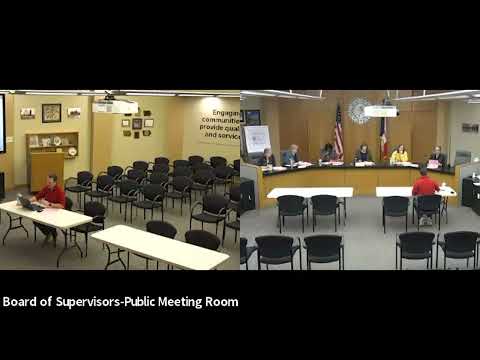
Story County reviews IT budget; proposes 43 Microsoft licenses, Starlink redundancy and hardware replacements
Summary
Story County supervisors and Information Technology staff discussed the county’s proposed fiscal-year IT budget during a Jan. 31 work session, focusing on a request to add 43 Microsoft accounts for seasonal and temporary staff, contingency plans for Internet outages using Starlink satellite service, ongoing UKG costs, participation in the MAPS partnership, and a multi-year hardware and wireless replacement plan.
Story County supervisors and Information Technology staff discussed the county’s proposed fiscal-year IT budget during a Jan. 31 work session, focusing on a request to add 43 Microsoft accounts for seasonal and temporary staff, contingency plans for Internet outages using Starlink satellite service, ongoing UKG costs, participation in the MAPS (mapping/GIS) partnership, and a multi-year hardware and wireless replacement plan.
IT Director Joe Wakeman told the Board that the department changed its policy so interns and seasonal employees will receive individual Microsoft accounts rather than shared mailboxes. "That is a $12,000 annual ad for those 43, seasonal part time, etcetera positions," Wakeman said, adding the exact figure ($12,058) will be added to the data processing software initial purchase line (page 142 of the submitted budget). Wakeman said the county needs individual accounts so temporary election workers and others can complete required state cybersecurity training and access systems such as the voter registration database without relying on external Gmail accounts.
Wakeman also explained that the 43 licenses will be managed as a floating pool so the county can add or remove accounts month to month as staff rotate. "It's a floating pool of 43 licenses that we'll add," he said. The cost is strictly for Microsoft licensing, he said, and does not include new computers.
On resilience and connectivity, Wakeman proposed two Starlink subscriptions—one as a countywide redundancy option and another if needed at the range house in rural areas. He described Starlink as "a pretty inexpensive way to strengthen our COOP COG" (continuity of operations/continuity of government) and said the dish equipment is about $500 with roughly a $140 monthly service fee; if local fiber (Colo Telephone) arrives on schedule the county would prefer fiber but would use Starlink temporarily.
The board also discussed the county’s participation in MAPS (the GIS/mapping cooperation among Story County, the City of Ames and Iowa State University). Wakeman provided an invoice summary showing total MAPS expenses of $298,089 for the prior year and the contributions listed on that invoice: Iowa State University about $72,000, Story County about $73,000, Ames Police about $76,000, E-911 about $60,000, Ames Fire about $66,100, Mary Greeley about $28,100, City of Nevada about $3,000, Huxley about $1,700 and Story City about $1,600. Wakeman said some smaller partner contributions appear to follow a sliding scale rather than a strict equal split, and he said the MAPS 2080 (document referenced in discussion) may need review.
Personnel- and systems-related costs were also discussed. Wakeman said the county completed a Microsoft 365 (Office/Teams) migration and that a previously contracted $33,000 for technical assistance was largely unused and can be applied toward other projects such as a phone system replacement. He said the UKG telestaff addition and a five-year UKG agreement lock in costs for multiple years: "that's gonna be ongoing, a 111 a year, about, for UKG? For 5 years," as discussed in the meeting; he added the contract holds costs steady for five years with a later 4% escalation.
Hardware and infrastructure needs featured repeatedly. Wakeman said some currently budgeted desktop replacements were moved into the current fiscal year because purchases were made early; he confirmed nine desktops are slated for replacement with a line-item amount discussed in the meeting. He estimated that replacing countywide wireless access equipment (end of vendor support for the current model) would cost about $41,300. Wakeman said the department currently estimates at least $100,000 of unspent funds remain in the current fiscal year’s IT budget and that about $225,500 was the optimistic estimate of underspending earlier in the session; those funds could be used to cover early purchases without a budget amendment.
Wakeman recommended consolidating webinar and meeting licenses into Microsoft Teams where feasible. He said the county would likely keep Zoom webinar licenses for one more year to allow the board and other groups to pilot Teams webinar, then transition: "it would be my intent to start migrating…to use Team's webinar and kinda pilot that for us." He also flagged a potential website replacement study next fiscal year to evaluate user experience improvements.
Board members and department leaders asked for clarifications and small adjustments during the review. Auditor Lucy Martin and Supervisor Lisa Heddens questioned counts and line items for Acrobat Pro and desktop replacements; Wakeman said he would correct a copy-paste error that had spread counts unevenly across lines and would provide an updated equipment-line total later in the day. Wakeman confirmed he would adjust the budget to include the additional Microsoft licensing cost and would rework the equipment line once confirmed purchases moved from next fiscal year into the current year.
No formal board vote occurred during the work session; the meeting served to review the IT request and for staff to refine budget figures and follow up with revised numbers. Wakeman said the IT department will send updated line-item totals and would continue coordinating with departments on device replacements, conference-room AV upgrades and potential phone-system replacement plans.
Wakeman closed by thanking colleagues and noting ongoing coordination with Iowa County IT groups (ICIT) and national county resources (NACo) for training and vendor options. The county’s IT budget remained a moving document at the end of the session as staff incorporated the discussion and corrections.