Get Full Government Meeting Transcripts, Videos, & Alerts Forever!
Study: Phase 1 Alaska LNG pipeline could cut in-state gas prices; AGDC seeks private partner and limited financing backstop
Summary
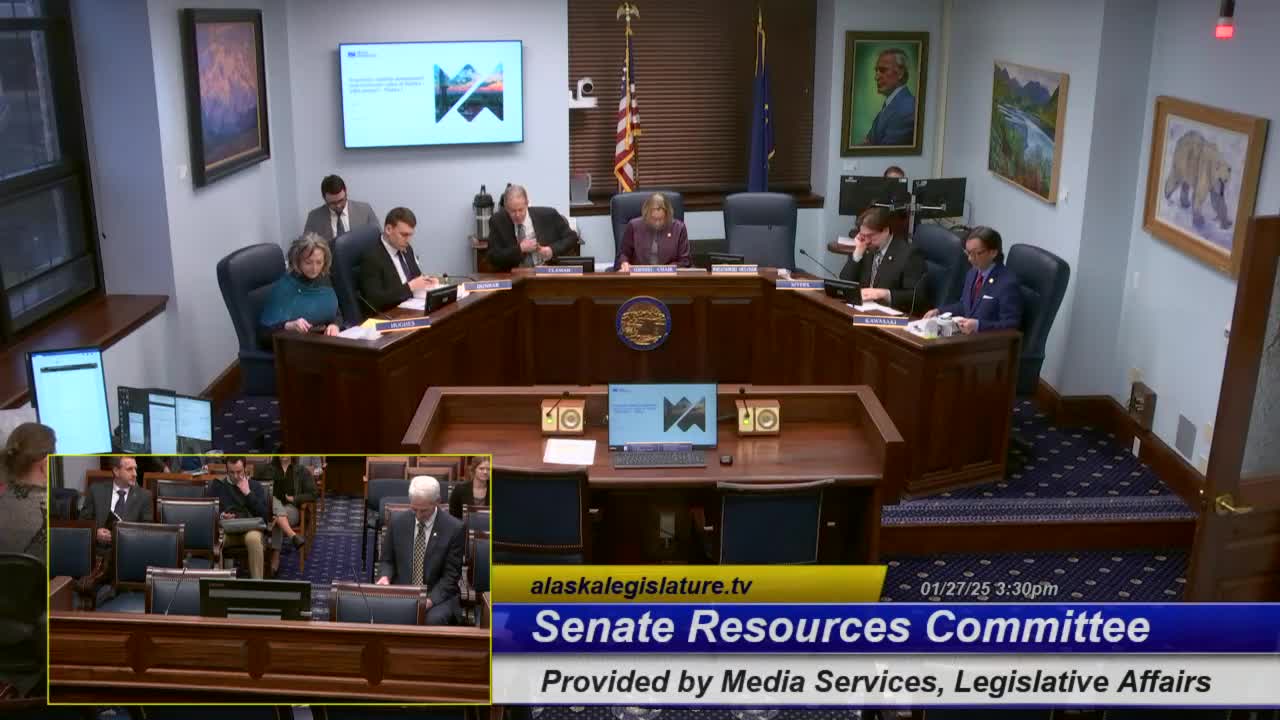
A Wood Mackenzie economic analysis presented Jan. 27 to the Alaska Senate Resources Committee found that a Phase 1 Alaska LNG pipeline — a 765-mile, 42-inch mainline with roughly 3.3 Bcf/day capacity — could lower delivered gas prices for Southcentral Alaska under higher-throughput scenarios, the firm—s Costa Swift told the committee.
A Wood Mackenzie economic analysis presented Jan. 27 to the Alaska Senate Resources Committee found that a Phase 1 Alaska LNG pipeline — a 765-mile, 42-inch mainline with an estimated capacity of about 3.3 billion cubic feet per day — could deliver gas into Southcentral Alaska at a base-case delivered cost of about $12.80 per MMBtu, falling as throughput rises to as low as $2.23 per MMBtu in a high-demand scenario, Wood Mackenzie Vice President Costa Swift told the committee.
The study, commissioned under legislative intent language and reviewed for the committee by Wood Mackenzie and the Alaska Gas Line Development Corporation (AGDC), compared that in‑state pipeline option with importing LNG into Anchorage via an FSRU (floating storage and regasification unit). Wood Mackenzie estimated the delivered cost for LNG imports (excluding an onshore reception/dock site) at roughly $10.20–$13.70 per MMBtu, depending on contract, shipping origin and lease costs for an FSRU.
Why it matters: committee members heard that a competitively priced, reliable pipeline supply could create substantial in‑state economic activity and consumer savings, while also generating construction and ongoing jobs. AGDC said it is seeking private development partners to advance the asset and discussed a request for limited public financial backstopping during the next commercial development stage.
Wood Mackenzie’s presentation and key figures
Costa Swift summarized the firm’s modeling approach, which tested four long-term demand scenarios (base load, added industrial demand, a larger industrial restart, and a full 20 MMTPA export facility) and ran sensitivities for financing, taxes and project life. Swift said Phase 1 as modeled covers the pipeline mainline only (no upstream treatment, no LNG liquefaction facility): “Phase 1 is only related to the pipeline itself,” he said.
Key numbers presented by Wood Mackenzie (as stated to the committee): - Pipeline mainline CapEx (Phase 1, mainline only): $10.8 billion to $14.9 billion depending on scope and…
Already have an account? Log in
Subscribe to keep reading
Unlock the rest of this article — and every article on Citizen Portal.
- Unlimited articles
- AI-powered breakdowns of topics, speakers, decisions, and budgets
- Instant alerts when your location has a new meeting
- Follow topics and more locations
- 1,000 AI Insights / month, plus AI Chat