Get Full Government Meeting Transcripts, Videos, & Alerts Forever!
Get email alerts on the Alaska Lng Pipeline topic
No spam. Unsubscribe anytime.
Study: Phase 1 Alaska LNG pipeline could cut in-state gas prices; AGDC seeks private partner and limited financing backstop
Summary
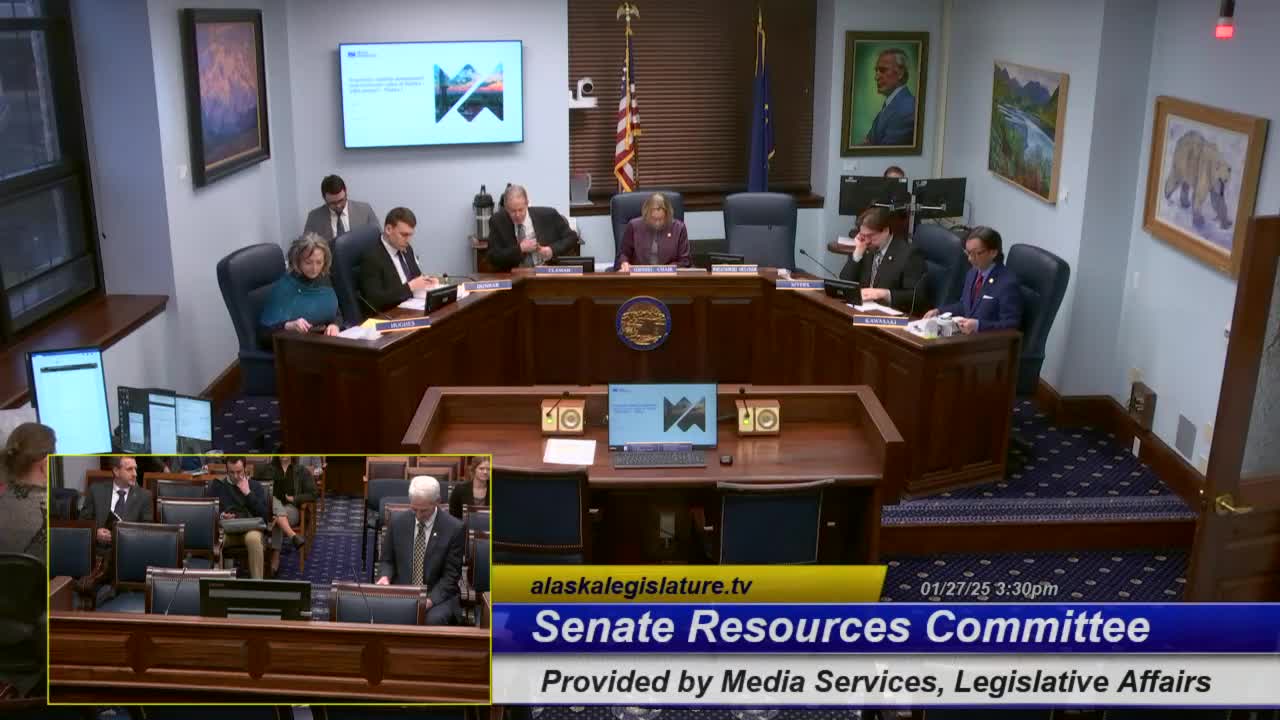
A Wood Mackenzie economic analysis presented Jan. 27 to the Alaska Senate Resources Committee found that a Phase 1 Alaska LNG pipeline — a 765-mile, 42-inch mainline with roughly 3.3 Bcf/day capacity — could lower delivered gas prices for Southcentral Alaska under higher-throughput scenarios, the firm—s Costa Swift told the committee.
A Wood Mackenzie economic analysis presented Jan. 27 to the Alaska Senate Resources Committee found that a Phase 1 Alaska LNG pipeline — a 765-mile, 42-inch mainline with an estimated capacity of about 3.3 billion cubic feet per day — could deliver gas into Southcentral Alaska at a base-case delivered cost of about $12.80 per MMBtu, falling as throughput rises to as low as $2.23 per MMBtu in a high-demand scenario, Wood Mackenzie Vice President Costa Swift told the committee.
The study, commissioned under legislative intent language and reviewed for the committee by Wood Mackenzie and the Alaska Gas Line Development Corporation (AGDC), compared that in‑state pipeline option with importing LNG into Anchorage via an FSRU (floating storage and regasification unit). Wood Mackenzie estimated the delivered cost for LNG imports (excluding an onshore reception/dock site) at roughly $10.20–$13.70 per MMBtu, depending on contract, shipping origin and lease costs for an FSRU.
Why it matters: committee members heard that a competitively priced, reliable pipeline supply could create substantial in‑state economic activity and consumer savings, while also generating construction and ongoing jobs. AGDC said it is seeking private development partners to advance the asset and discussed a request for limited public financial backstopping during the next commercial development stage.
Wood Mackenzie’s presentation and key figures
Costa Swift summarized the firm’s modeling approach, which tested four long-term demand scenarios (base load, added industrial demand, a larger industrial restart, and a full 20 MMTPA export facility) and ran sensitivities for financing, taxes and project life. Swift said Phase 1 as modeled covers the pipeline mainline only (no upstream treatment, no LNG liquefaction facility): “Phase 1 is only related to the pipeline itself,” he said.
Key numbers presented by Wood Mackenzie (as stated to the committee): - Pipeline mainline CapEx (Phase 1, mainline only): $10.8 billion to $14.9 billion depending on scope and contingencies. - Pipeline length and specs: approximately 765 miles, 42‑inch diameter; capacity ~3.3 Bcf/day; first gas estimated in the modelling around 2031. - Delivered gas to the domestic market (base load case): $12.80/MMBtu; as more demand is realized the delivered cost falls (example scenario results included $11.20, $8.97 and as low as $2.23/MMBtu under the largest demand/load cases Wood Mackenzie modeled). - LNG import delivered-cost (excluding onshore reception/dock work): $10.20–$13.70/MMBtu (range driven by contract index, shipping distance and FSRU lease costs).
Swift emphasized major sensitivities: a federal loan guarantee or lower borrowing rates materially reduce delivered cost, while higher property tax rates and higher CapEx increase it. For example, a 10% rise in CapEx would raise delivered cost by roughly $1/MMBtu in the firm’s sensitivity runs, and changes in assumed property tax materially affected cost in their model.
Socioeconomic analysis
Wood Mackenzie reported that roughly 60% of the pipeline’s construction CapEx would be spent in Alaska and estimated lifetime in‑state gross value added of roughly $10.3 billion for a Phase 1 pipeline development (direct, indirect and induced effects reported together). The firm estimated an additional $5 billion–$7 billion in consumer savings to the Alaska economy compared with an import scenario, with a further upside of roughly $6 billion if lower-cost gas spurs more industrial activity.
Limitations flagged during questioning
Committee members repeatedly noted that Wood Mackenzie’s delivered-price figures exclude certain local costs: the study did not include site‑specific estimates for an onshore reception/dock (regasification) site or local distribution upgrades. Swift confirmed the firm did not estimate costs for a specific reception-site engineering survey and therefore left onshore reception/dock costs out of the import-LNG delivered-price range. Senators also noted the study’s Anchorage‑region price estimates did not include the distribution or tariff costs to deliver gas into Fairbanks.
AGDC presentation and developer/financing update
Frank Richards, president of the Alaska Gas Line Development Corporation, told the committee AGDC is pursuing a Phase 1 approach focused on delivering gas to Alaskans as quickly and affordably as possible and is negotiating with private developers to transition the project to private ownership. “AGDC is the current owner and developer of the Alaska LNG project, and we are currently transitioning this to private ownership under qualified developers,” Richards said.
Richards and AGDC commercial lead Matt Kissinger addressed commercial next steps and funding: AGDC described an industry-standard commercial arrangement in which a pipeline developer would undertake front-end engineering and design (FEED) work and asked the legislature and state‑affiliated development agencies about a limited backstop for FEED. Richards described a previously discussed $50 million backstop request tied to FEED: if the project takes final investment decision (FID) the backstop would be repaid; if it does not, the backstop could be used to reimburse the pipeline developer for work performed. AGDC also said it is negotiating a development deal with a private group often referred to in the hearing transcript as Glenfarn/Glenfarms; AGDC stated that the developer has committed to fund a larger portion of work to FID (AGDC said developer funding was confidential and did not disclose an exact figure during the hearing).
Costs to reach FID and developer commitments
AGDC stated an estimated cost to carry the project to FID of roughly $150 million (developer‑funded per AGDC presentations). Richards described an earlier stage when AGDC sought a $50 million backstop for FEED and explained that developers typically provide such contractual assurances in other commercial settings; AGDC has been pursuing both developer partnerships and discussions with financing authorities (the transcript referenced a sister agency called ADA) to structure development finance arrangements.
Fairbanks offtake and local distribution
Committee members repeatedly asked about Fairbanks. AGDC said an earlier (2015) cost estimate for a lateral to a City Gate in Fairbanks was roughly $130 million for about 32 miles of pipe, but Wood Mackenzie confirmed the firm did not include Fairbanks distribution or local connection tariffs in its Anchorage-delivered numbers. AGDC and Wood Mackenzie both said additional CapEx and tariff work would be required to serve Fairbanks and that those costs would need separate, site‑specific study.
Questions and unresolved items
Committee members pressed on several items that remain unresolved or confidential in the record: the precise financial commitments and source(s) of funds from the private developer under negotiation (AGDC said that amount is confidential), the exact terms of any backstop or development finance agreement under discussion with ADA, and whether existing agreements with Prudhoe Bay/Point Thompson producers remain in force (Wood Mackenzie deferred those questions to AGDC). Senators also expressed concern that some costs relevant to a full Alaska LNG export facility (processing on the North Slope, liquefaction plant, Cook Inlet crossing) were not part of the Phase 1 pipeline-only numbers, and they cautioned against equating the Phase 1 mainline cost estimate with the historic $40 billion figure that included those broader elements.
No formal votes or committee decisions were taken during the Jan. 27 meeting. Committee chair Senator Giesel closed the hearing after AGDC’s remarks and said the committee would likely revisit the topic at a future meeting.
Ending
The committee scheduled follow-up hearings; no formal authorizations, appropriations or motions were adopted at this session. The record shows the Legislature asked for independent evaluation via intent language and that committee members requested additional, site‑specific cost information (onshore reception/dock for an import option, and Fairbanks distribution tariffs) before reaching policy conclusions.