Get Full Government Meeting Transcripts, Videos, & Alerts Forever!
Get email alerts on the District Budget Shortfall topic
No spam. Unsubscribe anytime.
Kenai Peninsula superintendent warns of deep budget shortfall; hiring freeze and school closures possible
Summary
Kenai Peninsula Borough School District Superintendent Clayton Holland told the Senate Education Committee the district faces a large budget gap, an active hiring freeze for some positions and possible school closures; public testimony from Anchorage and Seward speakers described parallel staffing and program pressures statewide.
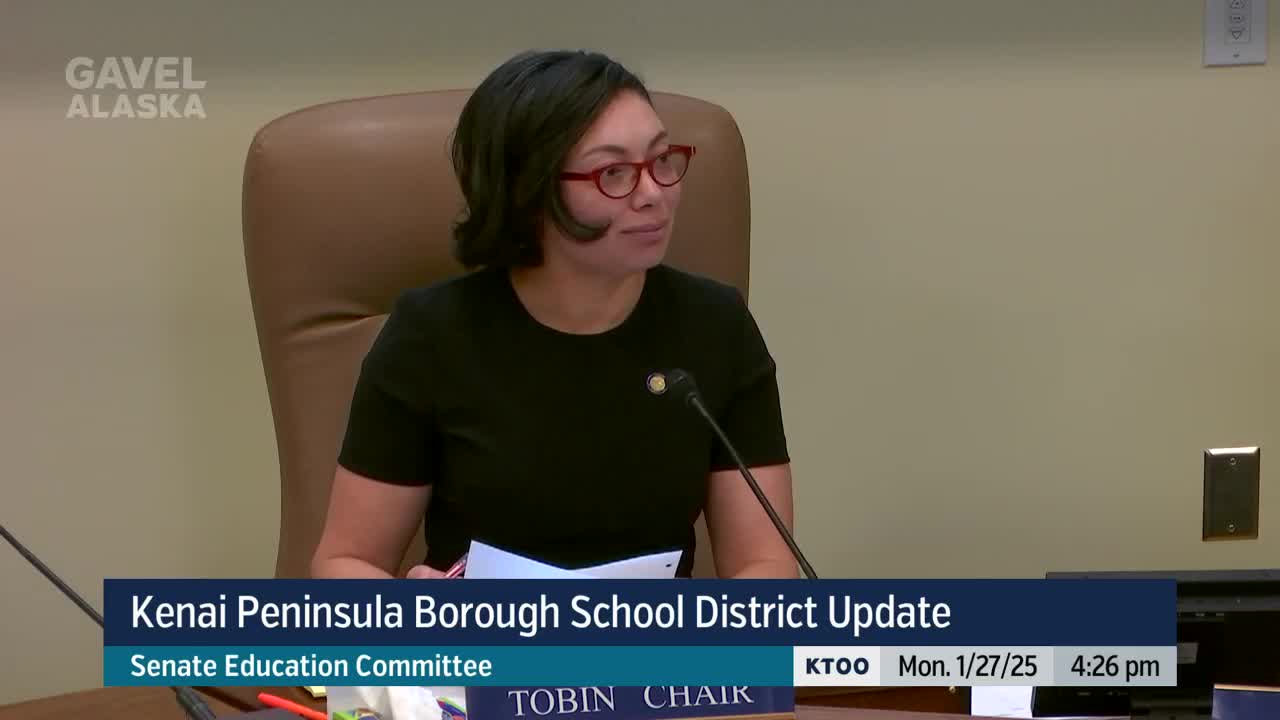
Juneau — Clayton Holland, superintendent of the Kenai Peninsula Borough School District, told the Alaska Senate Education Committee on Jan. 27 that his district is projecting a severe shortfall that will force staffing and program reductions if the state does not provide earlier or larger funding.
Holland said the Kenai Peninsula Borough School District (KPBSD) — which he described as “the size of West Virginia,” with 42 schools, about 8,500 students and roughly 1,200 employees — is projecting “almost $17,000,000” in deficit for the coming year and that the district’s unrestricted fund balance has fallen “to less than $300,000.” He said the district has placed a hiring freeze on new and temporary positions and was considering “massive cuts” to programs, staff and potentially school closures; he scheduled a district work session on Feb. 4 to consider options.
Why it matters: a multi-million-dollar shortfall in a large district threatens classroom services, special education staffing and extracurricular programs; public testimony that followed the superintendent’s remarks described parallel staffing shortfalls in Anchorage and Seward.
Holland said escalating fixed costs — transportation, insurance, utilities and contract increases — have eroded the district’s fiscal cushion. He said transportation costs previously required transfers from the general fund (KPBSD had moved funds in recent years to cover a gap) and that fuel and contractor price increases continue to pressure the budget. He said insurance costs had increased about 22% year over year for the district.
Holland described a range of program and personnel cuts under consideration if additional revenue is not provided: raising pupil–teacher ratios (the district’s projection included an increase that could eliminate about 85.5 teachers), eliminating extracurriculars (including sports), reducing district-office staffing and cutting signature programs (Holland specifically mentioned his district’s middle-college program). He said those actions still might not close the district’s projected shortfall.
Holland also told the committee his district was already dealing with a staffing freeze in special education — he said special-education grant balances had been run down to the point that the district imposed a hiring freeze for temporary and new hires in paraprofessional and other positions. He said that decision had forced reductions in on-site supports and that administrators were considering school consolidations where necessary.
Public testimony that followed reinforced staffing and program pressures across the state. David Kingsland — a longtime Alaska educator who worked in multiple districts and previously served on bond-review panels — told the committee that districts need earlier and predictable funding to plan staffing and avoid late-year layoffs. “I would recommend…that districts can get some early funding, or at least to know that number,” Kingsland testified.
Several Anchorage witnesses described similar and larger structural budget difficulties in Alaska’s largest district. Ben Spies, an Anchorage parent, said families are leaving the state in part because of school concerns and urged the legislature to increase education funding. Kelly Lesson, treasurer of the Anchorage School Board, said Anchorage School District (ASD) faces a structural FY26 shortfall she described as approximately $111,000,000 and that one proposal under consideration would spend down retained one‑time funds to roughly 5% of reserves — a use that Lesson said would yield about $47,000,000 but leave ASD with “less than a week’s worth of operating funds,” well under the district policy target of an 8% fund balance.
Andy Holliman, Anchorage School Board president, told the committee that long-term flat appropriations combined with inflation have quietly eroded program capacity across districts and that the accumulated effect over a decade is now visible in lost programs, higher class sizes and eroded staff morale.
A classroom-level witness, Joshua Garrard, a paraprofessional at Seward Middle School, said staffing shortages had forced him to teach multiple classes and that a newly imposed hiring freeze eliminated substitutes and other positions that had helped keep special-education services functioning. Garrard told the committee, “There is a void left by the lack of staffing, and we are out of compliance.”
The committee chair opened the record for continued public testimony; members asked further questions of the superintendent and invited additional district-level briefings in upcoming hearings. Holland said local boards and administrators are considering contract negotiations and staff raises that the district currently cannot afford.