Get Full Government Meeting Transcripts, Videos, & Alerts Forever!
Get email alerts on the State Budget topic
No spam. Unsubscribe anytime.
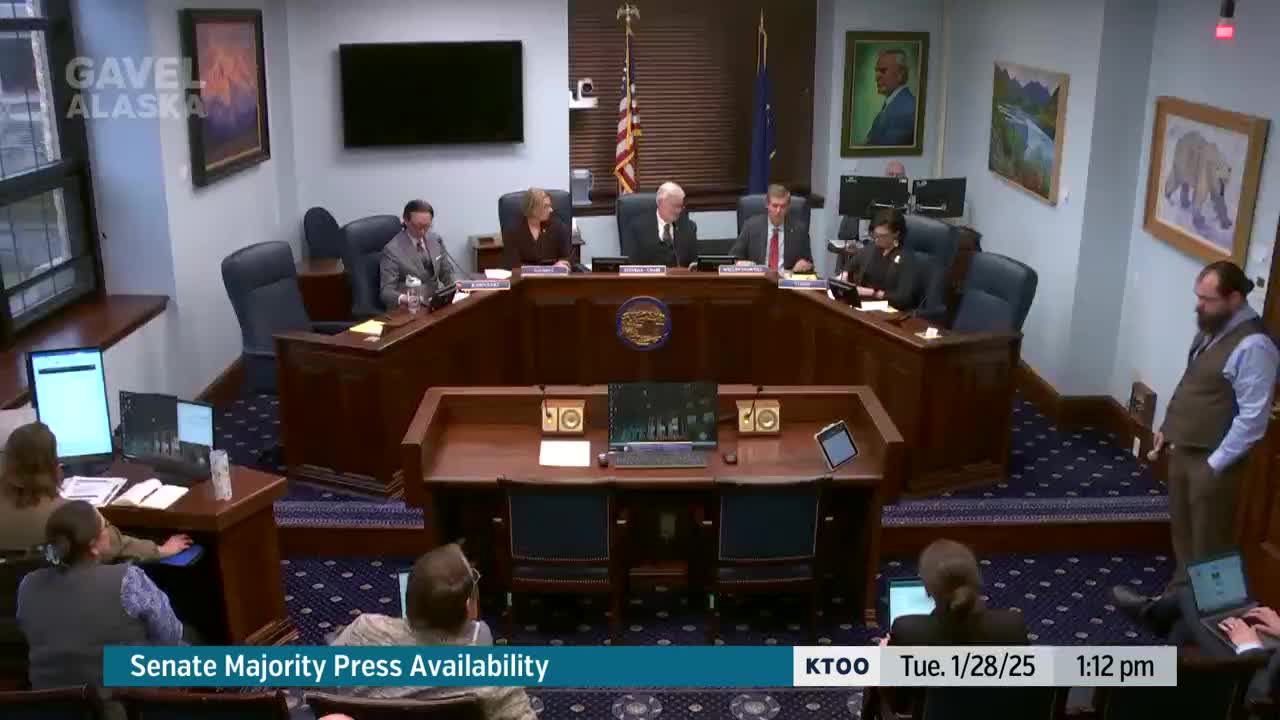
Senators outline budget gap and point to possible revenue options including oil tax changes
Summary
Senators said the Senate and House agree education is top priority but face a multihundred‑million dollar shortfall. Lawmakers discussed options such as modifying oil tax credits, revising corporate tax treatment and limited internet tax proposals while noting the governor's stance will shape action.
Senate leaders said this session will prioritize education but warned it must be paired with a credible plan to pay for increases amid a large projected deficit.
Senator Malakowski summarized analyses showing a roughly $250 million shortfall under one scenario and warned other fiscal notes and maintenance costs could push the gap toward $300–$400 million. "You're realistically probably looking at a 33 to $400,000,000 deficit with the $680 BSA," he said.
Nut graf: Senators described a significant budget gap and discussed revenue options including adjustments to oil tax credits, corporate tax changes, and modest internet tax measures — but said progress depends in part on the governor's willingness to support new revenue.
Senator Giesel and others pointed to several potential revenue sources: changing the structure of oil tax credits and addressing special tax treatment for certain producers; reducing an $8‑per‑barrel tax credit that independent analysis suggested could be trimmed without economic harm; and pursuing internet‑sales tax measures that could raise $20–$50 million.
Senators emphasized constraints on drawing down the Constitutional Budget Reserve (CBR) and the unwillingness, they said, of many members to overdraw the Permanent Fund to cover recurring costs. "There's not a desire to use the CBR because we have a very limited savings," Malakowski said.
Senators said they would welcome the governor's plan for how to fund priorities. "We would all really like to hear...how are we gonna pay for these things?" Malakowski said, noting the governor had earlier proposed approximately a $200 million increase in education funding.
Ending: Lawmakers said they expect debate this session over tax structure and revenue; any concrete proposals will depend on budget committee work and the governor's position, which senators said will shape the legislature's appetite for new revenue.