Get Full Government Meeting Transcripts, Videos, & Alerts Forever!
Get email alerts on the Project Delivery topic
No spam. Unsubscribe anytime.
DOT describes STIP management, data office and contractor/DBE challenges
Summary
DOT told senators it built a project management approach to improve Statewide Transportation Improvement Program administration after estimate and inflation errors; it created a Data Modernization Innovation Office to centralize GIS and data services and reported it is not meeting federal disadvantaged business enterprise goals.
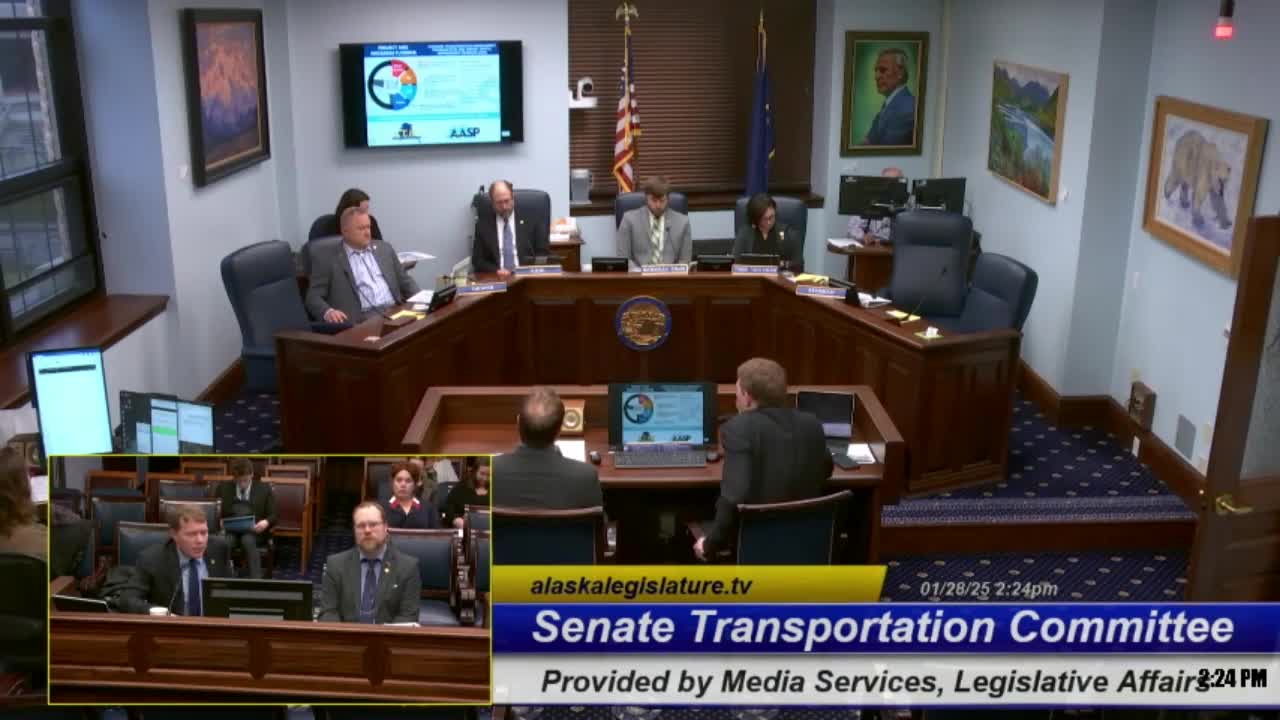
Commissioner Ryan Anderson and DOT legislative liaison Andy Mills briefed the Senate Transportation Committee on steps the department is taking to improve project delivery and data management, and on compliance challenges with federal disadvantaged business enterprise (DBE) goals.
Anderson said DOT has created a project management office and a process where project managers log estimate and scope changes so regional directors and program managers see updates before STIP amendment deadlines. He said earlier lapses in updating estimates contributed to last year’s STIP amendments and that the department is creating a regular two‑year STIP rhythm to avoid last‑minute adjustments.
The department also consolidated scattered technology staff into a Data Modernization Innovation Office (DMIO). Anderson said DMIO centralizes programmers, GIS professionals and training resources so the department can produce consistent data and improve federal reporting and project maps.
Anderson and Mills described federal‑compliance issues: the department said it is not meeting DBE thresholds with the Federal Highway Administration and is preparing outreach and plans to improve contractors’ engagement with disadvantaged businesses. They also noted blended federal funding complexities—for example, Alaska Marine Highway projects that began under federal highway funds and later qualified for the FTA rural ferry program must meet different rules, which complicates procurement and project execution.
On contracting for supplemental winter-maintenance work, Mills explained DOT ran multiple solicitations to ensure coverage in the Mat‑Su and Kenai areas and included minimums in contracts so contractors have some revenue certainty and will maintain capacity for winter call-outs.
Why it matters: Project-delivery, data accuracy and DBE performance affect timely construction, federal compliance and access to federal funds; improving business outreach and data consistency can reduce delays and funding risk.
DOT said a second STIP amendment would be public‑noticed soon and that the department is taking steps to improve DBE outcomes via outreach; no enforcement penalties were reported at the hearing.