Get Full Government Meeting Transcripts, Videos, & Alerts Forever!
Get email alerts on the Address Confidentiality topic
No spam. Unsubscribe anytime.
Senate committee hears bill to create statewide address protection program for survivors and public-safety workers
Summary
Senate Bill 31 would establish an address protection program in the Department of Administration to give eligible participants a State of Alaska PO box for official mail and keep their real mailing addresses confidential.
Senate Bill 31, introduced by Senator Jesse Kiel, would create a statewide address protection program in the Department of Administration to give eligible participants a State of Alaska post office box for first-class and registered mail and to keep their real mailing addresses confidential.
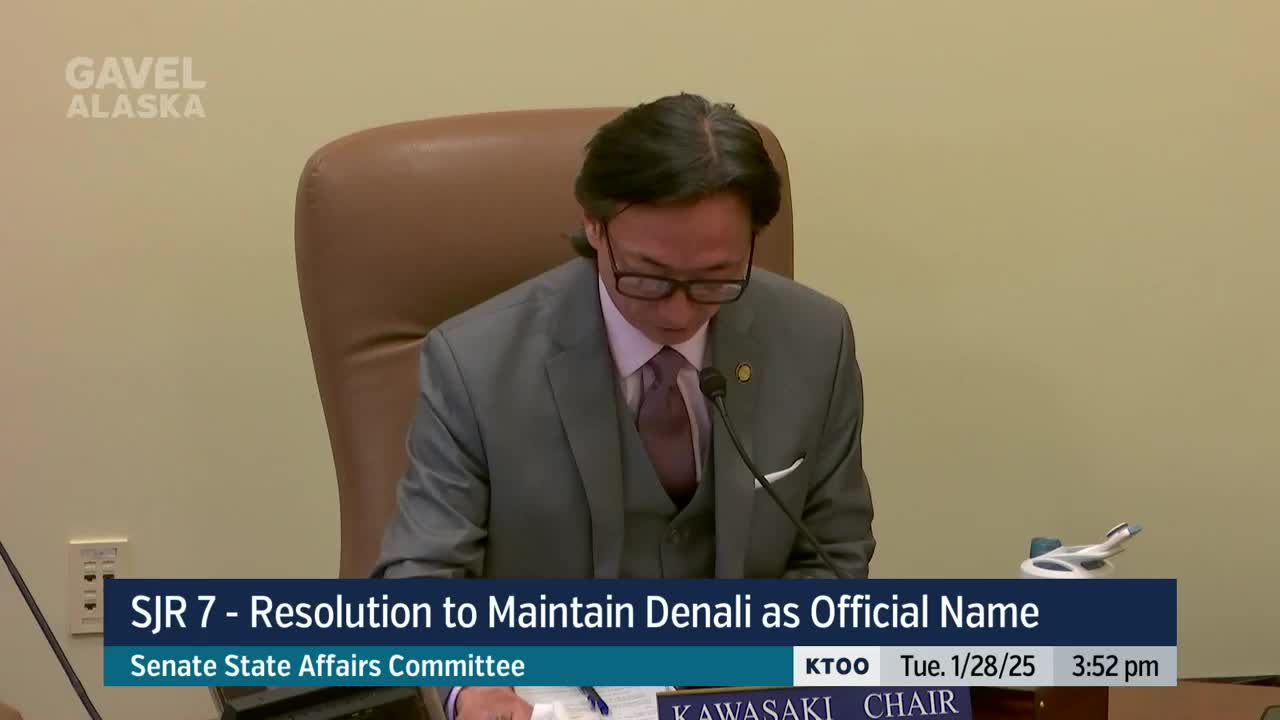
Senator Jesse Kiel, sponsor of the bill, told the Senate State Affairs Committee on Jan. 28 the program is intended to help survivors of domestic violence, sexual assault and stalking, and would also be available to peace officers and correctional officers. "Many of those things create a public record," Kiel said. "We are one of only six states without an address protection program." Kiel described the program as a targeted confidentiality tool and said it is not intended to forward commercial packages.
Ella Atkinson (staff to Senator Kiel) summarized key provisions: the program would be created in the Department of Administration; enrollees would use a single state PO box as a substitute mailing address; enrollees' real addresses would be kept confidential; registered offenders would be ineligible; state and municipal agencies would be required to accept the PO box; the department would be barred from charging a fee; confidential addresses could be disclosed only pursuant to a search warrant; the department would adopt implementing regulations and the bill's remaining provisions would take effect Jan. 1, 2026.
Witnesses including Randy McClellan, president of the Alaska Correctional Officers Association and a Department of Corrections staff sergeant, and Kiely Olson, executive director of STAR (Standing Together Against Rape) in Anchorage, testified in favor, telling the committee the program would help protect public-safety personnel and survivors. "Correctional officers work in an incredibly dangerous environment," McClellan said, describing threats he and colleagues have received and urging support for the bill. Kiely Olson told the committee programs in other states helped keep survivors safe and cited Montana's program costs (startup of about $50,000; roughly $20,000 per year to operate with 68 participants) as an example.
Brad Ewing, division director for Shared Services in the Department of Administration, answered fiscal questions. He said the department used other states' data to estimate an average of 60 pieces of mail per enrollee per year for the fiscal note and proposed a small program staff—a program manager and an administrative assistant—based on comparable programs. Ewing acknowledged the program would be unique to the division and the fiscal estimate could be refined.
Committee members raised questions about the fiscal note and program placement; several noted that other states place similar programs within election or other administrative divisions. Senator Gray Jackson asked whether participants would face a fee; Kiel answered the bill prohibits charging a fee. Members also asked about enforceability against internet search engines; Kiel and witnesses said the program does not erase historical online records but can prevent government-created records from identifying a participant's physical address.
The committee took testimony from multiple witnesses and kept public testimony open by email. No final vote was taken; the committee set the bill aside for further review and the fiscal estimate will be scrutinized in Finance Committee.