Get Full Government Meeting Transcripts, Videos, & Alerts Forever!
Get email alerts on the Capital Program topic
No spam. Unsubscribe anytime.
DOT identifies capital priorities: Dalton Highway, Klondike projects, Williamsport connector and trail mitigation
Summary
Commissioner Anderson reviewed the department's roughly $1.8 billion capital program, highlighting Dalton Highway repairs, Klondike Highway receipt-authority projects, the Williamsport Intermodal Connector, Silvertip bunkhouse and Wood River Canyon bridges and trails work.
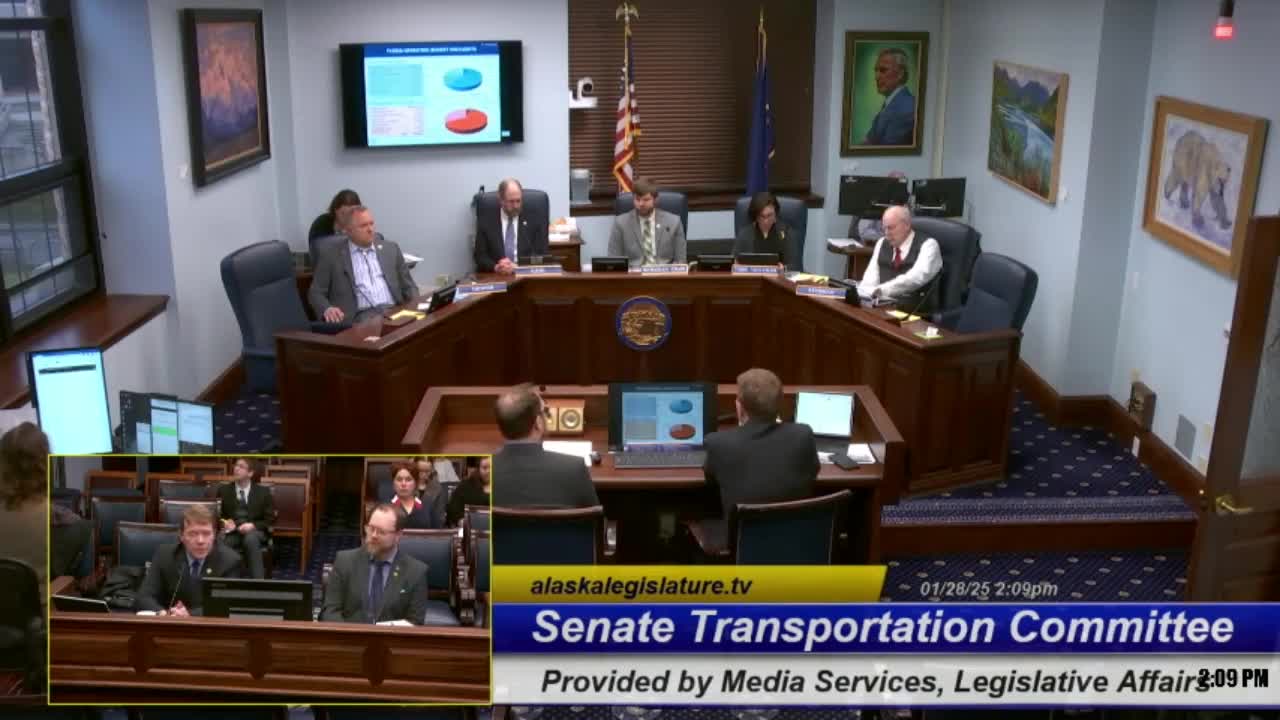
Ryan Anderson presented the Department of Transportation and Public Facilities’ capital program overview to the Senate Transportation Committee, saying the department expects roughly $1.8 billion in capital activity and that the program combines federal surface-transportation funds with airport and state match funding.
Anderson highlighted several projects:
- Dalton Highway: crews are prioritizing surface and drainage work after heavy summer rains that created difficult conditions for trucking. - Klondike Industrial Use Highway (Skagway): the work is financed through receipt authority tied to industrial activity on that corridor. - Williamsport Intermodal Connector: a priority link between Cook Inlet and Lake Iliamna that supports household goods, fuel access and Bristol Bay fishing-industry transport; Anderson said recent washouts from high rain prompted renewed attention. - Silvertip Camp Bunkhouse on the Sterling/Seward corridor: a proposed bunkhouse to house crews overnight for storm response in a remote winter hotspot. - Wood River Canyon bridges and trails (old Copper River Highway): funding would support trail stabilization, access for dipnet fisheries and mitigation for culturally sensitive grave sites.
Anderson also described blended federal program dynamics, noting the new rural ferry program administered by the Federal Transit Administration has increased federal capital options for ferry work but that managing different federal rules across agencies introduces complexity.
Why it matters: These capital projects affect freight mobility, community access and emergency-response capacity in rural and coastal areas; receipt-authority projects and federal program changes affect project funding and delivery.
No final schedules or completion dates were given for the highlighted projects; Anderson said teams are developing designs and pursuing amendments to the Statewide Transportation Improvement Program as required.