Get Full Government Meeting Transcripts, Videos, & Alerts Forever!
Get email alerts on the Airports topic
No spam. Unsubscribe anytime.
DOT highlights Anchorage cargo growth, airports expansion and sustainable aviation fuel plans
Summary
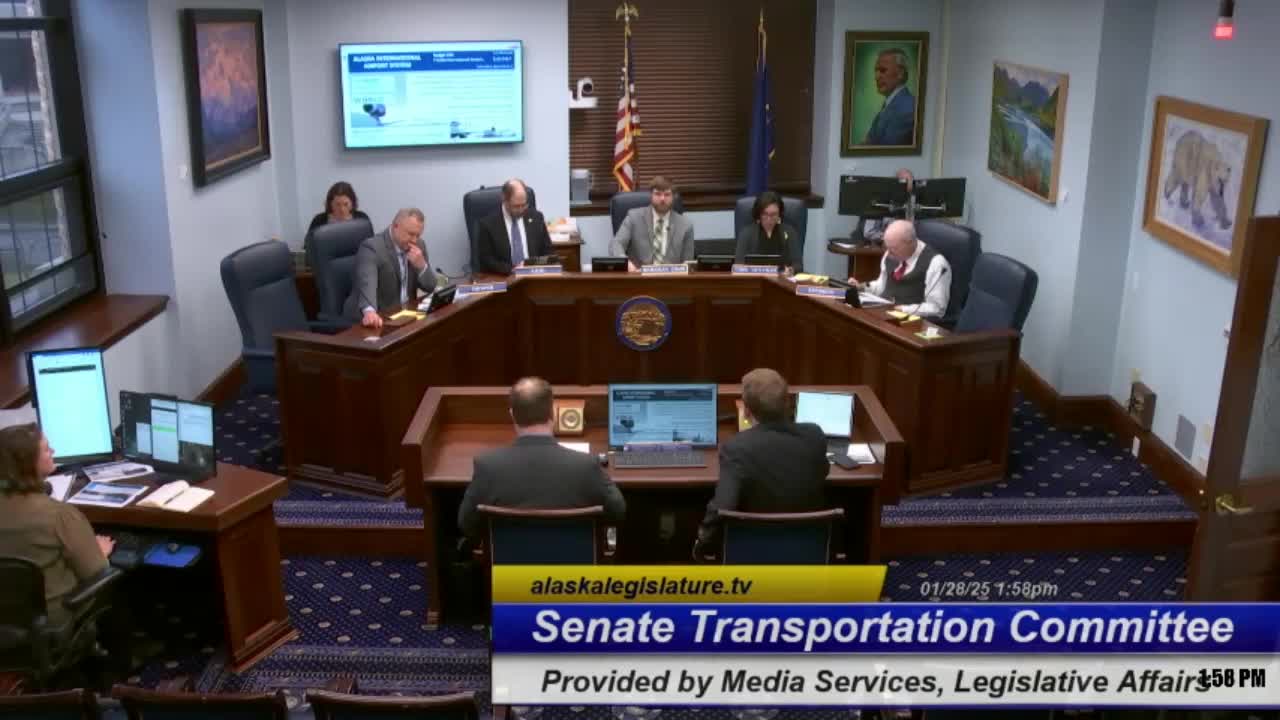
At a Jan. 28 Senate Transportation Committee hearing, Alaska Department of Transportation and Public Facilities Commissioner Ryan Anderson described growth at Anchorage and Fairbanks airports, proposals for apron and hardstand expansion and early work on sustainable aviation fuel and solar projects.
Ryan Anderson, commissioner of the Alaska Department of Transportation and Public Facilities, told the Senate Transportation Committee on Jan. 28 that Anchorage International Airport remains a strategic freight hub and that state airport managers are pushing infrastructure investments to sustain and expand cargo and passenger traffic.
Anderson said Anchorage was the second-busiest cargo airport in North America by some measures and cycles between third and fourth worldwide for cargo by landed weight. He said five new cargo carriers started serving Anchorage last year and that the department anticipates an increase in cargo revenue, describing airport investments aimed at additional apron and hardstand capacity to attract carriers.
The department is also tracking passenger-airline route growth to direct flights from the lower 48 into both Anchorage and Fairbanks, Anderson said. He told senators the state is pursuing several apron and hardstand proposals and wants a “welcoming climate” for carriers to invest.
Anderson said the agency is pursuing sustainable aviation fuel and noted the airports’ combined aviation fuel use approaches 900,000,000 gallons annually. He said the department is looking at both demand-side measures and fuel-supply options to support long-term use.
On energy infrastructure, Anderson said the department has issued a request for information for a 10-megawatt solar array at Ted Stevens Anchorage International Airport and has received three proposals. He said the department will review proposals and then pursue a formal solicitation for construction.
Why it matters: Anchorage and Fairbanks serve as statewide aviation gateways for passengers and freight; decisions about apron, hardstand and on-site energy affect the state’s ability to attract carriers and manage operating costs.
Anderson provided no timetable for final decisions on apron projects or the sustainable aviation fuel program; he said proposals are under review and that a formal bid process for the solar array would follow the RFI stage.