Get Full Government Meeting Transcripts, Videos, & Alerts Forever!
Get email alerts on the Criminal Division Caseloads topic
No spam. Unsubscribe anytime.
Criminal-division leaders report higher conviction rates but cite caseload, discovery and rural staffing pressures
Summary
Angie Kemp outlined prosecution statistics, trial work and caseload pressures in the criminal division, highlighting a 82% felony conviction rate in FY24, trial increases and large disparities in rural office workloads such as Dillingham’s 339 cases per prosecutor.
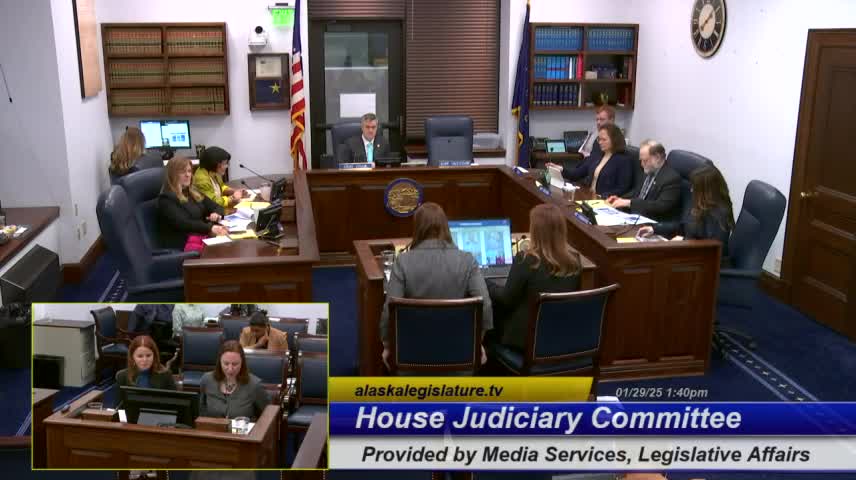
Angie Kemp, director of the criminal division, told the House Judiciary Committee on Jan. 29 that Alaska prosecutors have increased trial activity and conviction rates but face persistent caseload and discovery challenges that vary widely across the state.
"The criminal division's mission is to seek justice, promote public safety, and public respect for government through prompt, effective, and compassionate prosecution of cases," Kemp said, and she pointed to year-over-year increases in trials and convictions as evidence of progress.
Kemp said the division tried 225 felony cases in fiscal year 2023 and 237 in fiscal year 2024, with a felony conviction rate of 82% in FY24. In the first half of FY25 she said prosecutors obtained convictions in multiple homicide and sexual-assault cases across the state.
At the same time, Kemp described workload pressures: a statewide average of about 144 cases per prosecutor, with extreme regional disparities. She told the committee that the Dillingham office averages about 339 cases per position, a level she described as "too many," and said the division is requesting an additional prosecutor for that office.
Members asked about causes for pretrial custody and delays. Kemp said many factors contribute to pretrial detention and that COVID-era court slowdowns created a backlog in some courts. She described a mix of causes for delay and said the division is encouraging prosecutors to make the record that they are "ready for trial" and to oppose unnecessary continuances.
Kemp also highlighted how digital evidence has increased prosecutors’ workloads: body-worn cameras and other electronic evidence create large, time-consuming discovery sets that did not exist in earlier eras. She said this digital growth has increased the time needed to screen, review and litigate cases and contributes to the difficulty in defining a single appropriate caseload standard.
Committee members and Kemp discussed retention and recruitment: pay increases and fellowship programs have improved retention, but prosecutors and support staff face a difficult workload, and many positions cannot be performed remotely because of court obligations.
Kemp gave additional system metrics: in FY24 the criminal-division trial counts and conviction statistics included 97 homicide and serious-assault convictions in the first half of FY25, and the division had 376 post-conviction-relief cases pending statewide. She said prosecutors play roles across the case lifecycle, including scene views, arrest-advice, pretrial litigation, trial preparation and post-conviction defense.
Ending: Kemp asked the committee to consider staffing requests tied to workload disparities and evidence-related costs as the Legislature considers budget requests.
Sources and attributions: Direct quotes and statistics cited are from Angie Kemp’s January 29 presentation to the House Judiciary Committee.